
Physical Therapy for Back Pain in NYC
Movement-focused rehabilitation for active adults and athletes dealing with low back pain, disc injuries, sciatica, stiffness, and performance-related injuries. We find the source, build the strength, and get you back to training.
Most back pain is managed.
Very little of it is solved.
Low back pain is the leading cause of disability worldwide. Most adults will experience a significant episode at some point, and a large portion of them will experience it again, and again, because the first episode was managed rather than solved.
The standard approach to back pain has a poor track record. Imaging finds something that looks alarming but may have nothing to do with the pain. Medication reduces symptoms without addressing the cause. Rest and avoidance lead to deconditioning that makes the next episode worse. Repeated passive treatments create dependency without building anything lasting. For active people, this cycle is particularly frustrating because the default advice, stop doing what you love until it settles down, never seems to produce the outcome it promises.
The research on back pain treatment is more optimistic than the experience of most sufferers suggests. The spine is remarkably resilient. Disc herniations reabsorb. Muscles strengthen. Movement patterns retrain. The body's capacity to recover from back pain, given the right input, is genuinely impressive. What it requires is an accurate understanding of what is driving the problem and a progressive plan that builds toward real capacity rather than just managing symptoms.
The active adults who recover fully from back pain and stay recovered are not the ones who were lucky with their diagnosis. They are the ones who addressed the underlying weakness and movement patterns that made the injury possible in the first place.
0
Cookie-cutter protocols. Every plan is built from your evaluation, not a template.
3
NYC locations. Midtown, SoHo, Long Island City.
100%
One-on-one sessions. No aides, no hand-offs, no exceptions.
Back conditions we treat
Each section below describes our clinical approach to a specific back condition: what is actually driving it, how we assess it, and how we treat it. This is not a list of diagnoses. It is a description of how we think about the back and how that thinking translates into treatment.
Lumbar muscle strains and sprains
ACUTE LOW BACK PAIN
Lumbar strains are among the most common reasons people seek physical therapy, and also among the most overtreated with passive rest. A muscle strain in the lower back occurs when the muscle fibers are overstretched or torn, typically during a sudden movement, a heavy lift, or an awkward position held under load. The pain is usually sharp at the moment of injury and stiffens considerably in the hours that follow.
The evidence on recovery from acute back strains is clear: early, gentle movement produces better outcomes than bed rest. Staying still allows the surrounding muscles to guard and tighten, which creates a secondary layer of pain on top of the original injury. The goal of early treatment is to reduce that protective tension, restore normal movement patterns, and begin rebuilding the strength that supports the lumbar spine.
Most uncomplicated strains resolve within a few weeks with appropriate treatment. What physical therapy adds is speed of recovery, prevention of recurrence, and the identification of any underlying movement patterns or strength deficits that made the injury likely in the first place.
“Rest is not the prescription for most back strains. Early movement, done correctly, is what drives recovery.”
Sciatica
NERVE PAIN — LUMBAR AND GLUTEAL
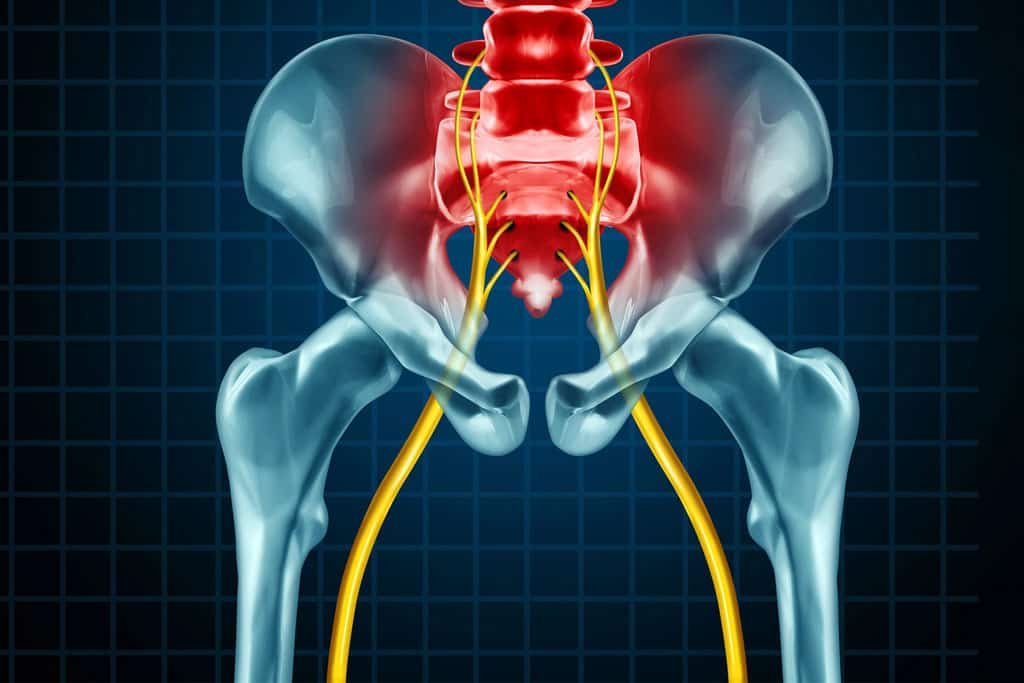
Sciatica is one of the most searched pain terms in existence and one of the most poorly understood. The sciatic nerve is the largest nerve in the body, running from the lower spine through the glute and down the back of the leg. When it is compressed or irritated, the result is a sharp, burning, or electric pain that travels along that path, often accompanied by tingling, numbness, or weakness in the leg or foot.
What most people do not know is that sciatica is a symptom, not a diagnosis. The compression can come from a lumbar disc pressing on a nerve root, from tightness in the piriformis muscle in the glute, from a narrowing of the spinal canal, or from several of these at once. The treatment depends entirely on the source. Stretching the piriformis helps one presentation and does nothing for another. This is why generic sciatica advice rarely works.
At Moment, we identify the specific driver of the nerve irritation before determining the treatment approach. For discogenic sciatica, that often means directional exercises and manual therapy to reduce disc pressure. For peripheral nerve involvement in the glute, it means releasing the surrounding structures and retraining the hip. For both, it means building the strength and stability in the lumbar spine and hip that prevents recurrence.
“Sciatica is a symptom with several possible sources. Treating the symptom without identifying the source is why so many people do not get better.”
Disc injuries and lumbar disc herniation
DISC RELATED BACK PAIN
Lumbar disc injuries range from minor bulges that cause localized stiffness to significant herniations that press directly on nerve roots and send pain into the leg. The disc sits between each vertebra, acting as a shock absorber and spacer. When the outer layer weakens and the inner material pushes outward, the result depends entirely on which direction it moves and what it comes into contact with.
Disc injuries have a strong natural history of improvement, even significant herniations. The body reabsorbs the herniated material over time, and the majority of people with lumbar disc herniations recover fully without surgery. Physical therapy accelerates and guides that recovery by reducing compression through positioning and movement, restoring mobility in the affected segment, and building the surrounding strength that protects the disc from re-injury.
The key clinical skill with disc injuries is identifying which movements reduce pain and which increase it, and using that information to guide both treatment and daily activity modification. For patients who have been avoiding exercise out of fear of making things worse, this is often the turning point: understanding what is actually safe and what is not, rather than treating the back as fragile.
“Most lumbar disc herniations resolve without surgery. The body heals well with the right guidance, and protecting the disc from further damage does not mean stopping movement.”

Back pain from weightlifting
LIFTING RELATED BACK PAIN
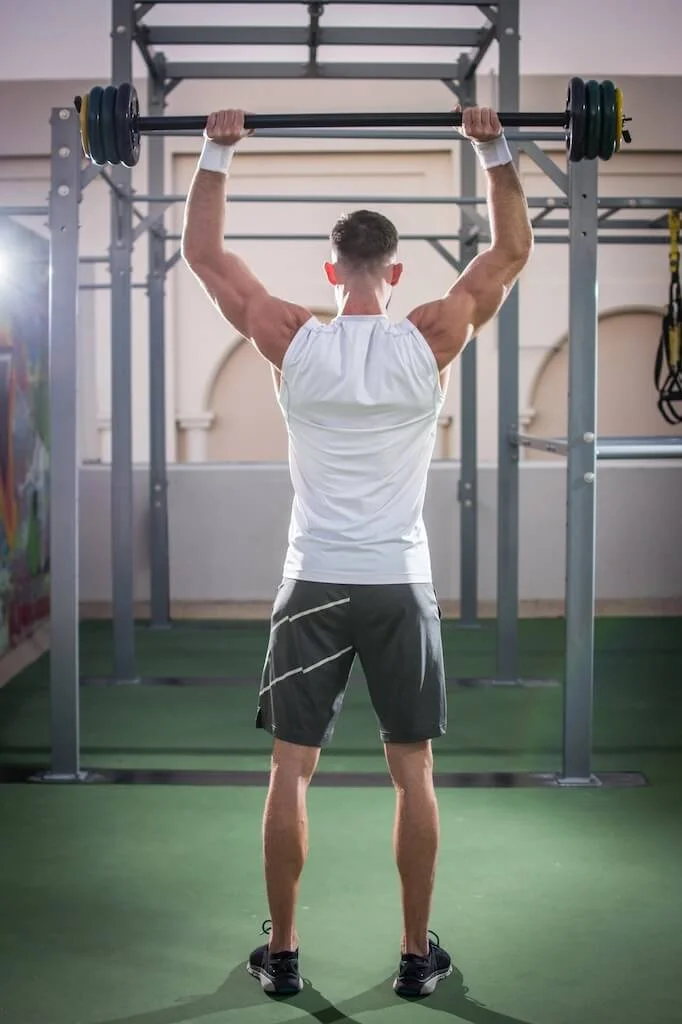
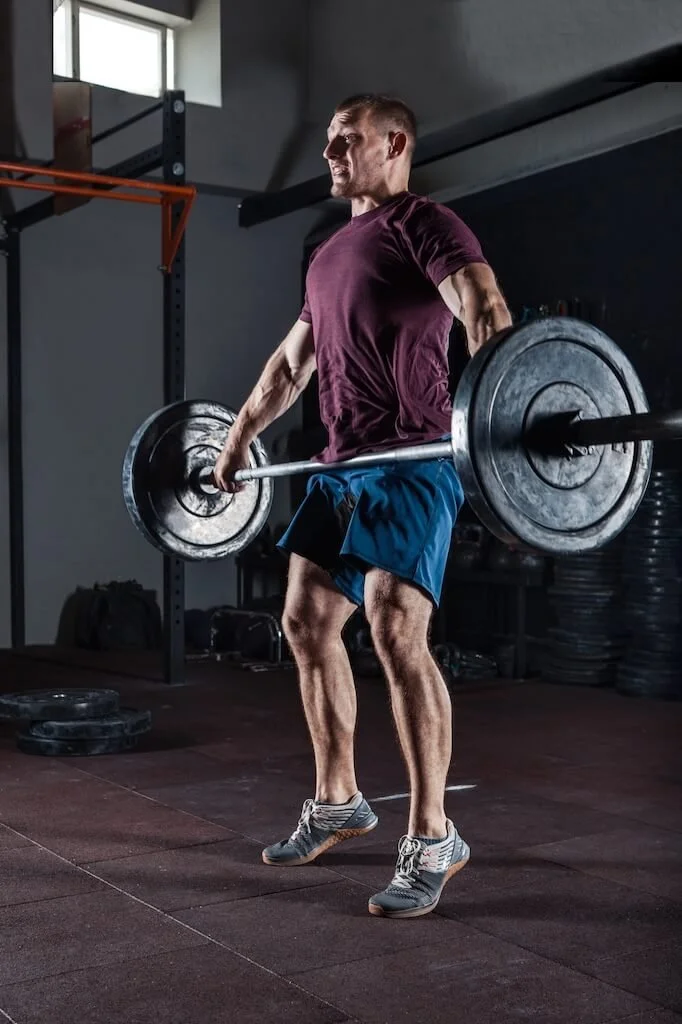
Back pain from lifting is not a sign that the spine is damaged or that lifting is dangerous. It is almost always a sign that something in the loading pattern needs to change. The lumbar spine is extraordinarily resilient under load when it is positioned well and supported by adequate muscular strength. When it is not, the passive structures, including discs, joints, and ligaments, absorb stress they were not designed to handle.
The most common drivers of lifting-related back pain are a breakdown in spinal position under fatigue or heavy load, insufficient hip hinge mechanics shifting stress from the hips to the lumbar spine, and a rapid increase in training volume that the body has not had time to adapt to. Any of these can produce pain ranging from generalized stiffness to acute disc injuries.
Our therapists train with barbells. We assess your squat, deadlift, hinge, and loaded carry patterns in the context of how you actually train, not in a clinical vacuum. The goal is always to identify the specific technical or capacity problem and solve it, not to steer you away from the training you have built your routine around.
“Back pain from lifting is a signal about loading patterns, not a verdict on the spine. The fix is almost always technical and capacity-based, not avoidance.”
Chronic low back pain
LONG-STANDING BACK PAIN
Chronic low back pain, defined as pain persisting beyond three months, affects an enormous portion of the population and is one of the leading causes of disability worldwide. It is also one of the conditions most poorly served by the medical system. The typical trajectory involves imaging, medication, injections, and eventual resignation to managing the pain rather than resolving it.
What the research on chronic back pain consistently shows is that active rehabilitation, specifically progressive strengthening and movement retraining, produces better long-term outcomes than any passive treatment. The pain has often persisted not because the original injury is ongoing, but because the body has developed protective movement patterns and strength deficits that perpetuate the pain cycle long after the initial tissue has healed.
At Moment, we approach chronic low back pain as a system problem, not a structural one. We assess what the body is guarding against, what strength and movement deficits have developed over time, and what the daily habits and activity patterns are that sustain the cycle. From there, treatment is progressive and goal-oriented. Most patients with chronic back pain have not yet experienced what their back can actually do when properly supported.
“Chronic back pain is not permanent. In most cases it has maintained itself through a cycle of weakness and guarding that physical therapy directly addresses.”

Mobility restrictions and back stiffness
MOVEMENT LIMITATION
Stiffness in the lower back is one of the most common complaints we hear, and it is almost universally undertreated. Most people stretch, foam roll, and accept the stiffness as a feature of their body rather than a problem with a solution. The stiffness is real, but the source is rarely the muscle being stretched.
True lumbar mobility restrictions usually involve a combination of joint stiffness in the lumbar and thoracic spine, tight hip flexors that pull the pelvis forward and compress the lumbar segments, limited hip rotation that forces the lower back to compensate during movement, and insufficient deep core strength to support the spine through its full range. Stretching the hamstrings does not address any of these.
Our approach to back stiffness is to assess what is actually restricting the movement, treat that directly with manual therapy and targeted mobilization, and then build the strength to maintain what we restore. Many patients are surprised by how much range of motion is available when the right structures are addressed.
“Stretching the muscles around the back rarely fixes back stiffness. The actual restriction is usually in the joints and hips, not the muscles being stretched.”

Back pain while running
RUNNING RELATED BACK PAIN
Back pain during or after running is more common than most runners expect, and it is rarely discussed with the same seriousness as knee or hip injuries. The lumbar spine absorbs significant repetitive force during running, and when the surrounding musculature is not doing its job, that force lands on passive structures that accumulate stress with every mile.
The most common sources of running-related back pain are insufficient hip extension causing the lower back to compensate on every stride, weak deep core muscles allowing the lumbar spine to move excessively during the loading phase, limited thoracic rotation forcing the lower back to generate the rotation the upper body should be providing, and a sudden increase in mileage that the body has not had time to adapt to.
We assess running mechanics the same way we assess them for knee and hip injuries: watching you run at your actual training pace and under fatigue, not just at a comfortable speed on a treadmill. The fix for running-related back pain is almost never to stop running. It is to understand what the running is asking of the back and build accordingly.
“Back pain while running is rarely a back problem. It is usually a hip or thoracic spine problem that the lower back is compensating for.”


Postural back pain
DESK WORK AND SUSTAINED POSTURE
Postural back pain is the price of the way most people work, and it is getting more prevalent as working hours lengthen and desk setups worsen. Sustained sitting compresses the lumbar discs, shortens the hip flexors, shuts off the glutes, and trains the deep stabilizing muscles of the back into disuse. The pain is real, the causes are clear, and it responds well to treatment.
The mistake most people make is treating postural back pain with passive interventions, massage, heat, stretching, that feel good temporarily but do not change the underlying weakness and restriction driving the problem. The solution requires building active strength in the muscles the desk is turning off, restoring the mobility that sustained sitting restricts, and making practical changes to how you work and move throughout the day.
We treat postural back pain as what it is: a strength and movement problem with a lifestyle component. The clinical work addresses the tissue. The take-home program addresses the habits. Both are necessary.
“Postural back pain is not a structural problem. It is a strength and movement pattern problem driven by how you spend your time. Both are addressable.”
Finding the root cause when everyone else treated the symptoms
"I had been dealing with a nasty sciatica and lower back pain for two months, and none of the chiropractors and physical therapists I saw offered any real help. Then I came to Moment Physical Therapy, and after only a couple of sessions I already started feeling significantly better. Instead of only treating the symptoms like most therapists tend to do, my therapist found the root causes of my pain. They were incredibly attentive, encouraging, and supportive both during and outside of our sessions. I have regained my mobility and strength and started exercising again."
Result: Two months of failed treatment elsewhere, resolved at Moment. Back to full mobility, strength, and exercise.
How we evaluate and treat back pain
Back pain assessment at Moment is not a questionnaire and a list of exercises. It is a systematic evaluation of the whole body designed to find the actual source of the problem, not just the location of the symptoms.
-
01
Lumbar and spinal assessment
Range of motion, joint mobility, directional preference testing, and identification of movements that reduce or increase symptoms
-
02
Neural screening
Assessment for nerve involvement, including sensation, reflexes, and leg symptoms that indicate disc or nerve root contribution.
-
03
Hip and thoracic evaluation
Mobility and strength testing of the hips and thoracic spine, which are the most common upstream drivers of lumbar back pain.
-
04
Core stability and strength
Assessment of deep core function, not just superficial abdominal strength, under the conditions that matter for your activity.
-
05
Movement and lifting analysis
For athletes and lifters, assessment of the specific movement patterns, squat, hinge, carry, run, that are loading the back and driving symptoms.
Treatment is progressive and built around getting you back to what you want to do. It is not a course of passive treatments designed to make symptoms manageable. It is a process of rebuilding what the back needs to perform without pain.
How we think about the back.
Back pain treatment at Moment is built on a set of principles that run counter to how most clinics approach it. These are not marketing statements. They are the actual beliefs that drive every clinical decision we make.
Movement is medicine
Passive rest is rarely the prescription. Early, appropriate movement drives recovery and prevents the secondary stiffness that often outlasts the original injury.
Load progressively
The spine is robust under load when it is properly supported. We build toward that capacity systematically, not by avoiding load indefinitely.
No passive dependency
Treatments that require you to keep coming back indefinitely without getting stronger are not solutions. Every plan is built toward independence
Strength is the long game
Most back pain recurs because the underlying strength deficits that allowed it to develop are never addressed. We build the capacity that makes recurrence unlikely.
Treat the system, not the symptom
Where it hurts and why it hurts are rarely the same place. We assess the whole body to find the actual driver, not just the location of pain.
Return to what matters
The destination is your specific activity: your training, your sport, your work. Not generic function. Your version of full capability.
Serious patients. Serious outcomes.
Our back pain patients range from first-time acute injuries to people who have been managing chronic pain for years. What they share is a desire to understand what is driving the problem and address it properly.
Desk workers and professionals
Managing chronic stiffness, postural pain, and recurring flare-ups driven by sustained sitting and sedentary work patterns.
Runners
Experiencing back pain during or after running and needing a gait and movement assessment that identifies the actual source.
Sciatica and disc patients
Managing radiating leg pain, disc herniations, or nerve irritation and looking for a conservative path to recovery before considering surgery.
Strength athletes and lifters
Dealing with lifting-related back pain and looking to identify the technical and capacity issues driving it without abandoning their training.
CrossFit and hybrid athletes
Training across multiple modalities with back pain that flares under certain movements and needs a nuanced, sport-specific approach.
Chronic pain patients
Living with back pain that has persisted for months or years and has not responded meaningfully to previous treatment.
FREQUENTLY ASKED QUESTIONS
-
Yes, and it is consistently the most effective intervention for long-standing back pain. Most chronic cases persist not because the original injury is still active, but because the body has developed compensatory movement patterns and strength deficits that sustain the pain cycle. Progressive strengthening and movement retraining address those causes directly. Many patients who have managed chronic back pain for years experience meaningful improvement within a few weeks of properly directed treatment.
-
Almost always a combination of position and capacity. When the lumbar spine loses its position under load, whether from fatigue, insufficient hip mechanics, or too much weight too soon, the passive structures absorb stress they are not designed for. A barbell assessment by a therapist who trains with barbells identifies exactly where the breakdown is occurring and what needs to change. The answer is rarely to stop lifting.
-
Yes, though running is rarely the actual cause. Running exposes underlying movement deficits: insufficient hip extension, limited thoracic rotation, weak deep core muscles. These force the lower back to compensate on every stride, and over miles that compensation adds up. A gait analysis that evaluates mechanics under real training conditions identifies what the running is asking of the back and what needs to be built to support it.
-
Disc pain tends to be more position-specific and often involves symptoms that travel into the leg (sciatica is a common presentation of disc involvement). It is usually made worse by certain movements and better by others, and the pattern is consistent and reproducible. Muscle pain tends to be more diffuse, less directional, and more responsive to movement and heat. The distinction matters because the treatment is different. A thorough evaluation makes the picture clear.
-
In the majority of cases, yes. Most lumbar surgeries, including discectomies, fusions, and decompressions, are performed on patients who have not completed a rigorous course of physical therapy. Studies consistently show that PT produces outcomes comparable to surgery for most common lumbar conditions, including disc herniations and spinal stenosis, with far less risk and recovery time. We give you an honest assessment of what is realistic for your situation.
-
Most lumbar disc herniations improve meaningfully within six to twelve weeks of appropriate treatment. The body naturally reabsorbs herniated disc material over time, and PT guides and accelerates that process. More severe herniations with significant nerve involvement take longer. The timeline depends on how long the injury has been present, how consistently treatment is applied, and whether the underlying movement patterns driving the problem are being addressed.
-
In most cases, yes, and it is usually better than resting. The key is knowing which movements are safe at which stage of recovery, how to modify your training rather than abandon it, and how to progress load as the back gets stronger. That is precisely what we work out with you from the first session. Treating the back as fragile tends to make it more fragile over time.
Moment Physical Therapy and Performance | Midtown Manhattan | SoHo | Long Island City, Queens