

Physical Therapy for Ankle and Foot Pain in NYC
Performance-focused rehabilitation for runners, athletes, and active adults dealing with ankle injuries, foot pain, mobility restrictions, and movement dysfunction. We identify the mechanical drivers, build what is missing, and get you back to full training.
The foot and ankle are where everything else shows up.
Every step you take, every stride you run, every landing you absorb passes through the foot and ankle first. They are the interface between your body and the ground, the structures that translate force, absorb impact, and provide the stable platform that every movement above them depends on.
When something goes wrong here, the consequences spread quickly. A stiff ankle changes how the knee tracks during a squat. Limited dorsiflexion forces the foot to collapse inward during running, adding stress to the knee, hip, and lower back. Chronic ankle instability creates constant low-level compensation that degrades movement quality across virtually every athletic demand. The foot and ankle are small structures carrying significant responsibility, and when they are not functioning well, the whole system feels it.
Foot and ankle pain in active people almost always falls into one of two categories. The first is load management: the tissue has been asked to absorb more stress than its current capacity allows, and something has given way under that demand. The second is mechanical: a movement pattern, a mobility restriction, or a strength deficit is directing excessive load to a structure that cannot sustain it. Most presentations involve both.
The runners who manage recurring foot and ankle injuries are not the ones who rest and return. They are the ones who identify what is driving the load, build the capacity to handle it, and change the mechanics that were creating the problem in the first place.
At Moment, foot and ankle treatment begins with a thorough evaluation of the local structures and the mechanics that govern how load moves through them. For runners and athletes, that includes running gait analysis at your actual training pace, not just a static assessment in a clinical setting. Treatment is built from that picture and oriented toward the specific demands of your activity.
0
Cookie-cutter protocols. Every plan is built from your evaluation, not a template.
3
NYC locations. Midtown, SoHo, Long Island City.
100%
One-on-one sessions. No aides, no hand-offs, no exceptions.

Not just healed.
Better than before.
"Josh helped me overcome a sprained ankle that refused to heal for months by identifying the various aspects of my strength, balance, and flexibility that were holding back recovery. So grateful to be back to health and improved beyond my prior state."
Sam Wheatley
Ankle sprain patient, treated by Josh
Result: Months of failed recovery resolved through a multi-system evaluation. Returned to full health stronger and more capable than before the injury.
Ankle and foot conditions we treat
Ankle sprains
ACUTE AND RECURRING
Ankle sprains are the most common musculoskeletal injury in sport and one of the most undertreated. The typical management is RICE, a few days off training, and a return to activity when the pain settles. For a minor sprain, that approach is sometimes sufficient. For the majority of ankle sprains that present to us, it is why the problem keeps recurring.
The lateral ankle ligaments that are stretched or torn during an inversion sprain do not just provide structural support. They are loaded with sensory receptors that give the brain real-time information about foot and ankle position. When those receptors are disrupted and never properly retrained, the ankle loses proprioceptive accuracy and becomes prone to repeated sprains on progressively less provocation.
Effective ankle sprain rehabilitation addresses three things in sequence: restoring full range of motion and reducing swelling in the acute phase, rebuilding the strength and proprioceptive function that protects the ankle in the subacute phase, and progressively reloading the ankle under sport-specific demands before returning to full activity. Skipping the middle phase is the most common reason ankle sprains become chronic ankle instability.
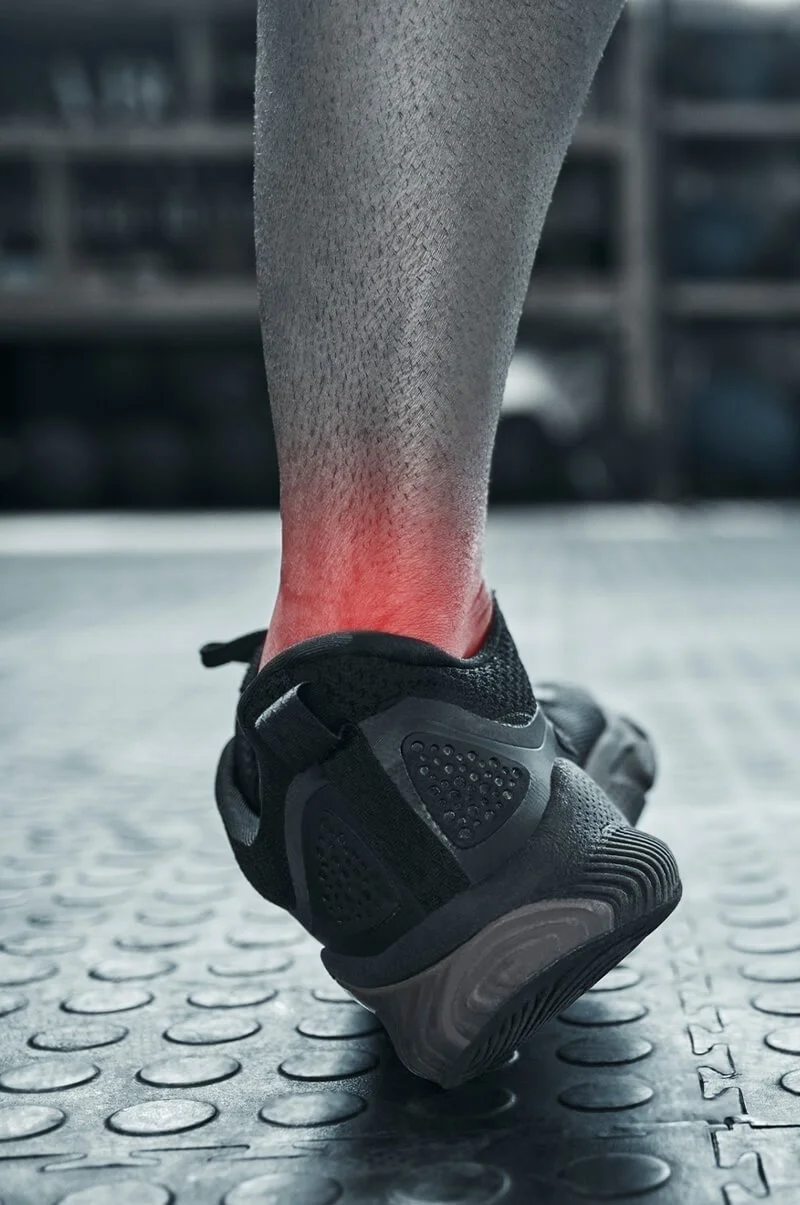
An ankle sprain that is not properly rehabilitated becomes the ankle that keeps spraining. The ligament heals. The neuromuscular control does not restore itself automatically.
— CLINICAL TAKEAWAY
Achilles tendonitis
INSERTIONAL AND MID-PORTION
Achilles tendonitis is one of the conditions most reliably worsened by the standard advice to rest and stretch. The Achilles tendon responds poorly to passive treatment and poorly to compression, which is exactly what aggressive stretching and prolonged rest produce. It responds well to one thing: progressive tendon loading.
The condition presents in two distinct forms. Mid-portion Achilles tendonitis involves the tendon body itself, typically about two to six centimeters above the heel, and is associated with repetitive running load that exceeds the tendon's current capacity. Insertional Achilles tendonitis occurs where the tendon meets the heel bone and involves a different set of mechanical drivers, including compression from footwear and from certain stretching positions.
Treatment for both forms is built around a graded loading program that progressively increases the mechanical demand on the tendon while carefully managing overall training volume. For runners, this means modifying load, not necessarily stopping running entirely. The tendon needs stimulus to adapt. The skill is in calibrating that stimulus correctly. We also assess the contributing factors upstream, calf strength and endurance, hip mechanics, and running gait, that determine how much load the Achilles is absorbing on every stride.
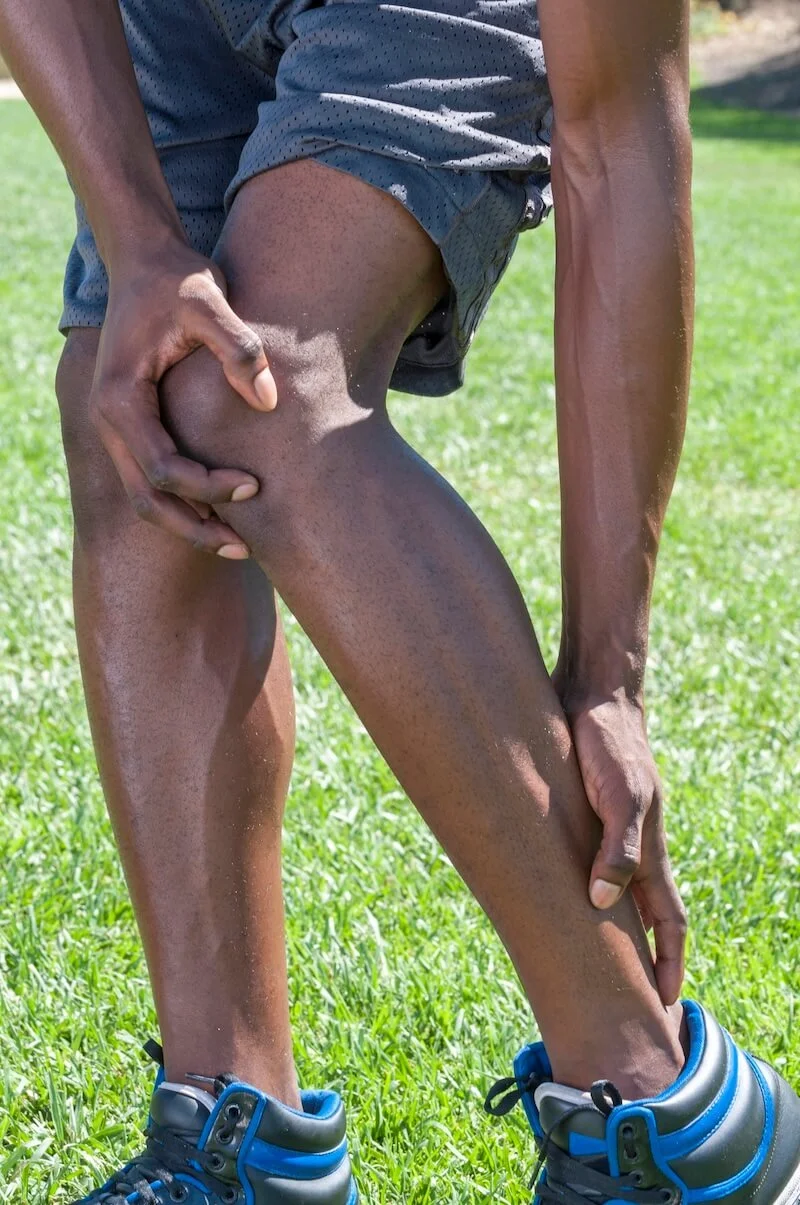
Achilles tendons heal through progressive loading, not rest. Stretching an irritated Achilles insertion makes it worse. The approach depends entirely on which part of the tendon is involved.
— CLINICAL TAKEAWAY
Plantar fasciitis
HEEL AND ARCH PAIN
Plantar fasciitis is among the most common and most frustrating running injuries, largely because the advice most people receive — rest, stretch, buy better shoes, wear orthotics — addresses the symptoms while leaving the underlying drivers completely intact. When they return to running, it comes back.
The plantar fascia is a thick band of connective tissue that runs from the heel to the base of the toes and plays a critical role in the mechanics of push-off during running. When the load placed on the fascia exceeds what it can currently handle, it becomes irritated at its attachment point on the heel, producing the classic first-step pain in the morning and pain that builds with sustained activity.
The most effective treatment for plantar fasciitis combines progressive loading of the plantar fascia and the calf complex with an assessment of what is driving the excessive load in the first place. Weak foot intrinsic muscles, limited ankle dorsiflexion, a sudden increase in mileage, and running mechanics that place disproportionate load on the forefoot are all common contributors. We assess all of them. The goal is not to manage the fascia through each training cycle. It is to build the capacity that makes recurrence unlikely.
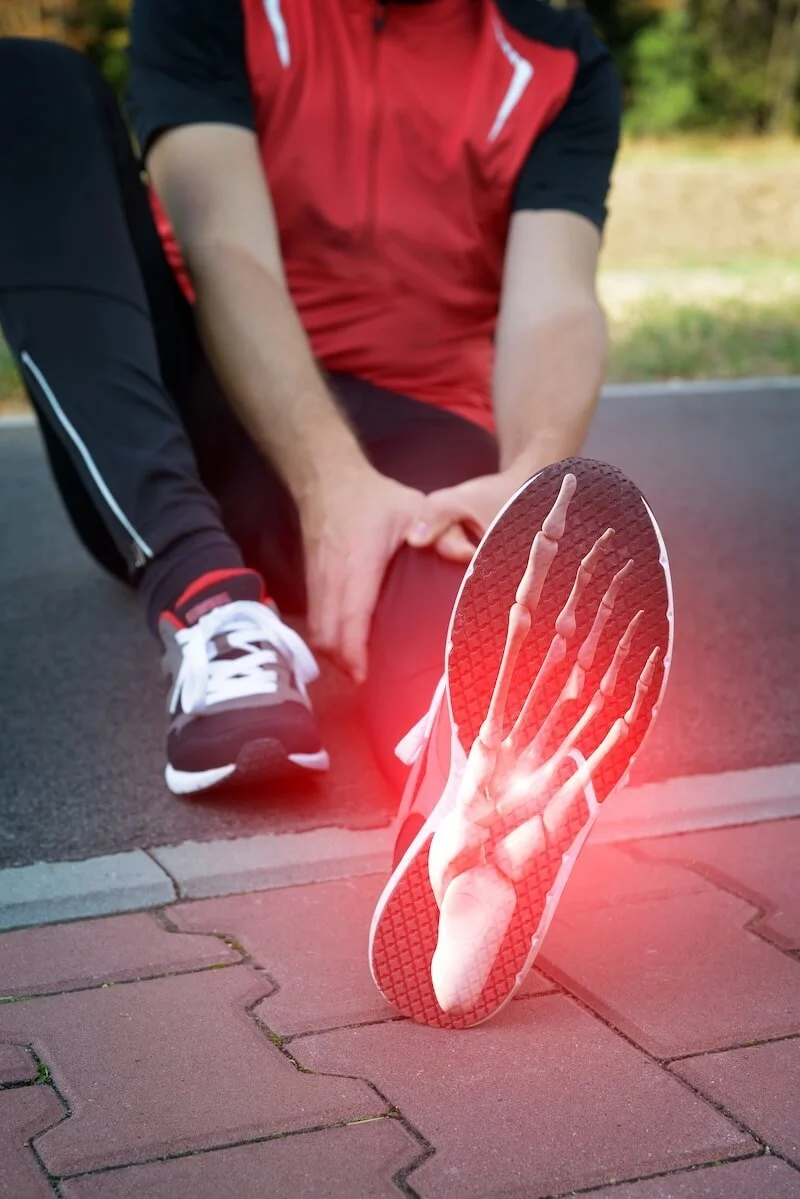
Plantar fasciitis that keeps coming back has a mechanical driver that has never been addressed. Rest removes the load temporarily. It does not build the capacity to handle the load long-term.
— CLINICAL TAKEAWAY
Chronic ankle instability
REPEATED SPRAINS AND GIVING WAY
Chronic ankle instability is what develops when an acute ankle sprain is not properly rehabilitated. The ankle that rolls on uneven ground, gives way during cutting movements, or requires constant conscious attention to feel safe is not structurally deficient. It is neurologically undertrained.
The lateral ankle ligaments contribute to stability through both their mechanical properties and the sensory information they provide to the nervous system about joint position. After a sprain, the mechanical properties of the ligament heal over weeks. The sensory function requires active retraining and does not restore itself simply through the passage of time or return to normal activity.
Treatment for chronic ankle instability is progressive and deliberate. Balance training that begins in stable conditions and advances through increasingly challenging surfaces and positions. Strength work for the peroneal muscles that guard against inversion. Sport-specific loading that replicates the cutting, landing, and change of direction demands of the activity the ankle needs to support. For athletes who have had a surgical stabilization, the rehabilitation protocol determines how much of the restored mechanical stability translates into functional performance.
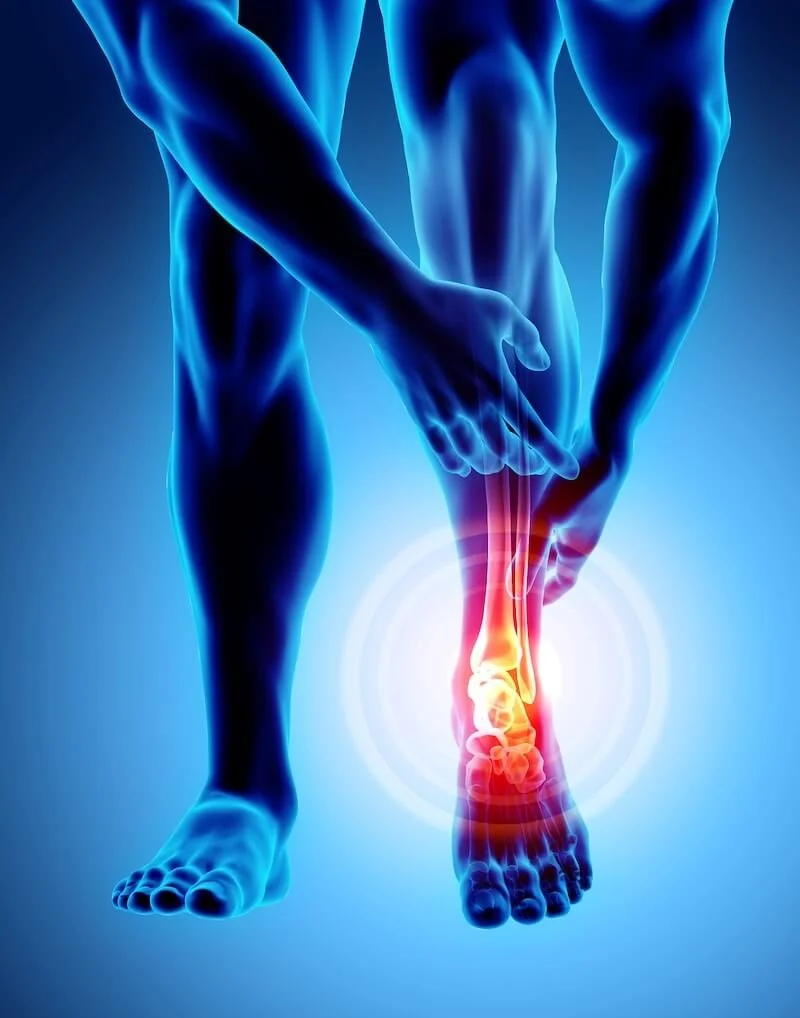
Chronic ankle instability is a neurological retraining problem, not a structural one. The ligament has healed. The proprioceptive system needs to be rebuilt.
— CLINICAL TAKEAWAY
Foot pain while running
RUNNING-RELATED FOOT MECHANICS
Foot pain during or after running is one of the most common complaints in our running patient population and one of the least straightforwardly diagnosed. The foot contains twenty-six bones, thirty-three joints, and over a hundred muscles, tendons, and ligaments. Pain in any of these structures during running can reflect a local issue, a mechanics issue, a load management issue, or some combination of all three.
The most important diagnostic distinction is between pain that is consistent and location-specific, which tends to reflect a particular structure under excessive stress, and pain that is diffuse or variable, which more often reflects a global mechanics or loading problem. Stress reactions and stress fractures require different management than plantar fasciitis or metatarsalgia, and getting that distinction wrong has significant consequences for the training timeline.
We assess foot pain in runners with running gait analysis that evaluates foot strike mechanics, loading rate, and how the foot moves through the stance phase at your actual training pace. This gives us a picture of what the foot is being asked to absorb that a static assessment in a clinic cannot provide. From there, treatment addresses both the local structure and the mechanics driving the excessive load.

Foot pain in runners is rarely just a foot problem. Gait mechanics, loading patterns, and training volume all contribute. Treating only the local structure without addressing the mechanics produces temporary results.
— CLINICAL TAKEAWAY
Mobility restrictions and stiffness
ANKLE DORSIFLEXION AND FOOT MOBILITY
Limited ankle dorsiflexion, the ability to bring the foot toward the shin, is one of the most consequential movement deficits in active adults and one of the most frequently overlooked. The ankle needs adequate dorsiflexion range for efficient running, deep squatting, single-leg landing, and virtually every athletic movement that requires the knee to travel over the foot.
When dorsiflexion is restricted, the body compensates. The heel rises early during the squat, increasing patellofemoral stress. The foot collapses inward during running to create the appearance of the range that is not available at the ankle. The knee takes on stress that the ankle should be absorbing. These compensations accumulate over years and create injury patterns at multiple sites up the chain.
Ankle and foot stiffness has addressable causes: posterior ankle capsule tightness, calf and soleus restriction, limited talar mobility, or a combination. We assess where the restriction is coming from and treat it directly with manual therapy and targeted mobility work, then build the strength and motor control to maintain what is restored under real loading conditions.

Limited ankle dorsiflexion is not a permanent feature of your anatomy. It has causes. And the injury patterns it creates up the kinetic chain resolve when the restriction is properly addressed.
— CLINICAL TAKEAWAY
Post-surgical ankle and foot rehab
LIGAMENT RECONSTRUCTION AND TENDON REPAIR
Whether you have had a lateral ankle ligament reconstruction, Achilles tendon repair, plantar fascia release, or another procedure involving the foot and ankle, the quality of rehabilitation determines more of your long-term outcome than the surgery itself. The operative work restores structural integrity. Rehabilitation rebuilds function, strength, and the neuromuscular control that makes the repaired structure reliable under real athletic demand.
Post-surgical ankle and foot rehab requires careful phase management, particularly in the early weeks when healing tissue must be protected from excessive load. We coordinate closely with surgeons and follow protocol-informed progressions while ensuring that each phase is driven by how your tissue is actually responding rather than fixed timelines.
For athletes and active adults, the return-to-sport phase of post-surgical rehabilitation is where most programs fall short. Getting back to walking and basic function is not the same as having a foot and ankle that can sustain running mileage, cutting movements, or overhead loading. We build toward the specific demands of your activity through the full recovery arc.

Post-surgical rehabilitation that stops at basic function leaves significant performance capacity on the table. Full return to sport requires building through the entire recovery arc.
— CLINICAL TAKEAWAY
STRESS REACTIONS, TENDINOPATHIES, AND BURSITIS
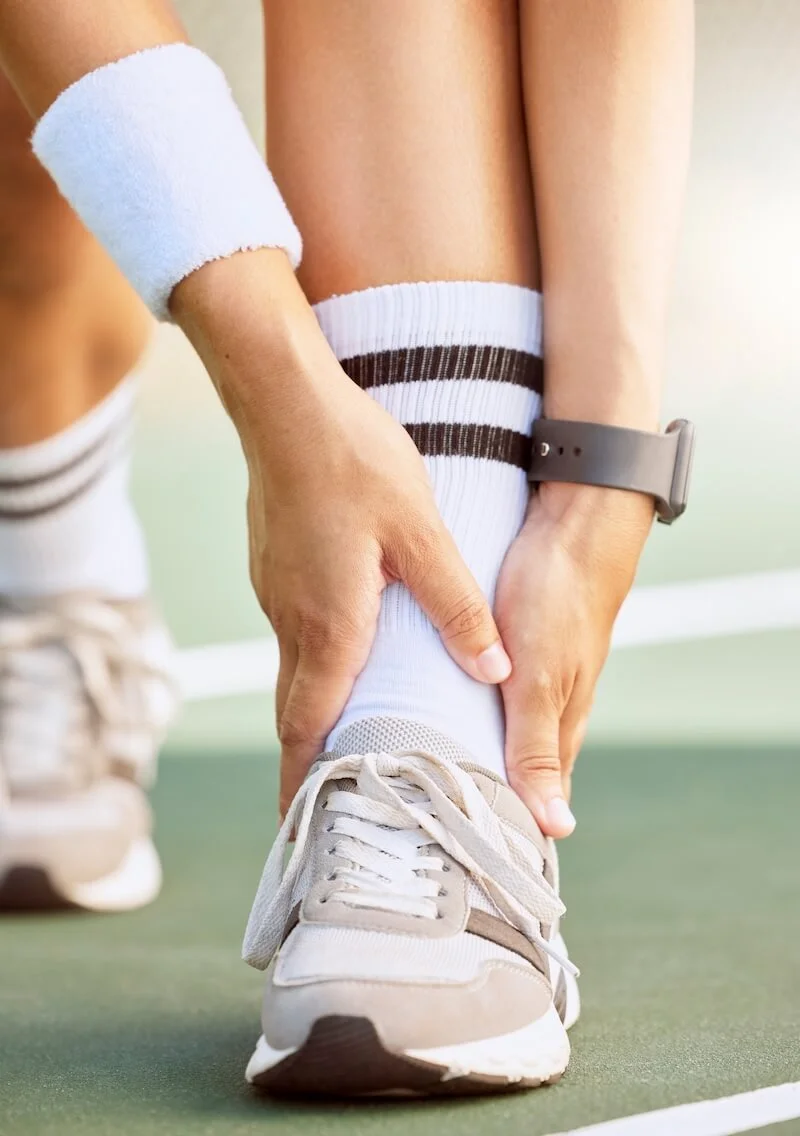
The foot and ankle are the first point of contact between the body and the ground during running, which means they absorb the cumulative impact of every stride across every training mile. When training load increases faster than the tissue can adapt, overuse injuries develop predictably: stress reactions in the metatarsals or calcaneus, peroneal tendinopathy along the outer ankle, posterior tibialis tendinopathy along the inner ankle, or retrocalcaneal bursitis at the back of the heel.
What all of these conditions share is a straightforward cause: load exceeded capacity over time. What differentiates them is the specific structure involved, the mechanical factors that directed excess load to that structure, and the treatment approach that addresses both. A stress reaction requires unloading and gradual return to impact. A tendinopathy requires progressive loading. Getting the approach wrong not only delays recovery but can make the injury significantly worse.
We identify the specific structure involved, determine what is driving the excess load through running gait analysis and a full assessment of strength and mechanics, and build a graduated return-to-running program that respects the healing timeline while maintaining as much training continuity as possible.
Overuse running injuries
Overuse running injuries are predictable responses to load that exceeded capacity. The solution is not to stop running indefinitely. It is to identify why the load exceeded capacity and address that directly.
— CLINICAL TAKEAWAY
OUR PROCESS
How we evaluate and treat ankle and foot pain
Every new patient goes through a thorough evaluation before treatment begins. We assess the local structures and the full mechanical context that determines how they are being loaded.
-
01
Local joint assessment
Range of motion, joint integrity, ligament stability testing, and soft tissue evaluation of the ankle, subtalar joint, and foot.
-
02
Ankle dorsiflexion screening
Weight-bearing dorsiflexion assessment that identifies mobility restrictions driving compensation patterns in squatting, running, and landing.
-
03
Strength and stability testing
Peroneal strength, calf endurance, single-leg balance, and reactive stability testing to identify the deficits most associated with re-injury risk.
-
04
Running gait analysis
Foot strike mechanics, loading patterns, and dynamic ankle function assessed at your actual training pace and under fatigue.
-
05
Return-to-sport progression
Criteria-based clearance using objective balance, strength, and functional testing before returning to full training or competition.
Treatment is progressive and specific. Tendon loading protocols for Achilles and plantar fascia conditions. Proprioceptive retraining for instability and post-sprain rehabilitation. Manual therapy to restore joint mobility. Strength programming built around the demands of your sport. Every phase has a measurable target and a defined progression.
WHO WE WORK WITH
Is this you?
Our ankle and foot patients range from competitive runners managing overuse injuries mid-training-block to active adults dealing with instability that has limited their confidence for years.
You run.
Whether you are training for a marathon, managing a recurring Achilles flare, or dealing with plantar fasciitis that flares every time you increase mileage, we assess your mechanics under real fatigue and fix what is creating the problem. Most running foot and ankle injuries do not require stopping. They require understanding.
You play a field or court sport.
Cutting, planting, jumping, and landing place demands on the ankle that straight-line running does not. Ankle sprains, chronic instability, and stress injuries are common in soccer, basketball, tennis, and volleyball athletes. We build the ankle's ability to handle those specific demands before returning you to competition.
You lift and the ankle is a limiting factor.
Limited ankle dorsiflexion compromises your squat depth, your clean catch position, and your single-leg stability. We treat the restriction directly and rebuild the mechanics of your lifts around the range you have restored.
You have been dealing with something that will not heal.
A sprained ankle from months ago that still feels unreliable. Plantar fasciitis that settles with rest and returns with training. An Achilles that flares every time you try to build mileage. Chronic foot and ankle conditions have clear, addressable causes when properly evaluated. Sam's ankle refused to heal for months before a thorough evaluation identified what was holding back recovery.
You had surgery and want to return to full activity.
Ligament reconstruction, Achilles repair, or any foot and ankle procedure. Getting back to walking is not the same as getting back to running, cutting, or lifting. We build through the full recovery arc.
You are an endurance athlete managing cumulative load.
Triathletes, ultra runners, and cyclists accumulate load differently than team sport athletes. Foot and ankle overuse injuries in endurance athletes are almost always load management and mechanics problems. We address both.
FREQUENTLY ASKED QUESTIONS
-
Almost always a combination of load management and mechanics. The most common culprits are plantar fasciitis, metatarsal stress reactions, and Achilles tendon irritation, all of which have identifiable mechanical drivers. A running gait analysis that evaluates your foot strike and loading patterns at your actual training pace tells us far more than a static assessment. Most running foot injuries do not require stopping training entirely when addressed correctly.
-
A minor ankle sprain with proper rehabilitation typically resolves in three to six weeks. More significant sprains involving multiple ligaments or associated injuries take longer. What matters more than the timeline is completing the full rehabilitation process, including the proprioceptive retraining phase that most people skip. An ankle sprain that is rested until pain-free but not properly rehabilitated is the ankle that becomes chronically unstable.
-
Yes, and it is the most effective treatment available. The key is addressing the underlying mechanical drivers, not just the local tissue. Weak foot intrinsic muscles, limited ankle dorsiflexion, and running mechanics that place disproportionate load on the heel are the most common contributors. PT that addresses these factors, combined with a progressive loading program for the fascia and calf complex, produces significantly better long-term outcomes than orthotics or passive rest.
-
Repeated ankle sprains almost always indicate that the proprioceptive function of the lateral ankle ligaments was never properly restored after the first significant sprain. The ligament heals, but the sensory system that gives the brain real-time information about ankle position does not restore itself automatically. Active retraining of balance and neuromuscular control is what breaks the cycle.
-
Yes, consistently. How your foot contacts the ground, how quickly load is applied through the stance phase, and how the ankle, knee, and hip work together during running all determine where stress concentrates in the foot and ankle. Gait mechanics that create excessive load at the heel cause plantar fasciitis. Mechanics that overload the Achilles cause tendinopathy. A running gait analysis identifies these patterns and guides treatment that addresses the root cause.
-
Achilles pain after running typically indicates that the tendon is being asked to absorb more load than its current capacity allows. This is most commonly driven by a sudden increase in mileage or intensity, insufficient calf strength and endurance, limited ankle mobility that places greater demand on the tendon, or running mechanics that increase the load on the Achilles per stride. Treatment focuses on progressive tendon loading and addressing the contributing factors, not rest and stretching.
-
Yes, though management depends on which bone is involved and the severity of the stress reaction. Some stress fractures require a period of protected weight-bearing before rehabilitation begins. Others can be managed with activity modification from the start. Physical therapy's role is to manage the return to loading safely and to identify the training and biomechanical factors that contributed to the stress fracture so they can be addressed before returning to full activity.
-
As soon as the pain is limiting your training, changing how you move, or has been present for more than two weeks without clear improvement. Early intervention for ankle sprains significantly reduces the risk of chronic instability. Early intervention for tendinopathies and stress reactions prevents minor problems from becoming significant ones. Waiting until something is severe consistently produces longer recovery timelines.
Common questions
Moment Physical Therapy and Performance | Midtown Manhattan | SoHo | Long Island City, Queens