Physical Therapy for Hip Pain in NYC
Movement-focused rehabilitation for runners, athletes, lifters, and active adults dealing with hip pain, impingement, mobility restrictions, and performance-related injuries. We find the driver, build what is missing, and get you back to full training.
The hip is the engine of lower body performance. When it is not working, everything else pays for it.
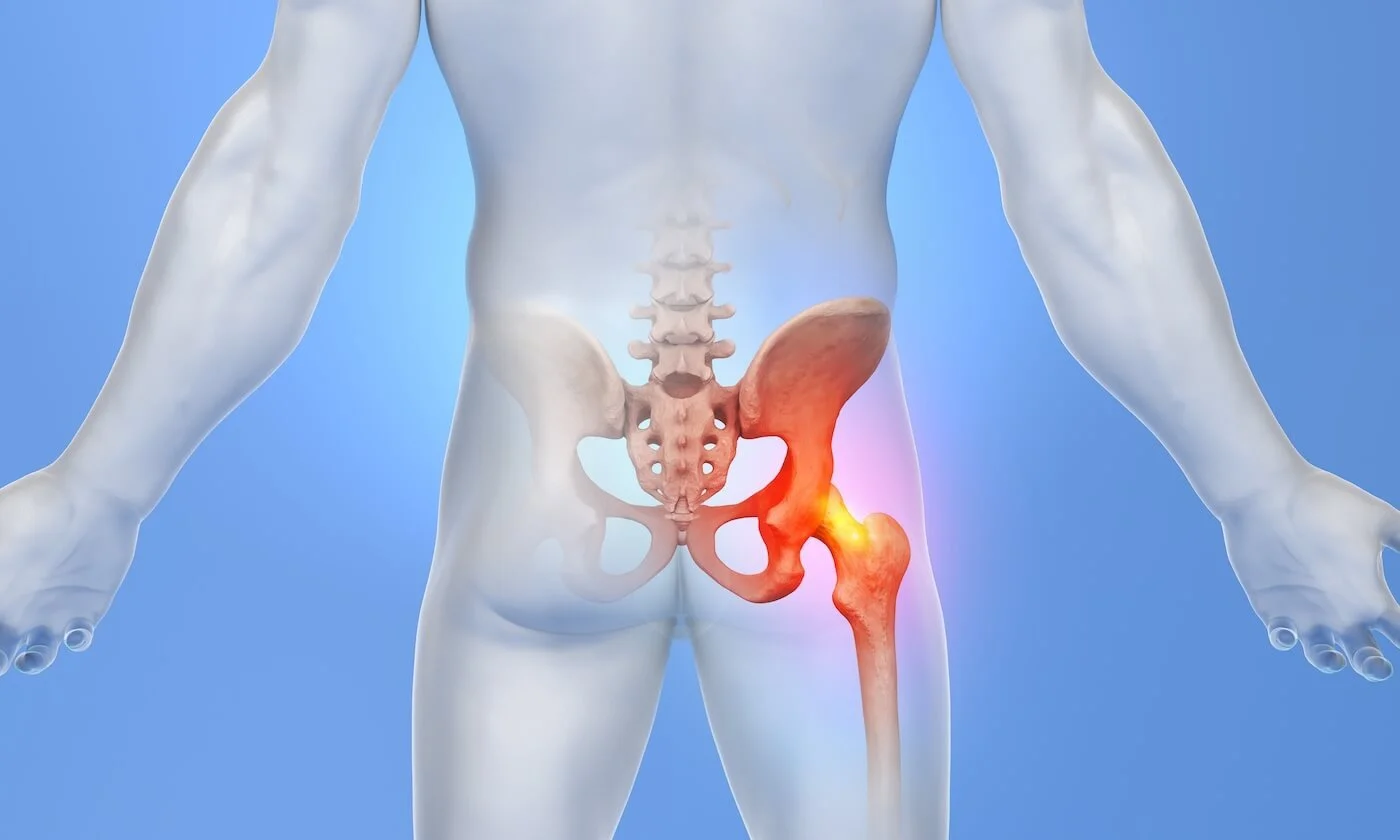
The hip is the most powerful joint in the lower body and the most consequential for athletic performance. It generates force for running, absorbs load during landing, stabilizes the pelvis during every single-leg activity, and drives virtually every movement that requires the lower extremity to produce power. When it is restricted, weak, or painful, the body does not stop moving. It compensates. And those compensations show up somewhere else.
The hip sits at the center of lower body function, and when something is off here, the effects show up everywhere. The knee absorbs what the hip fails to control. The lower back compensates when the hip cannot extend. The foot collapses to generate the rotation the hip is not providing. These are not separate problems — they are the same problem expressed in different places. Hip dysfunction is among the most underdiagnosed drivers of injury in active adults precisely because the pain it creates rarely stays where it starts.
Hip pain in active people does not follow a simple pattern. It can present as a deep anterior groin ache during squatting, a lateral hip pain that builds through a running season, a clicking or catching sensation that appears at the end range of hip flexion, or a diffuse stiffness that limits squat depth and running stride length without ever becoming acutely painful. Each presentation has a different driver and requires a different approach.
The most important thing we can tell you about hip pain is that imaging findings do not determine outcomes. An FAI finding on an MRI, a labral tear, even early arthritic changes — none of these are automatic verdicts. What matters is how the hip is moving, what it lacks, and whether that can be addressed with the right treatment.
At Moment, hip treatment begins with a thorough evaluation of the joint itself and the full mechanical context around it: thoracic mobility, lumbar position, pelvic control during single-leg loading, and how the hip behaves under the specific demands of your training. Treatment is built from that picture, not from a diagnosis on a scan.
0
Cookie-cutter protocols. Every plan is built from your evaluation, not a template.
3
NYC locations. Midtown, SoHo, Long Island City.
100%
One-on-one sessions. No aides, no hand-offs, no exceptions.

When previous PT failed, a different approach made the difference.
PATIENT STORY
"I had gone through multiple rounds of traditional physical therapy in the past, but no one had been able to address the underlying issue I was dealing with. During our one-on-one sessions, my PT taught me how to strengthen my hip muscles and provided personalized workout plans tailored to my needs. When I first started, I was hesitant to work out my legs for fear of causing further pain. But my PT gave me the confidence to resume strength training safely. Several months have passed since I completed my sessions, and I still feel confident in my ability to continue strengthening my legs and hips."
Laura Saini
Result: Resolved labral tear and impingement after multiple failed courses of traditional PT. Returned to full strength training with lasting confidence months after completing treatment.
Result: Returned to full martial arts training after a personalized recovery program that addressed details no previous provider had identified.
Hip conditions we treat
Hip impingement
(femoroacetabular impingement)
FAI — CAM, PINCER, AND MIXED
Femoroacetabular impingement is one of the most over-diagnosed and over-referred-to-surgery conditions in active adults. An FAI finding on imaging is common in athletes who have never had hip pain, which tells you something important: the imaging finding does not determine the outcome. What determines the outcome is how the hip is moving, how the surrounding musculature is supporting it, and whether the mechanics driving the impingement can be addressed without surgical intervention.
FAI occurs when there is abnormal contact between the ball and socket of the hip joint during movement. Cam-type impingement involves a bony prominence on the femoral head. Pincer-type involves excess coverage of the acetabulum. Mixed presentations involve both. In active people, symptoms typically appear as a deep groin or anterior hip ache that worsens with deep flexion, prolonged sitting, or high-load activities like squatting and running.
Conservative management is effective for the majority of FAI presentations. We assess hip mobility, the specific range where impingement is occurring, and the movement patterns that are loading the hip into that range. Treatment focuses on improving mobility in the directions that matter, building the strength and motor control to support the hip through its functional range, and modifying the mechanics that are driving the impingement. Many patients who have been told surgery is inevitable achieve full return to sport without it.
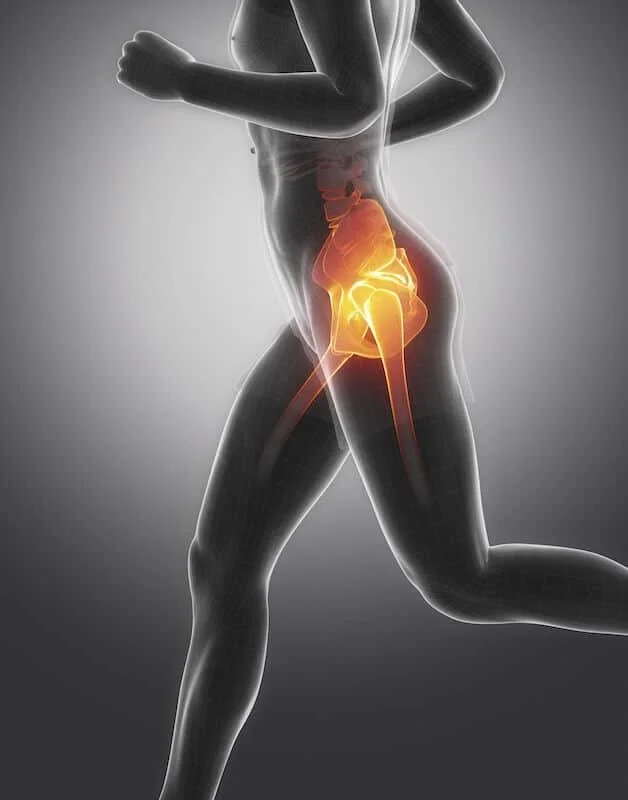
An FAI finding on imaging is not a surgical verdict. Most presentations respond well to properly directed physical therapy. What matters is how the hip is moving, not what the scan shows.
— CLINICAL TAKEAWAY
Hip pain while running
RUNNING-RELATED HIP DYSFUNCTION
Hip pain during or after running is among the most common complaints in our running patient population and one of the conditions most likely to be misattributed. Pain at the front of the hip during running is often labeled as hip flexor strain when it is frequently FAI or labral irritation. Pain at the outside of the hip is often called IT band syndrome when it is more often glute tendinopathy or lateral hip bursitis. The distinction matters because the treatment is different.
Hip pain in runners is almost always a mechanics and load management problem. The hip needs to extend fully behind the body during the propulsive phase of running. When hip extension is restricted, the lumbar spine compensates, creating back pain and altering the mechanics of the knee and foot. When the glutes are not generating adequate force during stance phase, the hip drops on the opposite side, creating a lateral shift that loads the IT band, the knee, and the lateral hip structures on every stride.
We assess running mechanics under real training conditions, looking specifically at hip extension range, glute activation timing, pelvic stability during single-leg stance, and how the hip and trunk work together across a full stride. From that assessment we build targeted strength and mobility work alongside a graduated return-to-running plan that addresses the mechanical driver rather than just managing the symptom.

Hip pain while running is almost never just a hip problem. It is a mechanics problem that the hip is expressing. Fixing the mechanics is what makes the pain stop returning.
— CLINICAL TAKEAWAY
Glute tendinopathy
LATERAL HIP PAIN AND TENDON IRRITATION
Glute tendinopathy is one of the most mismanaged conditions in active adults, largely because the instinct to stretch and rest the painful area does exactly the wrong thing. The gluteal tendons, which attach at the greater trochanter on the outer hip, become irritated when they are repeatedly compressed against the underlying bone. Stretching the hip into adduction, crossing the legs, and sleeping with the hip in a flexed and internally rotated position all increase that compression. This is why people who stretch their hip flexors and piriformis for lateral hip pain often feel temporarily better and then worse.
Glute tendinopathy is extremely common in runners, particularly those who run with a narrow step width or significant hip drop, and in perimenopausal women in whom hormonal changes affect tendon properties. It presents as a deep, aching pain at the outer hip or upper thigh that is worse with prolonged sitting, single-leg loading, and activities that require sustained hip stability.
Treatment is built around tendon loading and compression management. We educate patients on the positions to avoid while the tendon is irritated, then progressively load the gluteal tendons through a graduated strengthening program that begins with non-compressive exercises and advances to the sport-specific demands of running, lifting, or whatever activity is the goal. The tendons need load to adapt and strengthen. The skill is in applying that load without the compression that perpetuates the irritation.
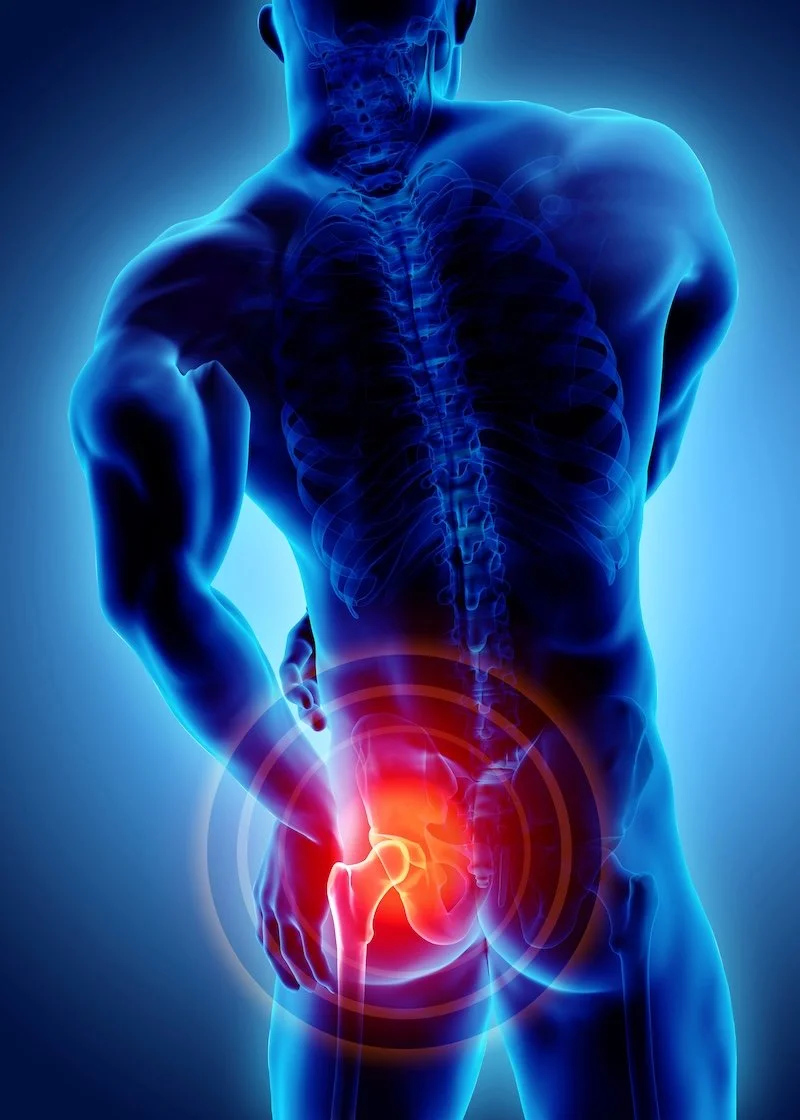
Stretching the lateral hip makes glute tendinopathy worse, not better. This is one of the most important clinical distinctions in hip pain management.
— CLINICAL TAKEAWAY
DEEP GLUTEAL PAIN AND SCIATIC SYMPTOMS
Piriformis syndrome involves irritation or compression of the sciatic nerve by the piriformis muscle in the deep gluteal space. It produces pain, tingling, or numbness that radiates from the buttock into the posterior thigh and leg, closely mimicking lumbar radiculopathy. The distinction matters clinically because the source of the nerve irritation determines the treatment.
Piriformis syndrome is particularly common in runners and cyclists who spend extended time in hip flexion and in anyone with altered hip mechanics that places excess demand on the deep external rotators. The piriformis is not inherently problematic, but when the surrounding hip musculature is not doing its share of the work, it becomes overloaded and can compress the nerve that runs adjacent to or through it.
Treatment focuses on releasing the tension in the deep gluteal space through targeted manual therapy and mobility work, then building the hip strength that reduces the load on the piriformis during activity. For runners, this includes gait analysis to identify the mechanical patterns placing excess demand on the deep hip rotators. Most piriformis syndrome cases resolve completely with properly directed conservative treatment when the contributing mechanics are addressed.
Piriformis syndrome
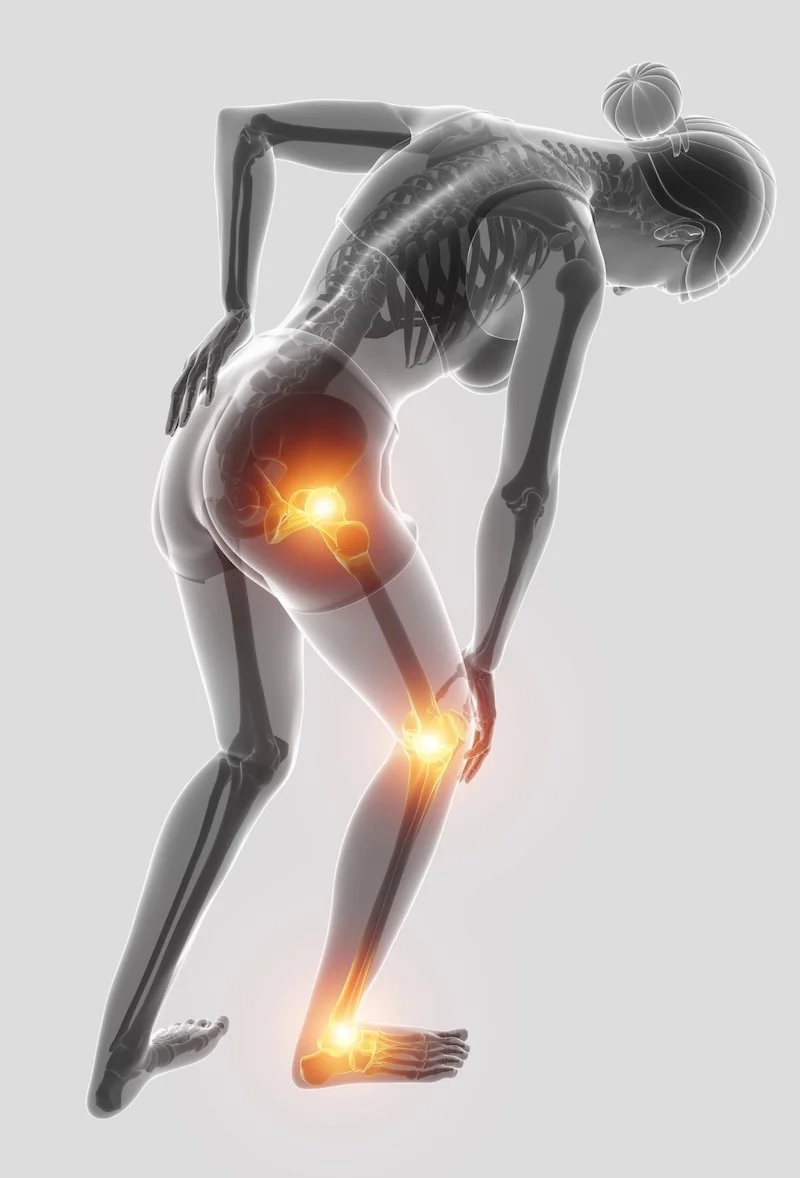
Piriformis syndrome is almost always a symptom of hip mechanics that are placing excess load on the deep gluteal muscles. Treating only the piriformis without addressing those mechanics produces temporary relief.
— CLINICAL TAKEAWAY
Hip labral irritation and tears
ACETABULAR LABRUM — CONSERVATIVE AND POST-SURGICAL
The acetabular labrum is a ring of fibrocartilage that deepens the hip socket, improves joint stability, and distributes force across the articular surfaces. Labral tears are common in athletes, particularly those who perform repetitive hip flexion under load, and they range from minor fraying that responds well to conservative management to complex tears that may require surgical repair.
The most important clinical reality about hip labral pathology is that imaging findings do not reliably predict symptoms or outcomes. Labral tears are present in a significant proportion of asymptomatic adults, which means the finding on an MRI is not automatically the source of the pain. Proper evaluation identifies whether the labral finding is actually contributing to the presentation or whether another structure is the primary driver.
Conservative management for labral irritation focuses on reducing the mechanical load on the labrum by improving hip mobility, building the muscular stability that protects the joint, and modifying the movement patterns that are creating the excess stress. For patients who have had labral repair surgery, we manage the full rehabilitation arc from early protected loading through return to sport, with objective testing driving clearance decisions at each phase.
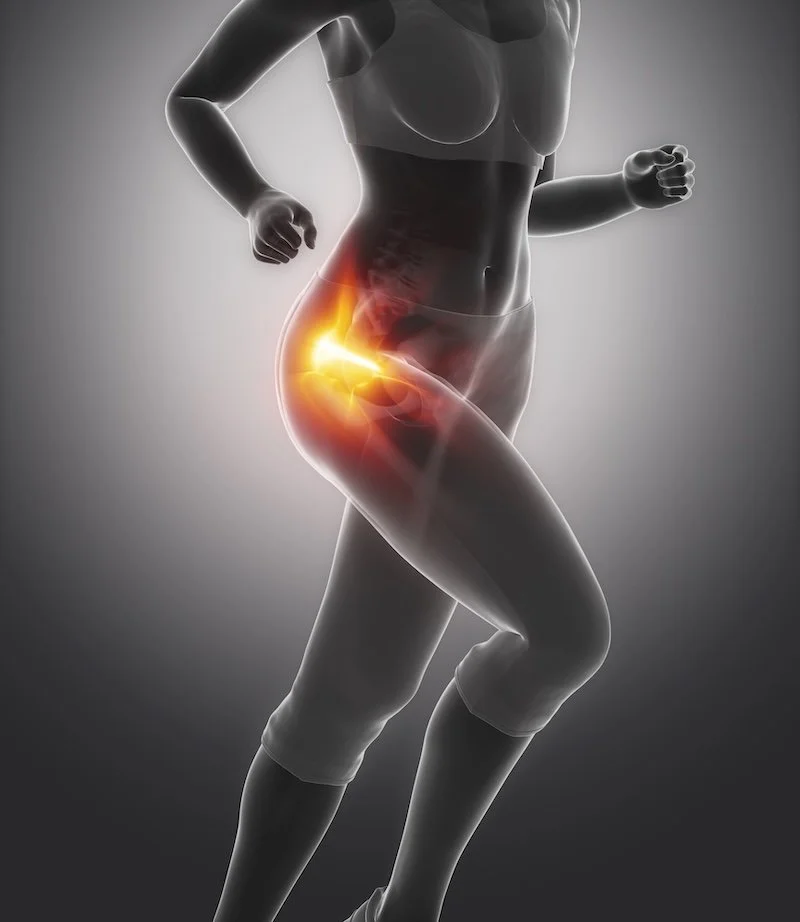
Not every labral tear on an MRI needs surgery. And not every hip pain with a labral finding is caused by the labrum. Proper evaluation tells you which is which.
— CLINICAL TAKEAWAY
Hip mobility restrictions
FLEXION, ROTATION, AND EXTENSION DEFICITS
Hip mobility restrictions are among the most consequential movement deficits in active adults and among the most commonly accepted as simply how someone is built. They are not. Restricted hip flexion, internal rotation, and extension have addressable causes, and the injury patterns they create — in the knee, the lower back, and the hip itself — resolve when those restrictions are properly treated.
Prolonged sitting is the most common driver of hip mobility loss in adults who also train. Hours of hip flexion daily shortens the hip flexors, compresses the anterior hip capsule, and inhibits the glutes. When that person then runs or squats, the hip is working from a restricted starting point and the body compensates at every adjacent segment. The lower back extends excessively to create the illusion of hip extension range. The knee drops inward because internal hip rotation is limited. The foot collapses to generate the rotation the hip cannot provide.
We assess hip mobility in all relevant planes, identify which structures are limiting movement, and treat them directly with manual therapy, targeted mobility work, and motor control training that teaches the hip to access and control the range we restore. Mobility without strength to control it does not hold under load, which is why isolated stretching rarely produces lasting change.
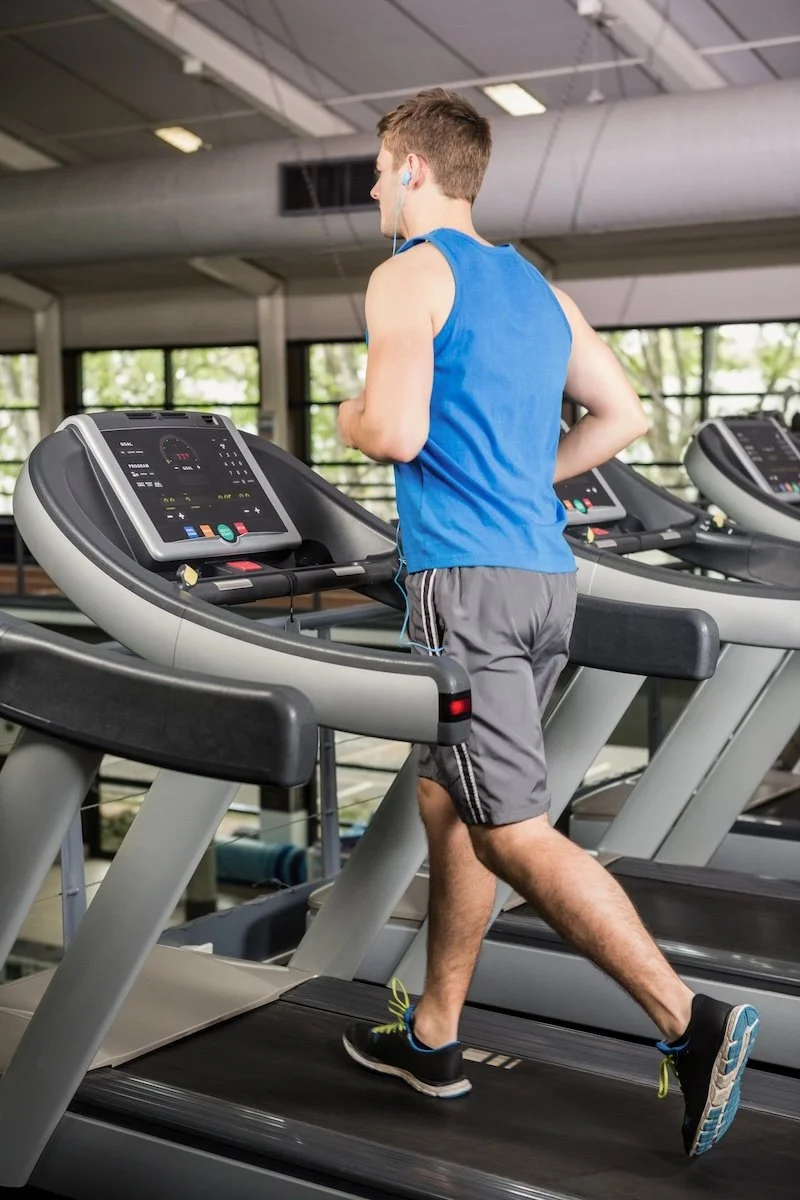
Hip mobility restrictions have causes. And the cascade of compensations they create through the knee, back, and foot resolves when the restrictions are properly addressed.
— CLINICAL TAKEAWAY
Hip pain from strength training
SQUAT, DEADLIFT, AND HINGE-RELATED PAIN
Hip pain during squatting, deadlifting, or other lower body strength work is extremely common in active adults and almost universally mismanaged with rest and avoidance. The hip is designed to be loaded. When it hurts under load, the question is not whether to load it but what is changing the way load is distributed through the joint.
The most common drivers of training-related hip pain are anterior hip impingement at the bottom of a squat, often related to hip flexion mobility restrictions or technique, posterior hip pain during the hip hinge that frequently reflects gluteal tendon compression or piriformis irritation, and groin pain that may involve the adductors, the psoas, or the anterior labrum. Each of these has a distinct mechanical cause and a distinct treatment approach.
Our therapists train with barbells and understand the specific demands of strength programming. We assess your actual squat, hinge, and loading patterns, not generic movement screens, and identify the technical or capacity problem producing the pain. The goal is always to return to the full program, not to build a modified version of training around an ongoing limitation.
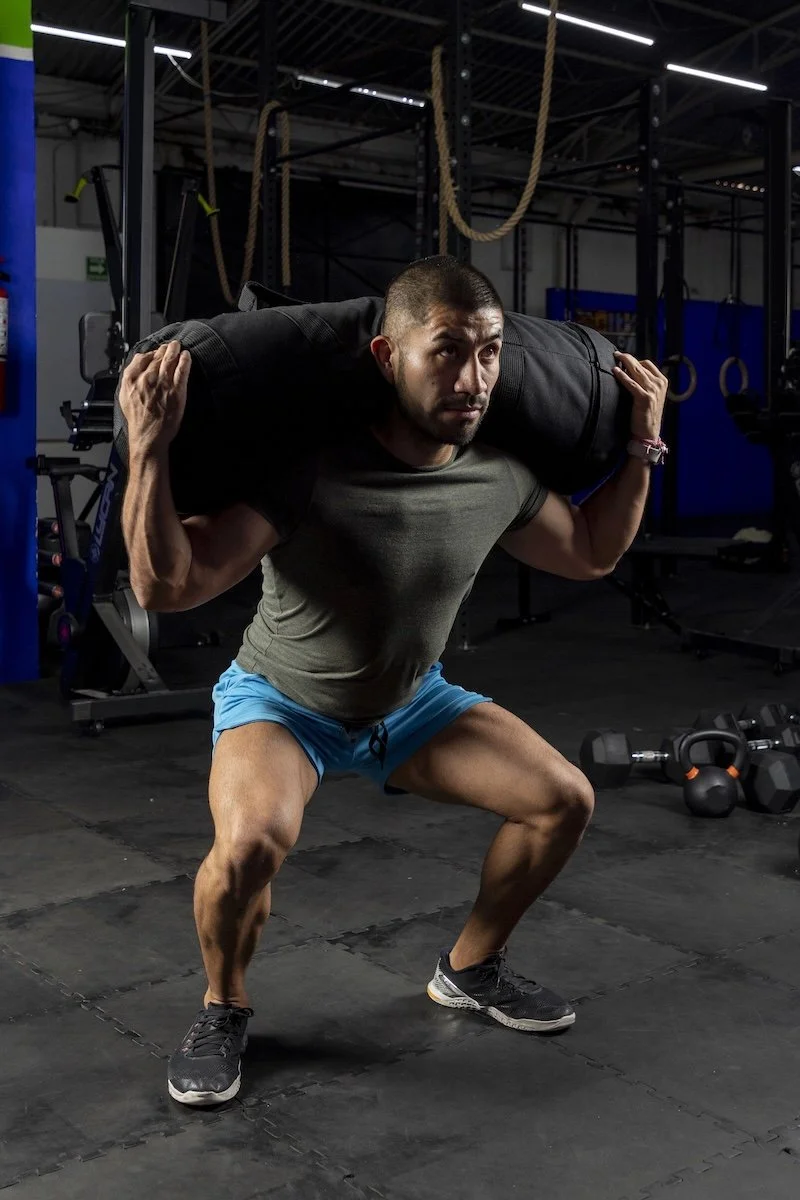
Hip pain in the gym is a loading pattern problem. The answer is to understand what the movement is asking of the hip and build the capacity to provide it.
— CLINICAL TAKEAWAY
Post-surgical hip rehab
HIP ARTHROSCOPY, LABRAL REPAIR, AND REPLACEMENT
Hip surgery, whether an arthroscopic procedure to repair a labral tear or address FAI, or a total hip replacement, is the beginning of the recovery process, not the conclusion. What happens in rehabilitation determines how much of the restored structure translates into actual function, strength, and return to athletic activity.
Post-surgical hip rehab requires careful phase management. Early sessions protect the healing tissue while preventing the significant strength and mobility losses that occur with immobility. Middle phases systematically rebuild hip strength, single-leg stability, and movement quality. The final phase loads the hip progressively under sport-specific demands and uses objective testing to drive return-to-sport or return-to-training clearance.
We coordinate closely with surgeons and follow protocol-informed progressions, but every advancement is driven by how the hip is actually responding, not by a fixed timeline. The same therapist manages the full arc of recovery. For patients pursuing a total hip replacement, we also offer pre-surgical conditioning that improves the strength and movement quality going into the procedure, which consistently produces better post-surgical outcomes.
The outcome of hip surgery is substantially determined by what happens in rehabilitation. A high standard of post-surgical care is not optional for anyone who wants to return to full activity.
— CLINICAL TAKEAWAY
The hip is the most important variable in running performance. We treat it like one.
For runners, hip mechanics are the single greatest determinant of both efficiency and injury risk. The hip needs to extend fully behind the body during the propulsive phase of running to generate forward momentum and protect the lumbar spine. It needs adequate internal rotation to allow a natural stride path without compensation at the knee or foot. And the gluteal muscles need to fire with sufficient force and timing to stabilize the pelvis during single-leg stance on every stride.
When any of these are missing, the system compensates. Running gait analysis at your actual training pace, not at a comfortable treadmill speed, is the tool that makes these compensations visible. We look at hip extension range under real fatigue conditions, because the deficits that drive injury rarely appear in the first mile. They appear when the hip flexors are tight and the glutes are fatigued, which is precisely when the body starts taking the shortcuts that accumulate into overuse injury.
For strength athletes, the hip drives every compound lower body movement. Squat depth, deadlift mechanics, single-leg stability, and the ability to hinge efficiently without loading the lumbar spine are all hip-dependent. We assess your actual training movements and identify the hip capacity and mechanics issues that are limiting performance or creating pain. The goal is always to restore the full movement, not to build a modified version of training around an ongoing limitation.
Objective strength testing, including dynamometer assessment of hip abductor and external rotator strength, gives us precise data on the deficits most associated with running injury and performance limitation. Combined with gait analysis, this gives us a complete picture of what the hip is and is not doing under the demands of your specific activity.
OUR PROCESS
How we evaluate and treat hip pain
Every new patient goes through a thorough evaluation before treatment begins. We assess the hip joint and the full mechanical context that determines how it functions.
-
01
Hip joint assessment
Range of motion in all planes, joint integrity testing, labral provocation, and soft tissue evaluation of the hip flexors, rotators, and gluteal complex.
-
02
Pelvic and lumbar screen
How the pelvis and lumbar spine relate to hip mobility and stability. Hip restrictions almost always produce compensatory patterns at adjacent segments.
-
03
Strength and load testing
Dynamometer testing of hip abductor, external rotator, and extension strength compared to the uninjured side and to benchmarks for your activity level and sport.
-
04
Running gait analysis
Hip extension range, pelvic drop, glute activation timing, and stride mechanics assessed at real training paces and under fatigue.
-
05
Movement and lifting analysis
Squat, hinge, single-leg, and sport-specific movements assessed in the context of your actual training to identify the mechanical and capacity drivers of pain.
Treatment is progressive, specific, and built around a defined return-to-performance destination. Every phase has a measurable target. Sessions are one-on-one with your physical therapist for the full hour, every time.
WHO WE WORK WITH
Is this you?
Our hip patients range from competitive runners with chronic impingement to active adults who have been told surgery is the only option. What they share is a desire to understand what is actually driving the problem and address it properly.
You run.
Hip mechanics are the single greatest determinant of running efficiency and running injury risk. Hip drop, limited extension, glute weakness — all of it shows up in the knee, back, or ankle before it gets attributed to the hip. We assess your mechanics under real fatigue and fix what is actually driving the problem.
You lift.
Squats, deadlifts, hip thrusts, single-leg work. Hip pain in the gym is almost always a mechanics and mobility problem. We assess your actual movements and identify whether the issue is anterior impingement, tendon compression, or a mobility restriction creating excess demand at the joint.
You train across multiple disciplines.
CrossFit, triathlon, hybrid programming. The hip is involved in virtually every athletic demand, which means hip dysfunction compounds quickly across multi-modal training. We address the full picture of what your training is asking of the hip.
You sit most of the day and then try to train.
Prolonged sitting is the most reliable way to lose hip mobility and inhibit the glutes. When you then ask those structures to perform under load, they are starting from a compromised position. We treat both the deficit and the performance limitations it creates.
You have been told you need hip surgery.
FAI, labral tears, and early hip arthritis are among the most over-referred conditions in orthopedics. Many patients told they need surgical intervention have not completed a rigorous course of physical therapy. A proper evaluation often reveals a more conservative path.
You had hip surgery and want full recovery.
Hip arthroscopy, labral repair, total hip replacement. The surgery addresses the structural problem. Rehabilitation rebuilds the function, strength, and confidence to return to your activity fully. We manage the complete arc from early protection through return to sport.
You are an endurance athlete managing chronic tightness.
Cyclists, swimmers, and long-distance runners develop predictable hip mobility and strength patterns from repetitive loading in a limited range. We address those patterns specifically, not generically, in the context of your sport and your training demands.
FREQUENTLY ASKED QUESTIONS
Common Questions
-
Hip pain during running typically reflects one of three patterns: anterior hip impingement during the loading phase, lateral hip pain from glute tendinopathy or IT band stress, or deep gluteal pain from piriformis irritation or labral involvement. Each has identifiable mechanical drivers. Running gait analysis that evaluates your mechanics at your actual training pace and under fatigue is the most reliable way to identify what is driving the pain and how to address it without stopping training entirely.
-
Yes, and in most cases it should be the first intervention rather than surgery. FAI is present on imaging in a significant proportion of people who have no pain, which tells you that the finding does not determine the outcome. What determines the outcome is how the hip is moving and whether the mechanics driving the impingement can be addressed. Conservative management with PT produces outcomes equivalent to surgery for most common FAI presentations, and without the surgical risk or recovery timeline.
-
In most active adults, hip tightness is a product of prolonged sitting combined with training that does not systematically address hip mobility. Hours of hip flexion daily shortens the anterior hip structures and inhibits the glutes. Specific joint capsule restrictions, particularly of the anterior and posterior capsule, are also common and do not respond to stretching alone. Manual therapy to the capsule combined with progressive strength work is what produces lasting change.
-
Yes, consistently and in multiple ways. Weak glutes reduce the stability of the hip during single-leg loading, forcing other structures to compensate. They reduce the force available for hip extension during running, which increases demand on the lumbar spine and alters mechanics throughout the lower extremity. And in the specific case of glute tendinopathy, glute weakness combined with compressive loading of the tendon is the primary driver of the condition. Glute strength is not just a performance variable. It is a load management variable.
-
It depends significantly on the condition, how long it has been present, and whether surgery is involved. Acute hip flexor strains and mild impingement presentations often respond well within four to eight weeks. Glute tendinopathy typically requires eight to twelve weeks of consistent progressive loading. Post-surgical hip rehab for labral repair or total hip replacement takes three to six months for a full return to sport or demanding physical activity. We give you a realistic timeline based on your specific presentation at the initial evaluation.
-
Substantially. Limited hip extension forces the lumbar spine to compensate during running and creates anterior pelvic tilt that alters loading throughout the lower extremity. Limited hip internal rotation forces the foot to collapse inward to generate the rotation the hip cannot provide. Limited hip flexion restricts squat depth and alters the mechanics of every hinge pattern. Hip mobility is not a local variable. It determines how load is distributed across the entire lower body on every repetition and every stride.
-
In most cases, no. Hip pain during training is almost always a signal about mechanics and capacity rather than structural damage. A clicking or catching sensation in the hip during squatting is common in people with FAI and is not inherently dangerous when properly managed. Sharp pain or pain accompanied by significant swelling warrants evaluation before continuing to load. For everything else, the goal is to identify what the movement is asking of the hip and build the capacity to provide it.
-
As soon as the pain is limiting your training, changing how you move, or has been present for more than two weeks without improvement. Hip pain that goes unaddressed tends to create compensatory patterns in the knee and back that become their own problems over time. Early intervention almost always means a faster and more straightforward recovery.
Moment Physical Therapy and Performance | Midtown Manhattan | SoHo | Long Island City, Queens