
Running Physical Therapy in NYC
for Runners and Endurance Athletes
Where Serious Runners Stay Healthy, Strong, and in the Game
New York makes runners. The pace, the concrete, the tight schedule, the “I will fit this run in somewhere” mindset. It also makes a lot of stubborn injuries.
At Moment PTP, we help runners and endurance athletes build a body that can handle the training they want to do, not just the training they can survive. Whether you are chasing a PR, coming back from a flare up, or tired of guessing what is “normal soreness” versus a real problem, this is running physical therapy in NYC built for people who take performance seriously.
If you want to run with fewer setbacks and more confidence in your plan, you are in the right place.
Built for NYC Runners Who Care About Results
You do not need motivation. You need clarity.
Most runners do not struggle because they lack grit. They struggle because their body has a limiting factor they keep running around, until it becomes the main story. A nagging Achilles. A knee that talks back on descents. A hip that feels fine until mile 4. An old ankle sprain that still changes how you load.
Moment is for runners who want to understand why something keeps happening, fix it at the root, and build enough capacity to keep training without constantly negotiating with pain.

Why Generic Rehab Breaks Down for Runners
Runners are not fragile. They are specific.
Running is high repetition, high impact, and brutally honest. If something is off, your body will show you. The problem is that most rehab never truly prepares you for the demands of running.
Common gaps we see in traditional care:
Rehab that stops when you feel “better” instead of when you are truly ready
Strength work that never transfers to stride mechanics, hills, or speed
No plan for mileage progression, intensity, deloads, and race season reality
A focus on symptoms without understanding the compensation pattern that drives them
If you want runner injury rehab that holds up in real training, the plan needs to match the sport.
How We Evaluate Runners
Your plan starts with how you move, not a template.
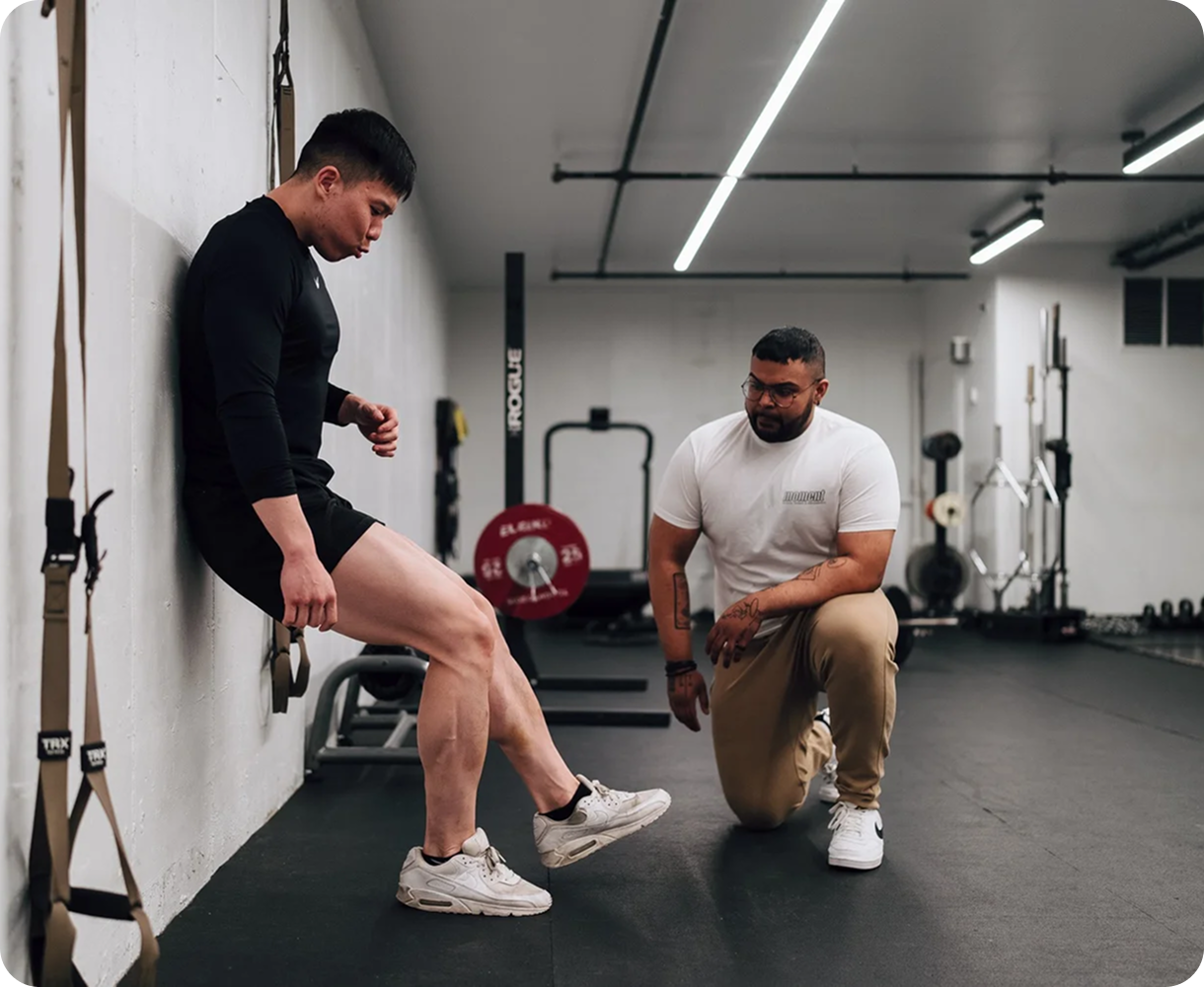
We look at the essentials that shape your running mechanics: how you load each leg, how your trunk controls motion, how your hips and feet contribute, and what happens when you change positions or add demand.
You are not just told you are “tight” or “weak.” You leave knowing what matters most for your running and what to do next.
Movement and Strength Assessment
Your stride is a skill. It can be improved.
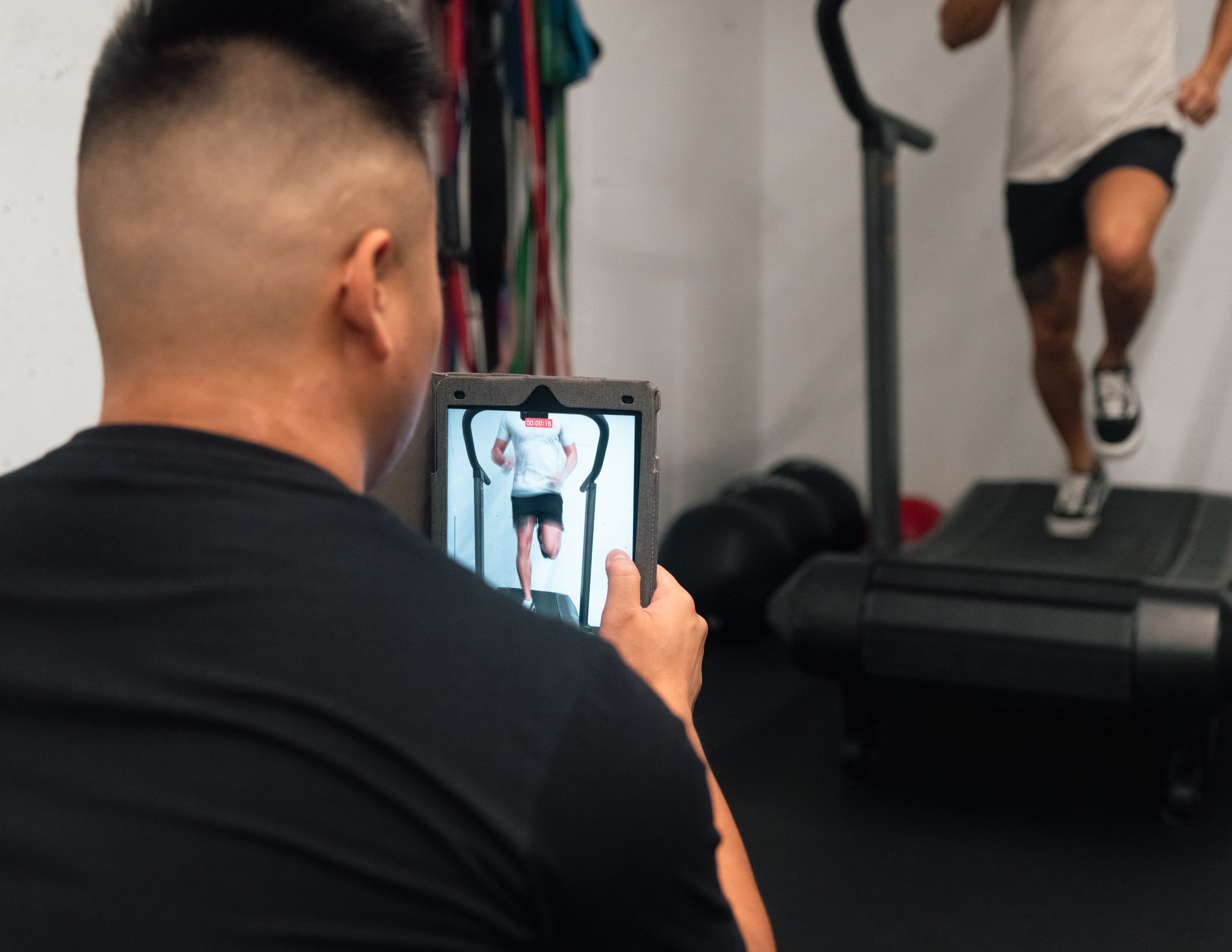
Our running gait analysis helps us see how you produce and absorb force, how you control your pelvis and trunk, how your foot and ankle behave under speed, and where efficiency is leaking.
Force and Performance Testing
Some decisions should not be based on guesswork. When appropriate, we use objective testing to identify asymmetries, measure readiness, and confirm your return to running is truly earned.
Our Force Plate Testing shows how your body produces and absorbs force with every stride, while Force Dynamometer Testing measures joint-specific strength to ensure nothing is missing beneath the surface.

The Moment Running Framework
This is how runners stay in the game longer.
Built for Every Type of Runner
From marathoners to ultra-runners to triathletes, every athlete experiences breakdown differently. Our framework is designed to adapt to those demands while keeping training consistent and sustainable.
Restore clean mechanics
We address the movement limitation that keeps showing up—not just where it hurts, but why runners are driven into that pattern under load.
Build strength that transfers
Runners don’t need generic strength work. They need sport-specific strength and conditioning that reflects real demands—marathon mileage, ultra-endurance fatigue, and triathlon multi-sport loading.
Expand mobility under demand
Mobility that only exists on a table does not help at mile 10, mile 30, or during race transitions.
We train mobility you can use under load, speed, fatigue, and terrain.
Return to running with a real progression
We guide runners back with structured progression around pacing, volume, and intensity—built for your sport, whether you’re training for a marathon, ultra, or triathlon season.


Common Running Injuries We Help Solve
If it’s a common running injury, there’s a strong chance we’ve seen it this week—and already helped a runner work through it.
At Moment, we regularly treat a wide range of running-related injuries and overload patterns, including:
Runner’s knee and patellofemoral pain
Achilles pain and calf strain patterns
Plantar fasciitis and persistent foot pain
IT band symptoms and lateral hip overload
Recurrent hamstring strains
Hip pain, groin pain, and deep pinching sensations
Ankle instability and repeated sprains
Stress reactions and bone load management concerns
These issues rarely come from a single moment of breakdown. More often, they develop from training load, mechanics, and strength imbalances accumulating over time.
To understand the most common patterns we see in runners—and how we approach them—explore our full breakdown of common running injuries
You do not need to stop running to heal. You need a smarter plan built around how runners actually load, recover, and adapt.
Performance Work for Runners Who Want More Than “Pain-Free”
Pain-free is the starting line, not the finish. Many runners arrive healthy but still feel capped. The stride lacks pop. Hills feel harder than they should. Pace fades late even when fitness says it should hold.
This is where performance work changes the conversation. Instead of simply removing pain, we focus on building a body that runs more efficiently, tolerates speed and elevation, and holds form deep into fatigue.
Strength becomes specific to running, not just lifting. Cross-training becomes intentional, not random—it starts supporting your stride and your training goals.
For runners looking for more structure in their training, our runner-specific programs provide guided strength, mobility, and progression built around mileage and race demands.
For marathoners, triathletes, and ultra-endurance athletes, our endurance athlete therapy integrates rehab and performance into a single system designed for long-term training consistency.
The result is a runner who does not just feel better, but runs better—more efficient, more durable, and more confident when the miles start to matter.
This is what happens when the plan is built around your body, your movement, and the real demands of running. Not generic rehab. Not guesswork. A clear path back to strength, confidence, and performance.
Proof That the Right Plan Changes Everything
“For most of my life, I dealt with an injury that kept me from running more than three miles at a time. In just three months of working with Steph, everything changed. I finally built the strength and mobility to run without limits and now I’m preparing for my first half marathon, something I never thought was possible.”
— Judy Lee
“Before working with Andy, I spent more than a year stuck with a nagging knee and hamstring injury that kept me away from running. After just a month, I felt stronger, more capable, and more confident than I did before the injury. Instead of focusing on what I couldn’t do, the plan showed me exactly what I could do to move forward. For the first time in a long time, I felt hopeful and excited to race again.”
— Christina Anderson
Start Running With Clarity
If you are tired of guessing, let’s make this simple.
Book your running assessment at Moment PTP and leave with a plan you can execute. We will tell you what is driving the issue, what matters most right now, and how to build back so you can run with confidence.
Schedule your first session at Moment PTP in Midtown Manhattan, Downtown Manhattan, or Long Island City.
Running Physical Therapy NYC FAQ
-
Not always. Many runners can keep some form of running in their plan if we manage load correctly and pair it with the right strength, mobility, and recovery work. The goal is to keep you training when possible, not shut you down by default.
-
We assess how you run and how you move off the treadmill. We look at mechanics, control, and strategy, then connect the findings to your symptoms, your training volume, and your goals. You leave with specific priorities, not generic cues.
-
It depends on the tissue involved, how long it has been lingering, and what your current training looks like. The good news is that most runners progress faster when they stop guessing and start following a structured return plan.
-
Yes. We regularly work with marathon runners, triathletes, ultra endurance athletes, and serious recreational runners who want a plan that respects their goals and matches the realities of NYC training.