Physical Therapy for Shoulder Pain in NYC
Movement-focused rehabilitation for athletes, lifters, overhead athletes, and active adults dealing with shoulder pain, instability, mobility restrictions, and performance-related injuries.
The shoulder is the most mobile joint in the body. That mobility comes at a cost.
No other joint asks as much of the surrounding musculature as the shoulder does. The hip sits in a deep socket with inherent bony stability. The knee is a hinge supported by robust ligamentous structures. The shoulder, by contrast, sits in a shallow socket that sacrifices stability for range of motion, leaving the rotator cuff, the scapular stabilizers, and the thoracic spine to provide the dynamic support that the joint's architecture cannot.
This is why shoulder pain is so prevalent in active people, and why it responds so poorly to rest. When the muscular system that supports the shoulder is not doing its job, load gets distributed to structures that were not designed to absorb it. Tendons thicken and become irritated. The bursa compresses. The labrum frays. The capsule tightens. And when you rest until the pain settles and then return to training, the same pattern produces the same result.
Shoulder pain shows up differently depending on what you do. In lifters, it tends to appear during specific loading patterns, a particular point in the bench press, the bottom of a dip, the catch position of a clean. In overhead athletes, it builds through a season as the cumulative demands exceed the shoulder's capacity to recover. In desk workers who also train, it reflects the compounding effects of postural dysfunction and loading a shoulder that has been spending eight hours in a compromised position.
In every case, the question that matters is not where it hurts. It is what the shoulder is being asked to do, what it currently lacks the capacity to handle, and what needs to be built to close that gap.
At Moment, shoulder treatment begins with a thorough evaluation of the joint itself and the system around it. Thoracic mobility, scapular mechanics, rotator cuff coordination, and how the shoulder behaves under the specific loading demands of your activity. Treatment is built from that picture, updated after every session, and aimed at a specific return-to-performance destination.
0
Cookie-cutter protocols. Every plan is built from your evaluation, not a template.
3
NYC locations. Midtown, SoHo, Long Island City.
100%
One-on-one sessions. No aides, no hand-offs, no exceptions.

The details you do not expect are often what make the difference.
PATIENT STORY
"I had lingering shoulder pain from martial arts training and a gym instructor recommended Moment's services. My PT's knowledge and attention to detail was incredible. There was so much I did not know I did not know, including small breathing exercises that helped loosen up my shoulder. My PT created a unique program tailored just for my recovery, and after a few sessions my shoulder had significantly improved and I was back on the mats."
Bernard Hunt
Martial arts athlete, shoulder pain patient
Result: Returned to full martial arts training after a personalized recovery program that addressed details no previous provider had identified.
Shoulder conditions we treat
Rotator cuff injuries
OVERUSE AND TRAUMATIC
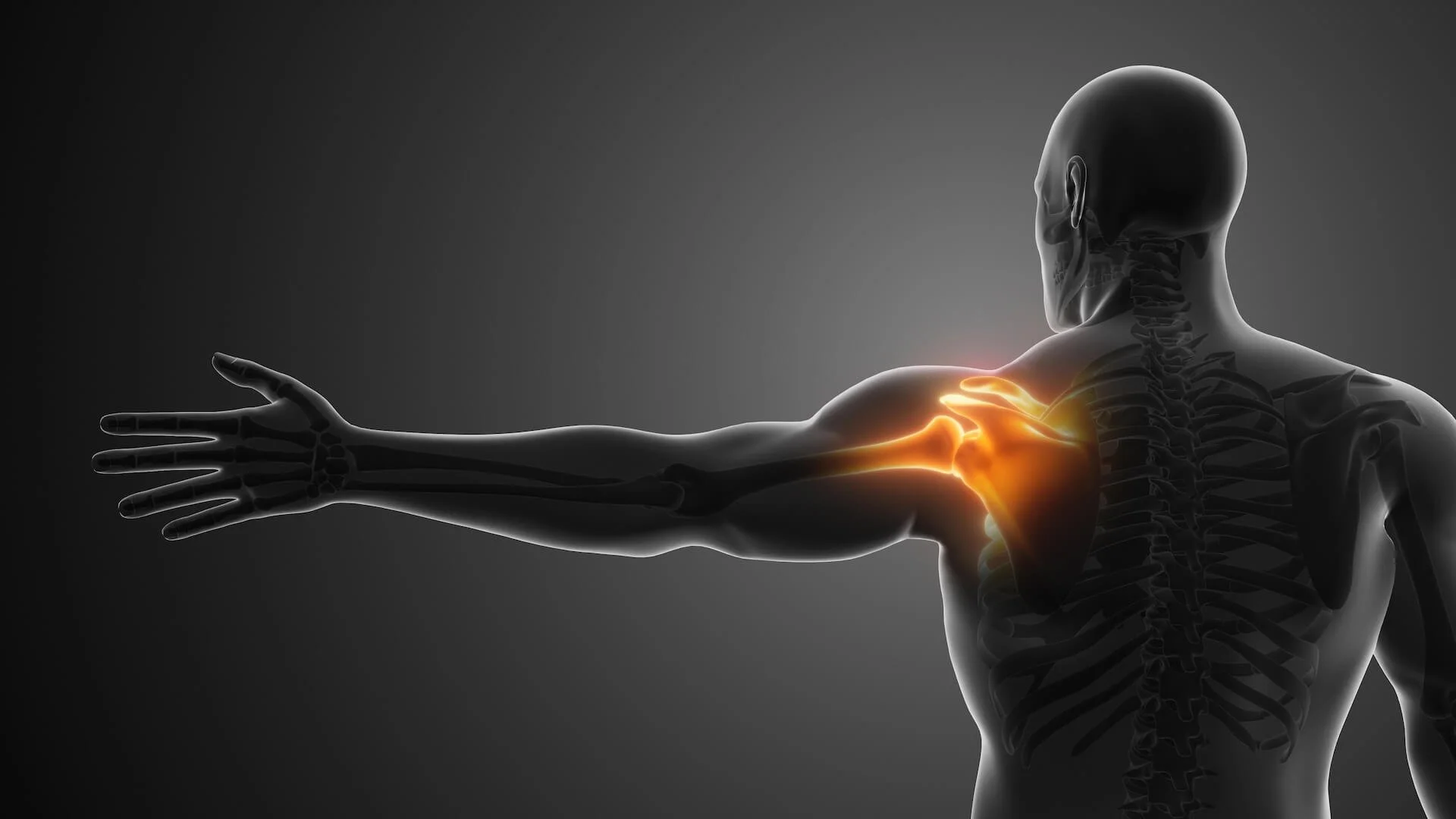
The rotator cuff is a group of four muscles that work together to stabilize the shoulder and control how the arm moves through space. When one or more of these muscles is strained, torn, or simply not functioning well relative to the others, the joint loses its center of rotation and other structures start absorbing load they were never designed to handle.
Rotator cuff injuries range from mild irritation caused by repetitive overhead movement to partial and full thickness tears that require careful progressive loading or surgical intervention. The most common presentation is pain at the front or side of the shoulder, often worse when reaching overhead, behind the back, or sleeping on the affected side.
Treatment begins with restoring the coordination between the four muscles, not just strengthening in isolation. We assess how the rotator cuff functions during the specific activities that are causing pain, whether that is a bench press, a serve, or reaching for something on a shelf, and build a progressive loading program that respects where the tissue is and where it needs to go.
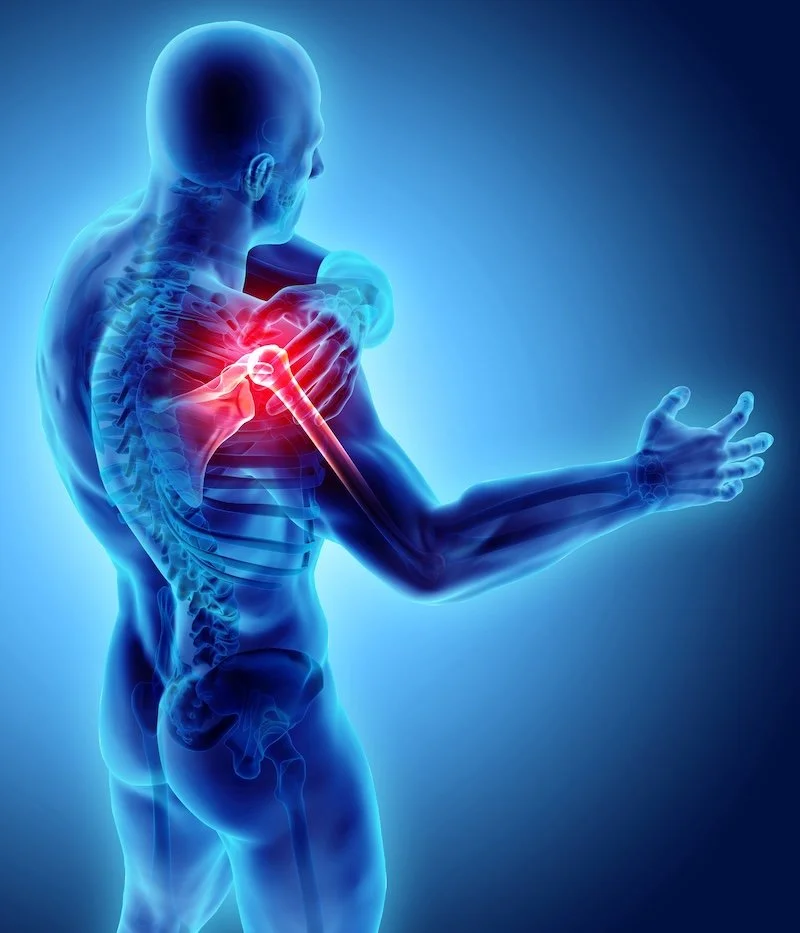
Rotator cuff strength in isolation is not the goal. Rotator cuff coordination under load is. That distinction drives how we program.
— CLINICAL TAKEAWAY
Shoulder impingement
SUBACROMIAL AND INTERNAL
Shoulder impingement occurs when soft tissue in the shoulder, most commonly the rotator cuff tendons or the bursa, gets compressed in the space between the humerus and the acromion during overhead movement. The result is a sharp or aching pain that typically appears in a specific arc of shoulder elevation and often gets worse with repetitive overhead activity.
What most people are not told is that the impingement itself is usually a symptom of a movement problem, not a structural one. Poor scapular mechanics, limited thoracic mobility, rotator cuff weakness, or a combination of all three can narrow the subacromial space and create compression that should not be there. This is why surgery to shave the acromion, once a common intervention, produces equivalent outcomes to rehabilitation alone in most cases.
We assess the full movement chain driving the impingement. Thoracic spine mobility, scapular upward rotation, rotator cuff strength ratios, and how the shoulder behaves under load all factor into the picture before we determine how to treat it.
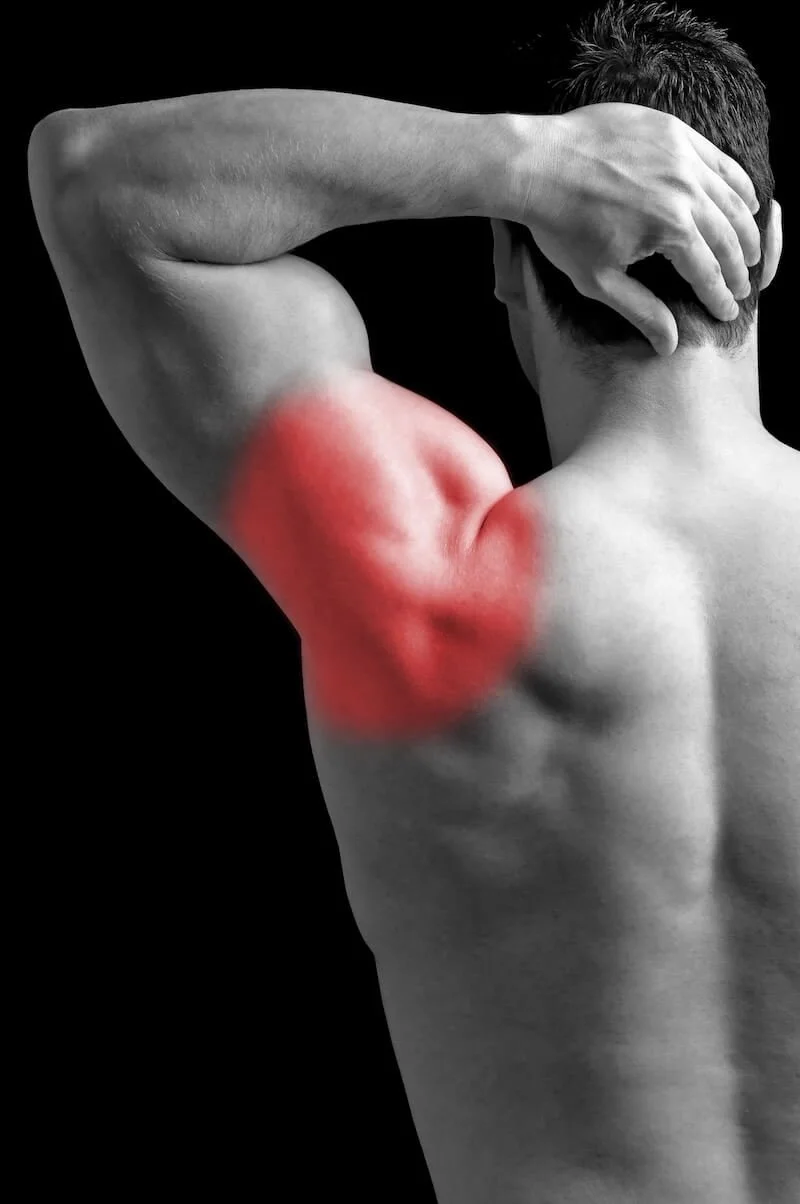
Impingement is almost always a movement problem, not an anatomical one. That distinction is what determines whether PT will hold long-term.
— CLINICAL TAKEAWAY
Labral injuries
SLAP TEARS AND BANKART LESIONS
The labrum is a ring of cartilage that deepens the shoulder socket and provides an anchor point for several stabilizing structures. Labral injuries are common in overhead athletes, throwing athletes, and anyone who has experienced a shoulder dislocation or repeated episodes of instability. They range from fraying of the labral tissue to complete tears that significantly compromise shoulder stability.
SLAP tears, which affect the top of the labrum where the biceps tendon attaches, are particularly common in swimmers, baseball pitchers, and weightlifters who load the shoulder through a large range of motion. Bankart lesions typically result from anterior dislocations and affect the front of the labrum.
Conservative management is effective for many labral injuries, particularly those without significant instability. Treatment focuses on restoring the muscular stability that the labrum can no longer provide, retraining movement patterns to reduce stress on the injured tissue, and progressively loading the shoulder back to full activity. For athletes who have had surgical repair, we manage the full rehabilitation arc from protected early loading through return to sport.
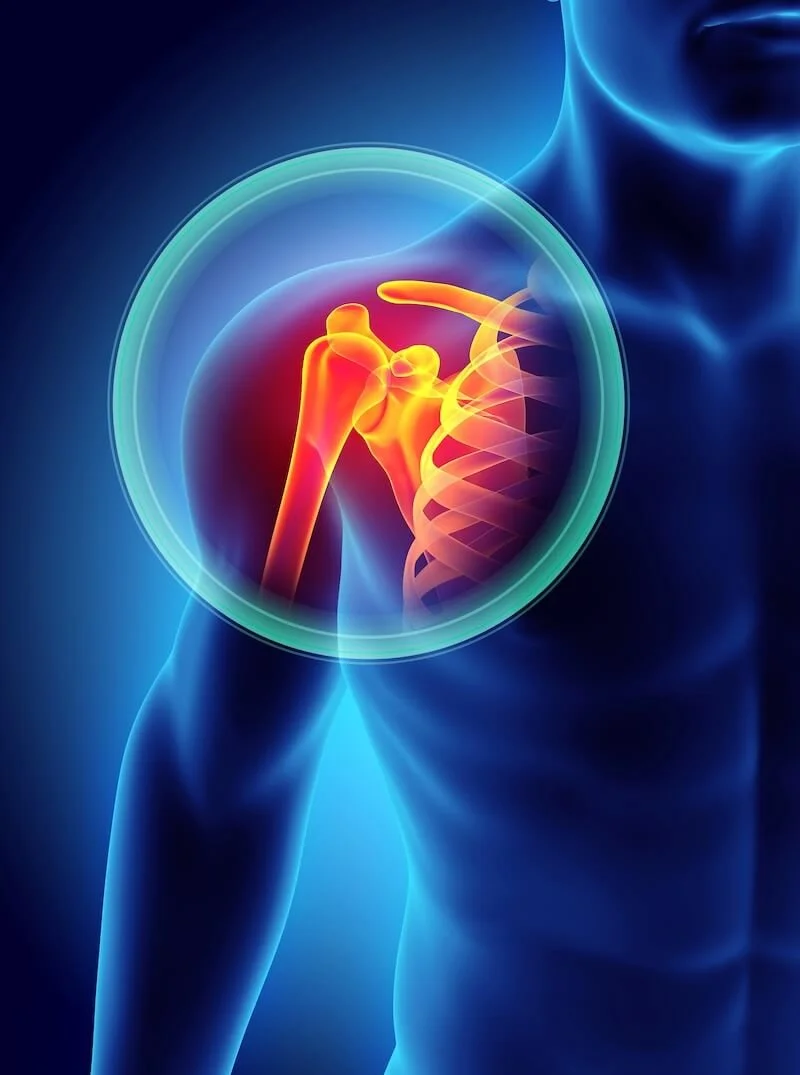
Not all labral injuries require surgery. Many athletes with labral pathology return to full sport with properly directed rehabilitation.
— CLINICAL TAKEAWAY
HYPERMOBILITY AND POST-DISLOCATION
Shoulder instability exists on a spectrum from subtle excessive movement that creates pain and apprehension during specific activities to full dislocation events that require reduction. For active adults and athletes, even the subtle end of this spectrum can be performance-limiting, creating a feeling of the shoulder being unreliable or giving way under load.
The shoulder is the most mobile joint in the body, which means it depends more on muscular stability than any other joint. When the rotator cuff, scapular stabilizers, and surrounding musculature are not providing adequate dynamic support, the shoulder compensates in ways that create pain and restrict performance.
Treatment for instability is centered on building the dynamic control that the passive structures cannot provide on their own. This is progressive, sport-specific work that trains the shoulder under the actual demands of your activity, not just in controlled clinical conditions. For patients who have had a surgical stabilization procedure, the rehabilitation protocol determines how much of the restored stability translates into long-term function.
Shoulder instability
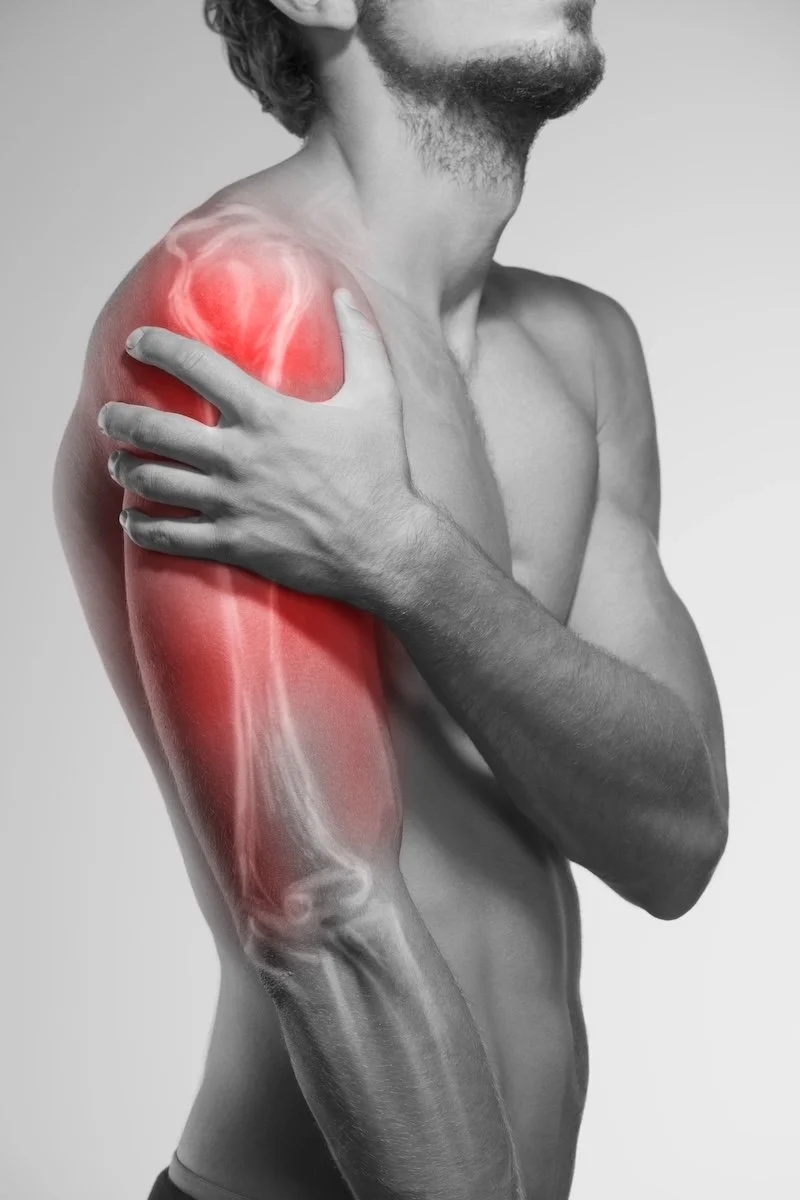
Shoulder instability is a strength and coordination problem before it is a structural one. In most cases, that can be addressed without surgery.
— CLINICAL TAKEAWAY
Frozen shoulder (adhesive capsulitis)
STIFFNESS AND MOBILITY LOSS
Frozen shoulder is one of the more frustrating conditions we treat, not because it is difficult to address, but because it is so frequently undertreated in its early stages when intervention is most effective. The condition involves a thickening and tightening of the shoulder capsule that progressively restricts range of motion, often accompanied by significant pain that is worst at night.
It follows a characteristic arc through three stages: a freezing phase where pain is primary and motion is beginning to restrict, a frozen phase where stiffness dominates and pain is more predictable, and a thawing phase where mobility gradually returns. Without treatment, the full cycle can take one to three years. With appropriate physical therapy, the timeline is significantly compressed and the degree of recovery is substantially better.
Treatment in the freezing stage focuses on pain management and maintaining as much motion as possible through the capsular tightening. In the frozen stage, manual therapy to the shoulder capsule combined with progressive stretching and strengthening drives the recovery. We work to restore full functional range of motion, not just enough to get through daily activity.

Frozen shoulder resolves faster and more completely with early, active physical therapy. Waiting it out is rarely the best strategy.
— CLINICAL TAKEAWAY
Shoulder pain from weightlifting
BENCH PRESS, OVERHEAD PRESS, AND PULL PATTERNS
Shoulder pain in the gym is extraordinarily common and almost universally mismanaged. Most lifters are told to rest, take anti-inflammatories, and avoid the movement that is causing pain. This approach addresses none of the underlying issues and typically results in the pain returning the moment training resumes.
The shoulder is asked to do a lot in a typical training session. Bench press, overhead press, pull-ups, rows, dips, and any number of accessory movements all load the joint through different arcs with different demands. Pain in one pattern does not necessarily mean the joint is damaged. It usually means the way load is being managed through that specific movement is off.
Our therapists train with barbells and understand the specific demands of strength training programming. We assess your actual movements, not generic shoulder patterns, and identify whether the issue is rotator cuff coordination, scapular control, thoracic mobility, or technique. The goal is always to return to the full training program without restriction, not to build a modified version of your training around the shoulder.
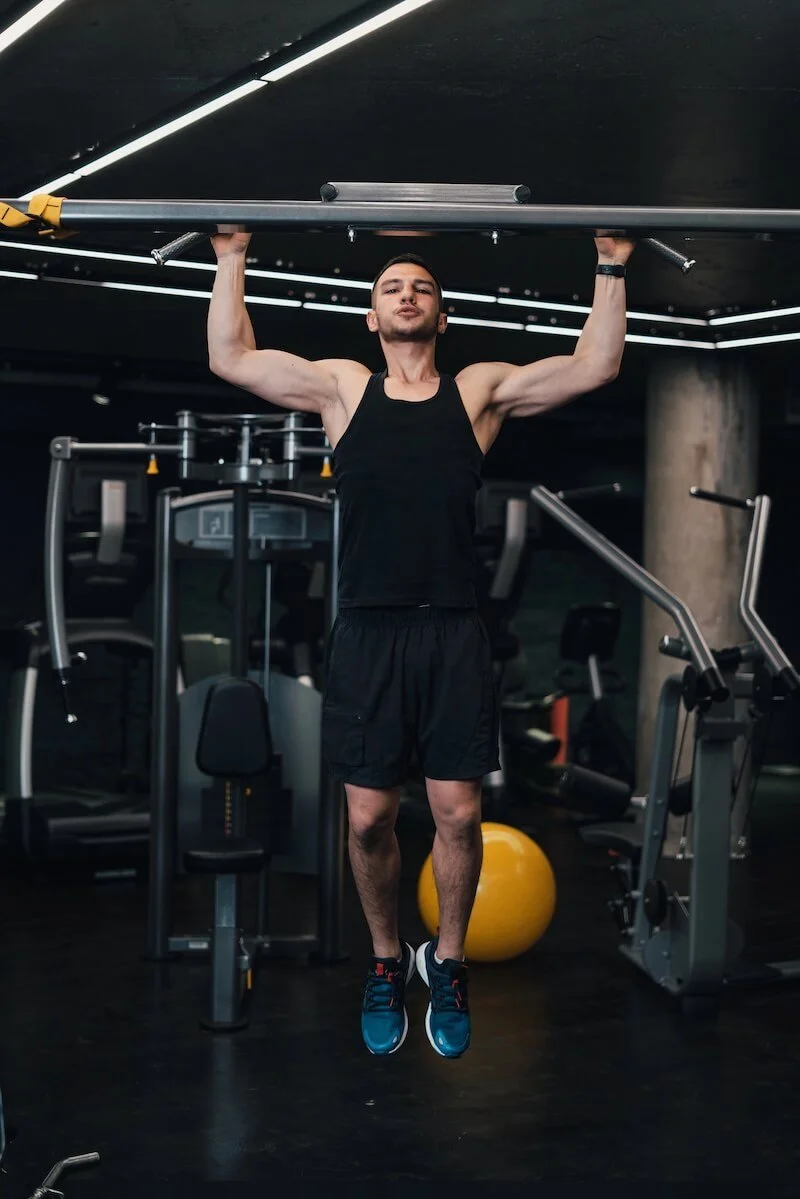
Shoulder pain in the gym is almost always a mechanics and capacity problem. The answer is rarely to stop lifting. It is to lift better.
— CLINICAL TAKEAWAY
Overhead athlete shoulder pain
SWIMMING, BASEBALL, TENNIS, VOLLEYBALL
Overhead athletes place demands on the shoulder that no other population does. A competitive swimmer's shoulder completes thousands of rotations per week. A baseball pitcher generates forces at the shoulder that approach the structural limits of the tissue with every throw. A tennis player's serve loads the shoulder at extreme ranges of external rotation under high velocity. These demands create patterns of overuse and adaptive change that require sport-specific understanding to address effectively.
The most common presentations in overhead athletes are internal impingement, posterior shoulder tightness that alters the mechanics of the throwing or serving motion, and rotator cuff irritation that builds gradually through a competitive season. In many cases, the pain is a signal that the shoulder has reached the limit of what it can absorb given its current strength and mobility profile.
We work with overhead athletes within their training and competition schedule, not around it. Treatment is built around the specific biomechanical demands of the sport and the athlete's position within their season. The goal is to address what is driving the pain while maintaining as much training continuity as possible.

Overhead athlete rehab requires understanding the sport. Generic shoulder protocols do not address the specific demands that produced the problem.
— CLINICAL TAKEAWAY

Shoulder mobility restrictions and stiffness
POSTERIOR CAPSULE TIGHTNESS AND THORACIC RESTRICTION
Limited shoulder mobility is one of the most common movement deficits we see in active adults, and one of the most frequently dismissed as simply how someone is built. It is not. Shoulder mobility restrictions almost always have addressable causes, whether that is posterior shoulder capsule tightness, limited thoracic extension and rotation, restricted first rib mobility, or pec minor tightness pulling the scapula into a position that limits overhead reach.
The consequence of untreated shoulder stiffness goes beyond the shoulder itself. When the shoulder cannot move through its full range, the cervical spine, thoracic spine, and elbow are asked to compensate. This creates injury risk at multiple sites and limits performance across virtually every upper body movement pattern.
We identify the specific structure or structures limiting motion and treat them directly with manual therapy and targeted mobility work, then build the strength to maintain what is restored. Mobility without stability does not hold, which is why stretching alone rarely produces lasting change in shoulder range of motion.
Shoulder stiffness is not a permanent feature of your anatomy. It has causes, and those causes are treatable.
— CLINICAL TAKEAWAY
Pain-free is the floor
Performance is the ceiling
The goal of shoulder rehabilitation at Moment is not to reduce your pain to a level you can tolerate. It is to build a shoulder that can do what you are asking of it, consistently, under the actual demands of your training or sport.
For lifters, that means returning to the full program. Not a modified version built around the shoulder, but the bench press, overhead press, and pulling movements you were doing before, with better mechanics and greater resilience. We assess your movements in the context of your actual training and rebuild from there.
For overhead athletes, it means returning to sport-level loading. The specific mechanics of your throw, your serve, your catch, or your stroke are part of the evaluation from the start. We use objective strength testing to measure the rotator cuff strength ratios that protect the throwing shoulder, and we build toward those numbers rather than general strength benchmarks that may not reflect what your sport demands.
For active adults managing chronic shoulder limitations, it means getting back to the activities that were becoming restricted. Reaching overhead without hesitation. Sleeping through the night. Training without modifying every upper body session around what the shoulder will and will not tolerate.
OUR PROCESS
Every new patient goes through a thorough evaluation before treatment begins. We assess the shoulder directly and everything that determines how it functions.
How we evaluate and treat shoulder pain
-
01
Shoulder joint assessment
Range of motion, joint integrity, capsular mobility, and soft tissue evaluation of the rotator cuff, biceps tendon, and surrounding structures.
-
02
Scapular mechanics
How the shoulder blade moves and positions itself during arm elevation and loading. Scapular dysfunction is one of the most common and most overlooked drivers of shoulder pain.
-
03
Thoracic spine evaluation
Thoracic extension and rotation directly affect shoulder mechanics. A stiff thoracic spine forces the shoulder to compensate during overhead movement.
-
04
Strength and load testing
Rotator cuff strength ratios, dynamometer testing for bilateral comparison, and assessment of how the shoulder manages load during your specific training movements.
-
05
Activity-specific analysis
Movement assessment in the context of what you actually do — your lifts, your sport, your overhead patterns — not just generic clinical movement screens.
Treatment is progressive and built around your specific return-to-performance destination. Every phase has a clear purpose and a measurable target. Sessions are one-on-one with your physical therapist for the full hour, every time.
WHO WE WORK WITH
Is this you?
Our shoulder patients range from competitive overhead athletes to active adults who have been managing chronic pain for years. What they share is a desire to understand what is driving the problem and address it properly.
You lift.
Bench press, overhead press, pull-ups, Olympic lifting. Shoulder pain in the gym is almost always a mechanics and capacity problem. We assess your actual movements and fix what is driving the issue without pulling you from the training you have built your routine around.
You train overhead.
CrossFit, Olympic weightlifting, gymnastics. Overhead movement demands a level of shoulder mobility, stability, and rotator cuff coordination that most training programs do not build systematically. We do.
You throw, swing, or serve.
Baseball, tennis, volleyball, swimming. Overhead athletes place demands on the shoulder that require sport-specific understanding to treat effectively. Generic protocols do not address what your sport is actually asking of your shoulder.
You sit at a desk and then try to train.
Sustained desk postures shut off the scapular stabilizers, tighten the pec minor, and restrict thoracic rotation. When you then load the shoulder in the gym, it is working from a compromised position. We address both the postural drivers and the performance limitations they create.
You are managing something chronic.
A rotator cuff that has been irritated for months. A shoulder that has been dislocating periodically. A frozen shoulder that is progressively restricting your life. Chronic shoulder conditions have clear, addressable causes when properly evaluated.
You had surgery and want more than basic recovery.
Rotator cuff repair, labrum stabilization, shoulder replacement. The surgery addresses the structural problem. Rehabilitation determines whether you return to full function. We manage the complete recovery arc from early protection through return to sport.
Common Questions
FREQUENTLY ASKED QUESTIONS
-
Almost always a combination of movement mechanics and load management. The most common drivers are poor rotator cuff coordination, limited scapular upward rotation, restricted thoracic mobility, and loading patterns that are inconsistent with the shoulder's current capacity. All of these are identifiable and addressable. A thorough evaluation will tell you exactly which one is driving your pain.
-
In many cases, yes. A significant number of shoulder surgeries, including rotator cuff repairs, labral procedures, and subacromial decompressions, are performed on patients who have not completed a rigorous course of physical therapy. For most common shoulder conditions, conservative management with PT produces outcomes comparable to surgery, particularly when treatment begins early and is appropriately progressive. We give you an honest assessment of what is realistic for your situation.
-
Impingement is almost always a movement problem rather than a structural one. The subacromial space narrows when the scapula is not rotating properly under the arm during overhead movement, when the rotator cuff is not centering the humeral head in the socket, or when thoracic stiffness forces the shoulder to compensate. All of these are movement and strength deficits that physical therapy addresses directly.
-
It depends significantly on the severity of the injury and whether surgery was involved. Minor rotator cuff strains and tendinopathies typically respond well within six to ten weeks of consistent treatment. Partial tears managed conservatively may take three to four months. Post-surgical rotator cuff repairs generally require four to six months before return to full overhead loading, with the timeline varying based on tear size and surgical technique. We give you a realistic timeline based on your specific presentation at the initial evaluation.
-
Yes, and it is one of the most common drivers of shoulder pain in people who work at a desk and also train. Sustained forward head and rounded shoulder posture tightens the pec minor and anterior shoulder, restricts thoracic extension, and alters how the scapula moves during arm elevation. When that posture is then loaded in the gym, the shoulder is working from a compromised position. Addressing the postural and mobility drivers is essential to lasting relief.
-
Overhead pain is most commonly produced by one of three mechanisms: subacromial impingement from poor scapular mechanics or rotator cuff weakness, posterior capsule tightness that limits full elevation, or acromioclavicular joint irritation from how the shoulder complex is moving. A thorough evaluation identifies which mechanism is present and determines the appropriate treatment approach.
-
Yes, and it is most effective when started early. Frozen shoulder responds well to manual therapy directed at the shoulder capsule combined with progressive range of motion and strengthening work. Early intervention significantly shortens the duration of the condition and improves the degree of recovery. Patients who begin PT in the freezing stage consistently do better than those who wait until the frozen stage to seek treatment.
-
As soon as the pain is limiting your training, changing how you move, or has been present for more than two to three weeks without improvement. Early intervention produces faster and more complete recovery in virtually every shoulder condition. Waiting until something is severe makes treatment harder and extends time away from training.
Moment Physical Therapy and Performance | Midtown Manhattan | SoHo | Long Island City, Queens