
Strength and Conditioning
That Actually Transfers to Sport
Strength is not just about lifting more weight.
Conditioning is not just about surviving hard workouts.
For athletes returning to sport, strength and conditioning must prepare the body to tolerate speed, force, fatigue, and decision-making all at once. In a city like New York, where training time is limited and performance demands are high, that distinction matters.
At Moment PTP, our strength and conditioning work is built for athletes who are past basic rehab but not yet fully ready to perform. We train the gap between being cleared and being confident.
Why Traditional Strength Programs Fall Short After Injury
Most return to training programs focus on rebuilding what was lost.
That is important. But it is incomplete.
Athletes do not get hurt because they are weak in perfect conditions. They get hurt when load increases, timing breaks down, or fatigue changes mechanics. This is especially common for NYC athletes juggling packed schedules, inconsistent recovery, and compressed training windows.
Generic programs miss this. They chase numbers instead of readiness.
Strength without context does not protect you when intensity rises.
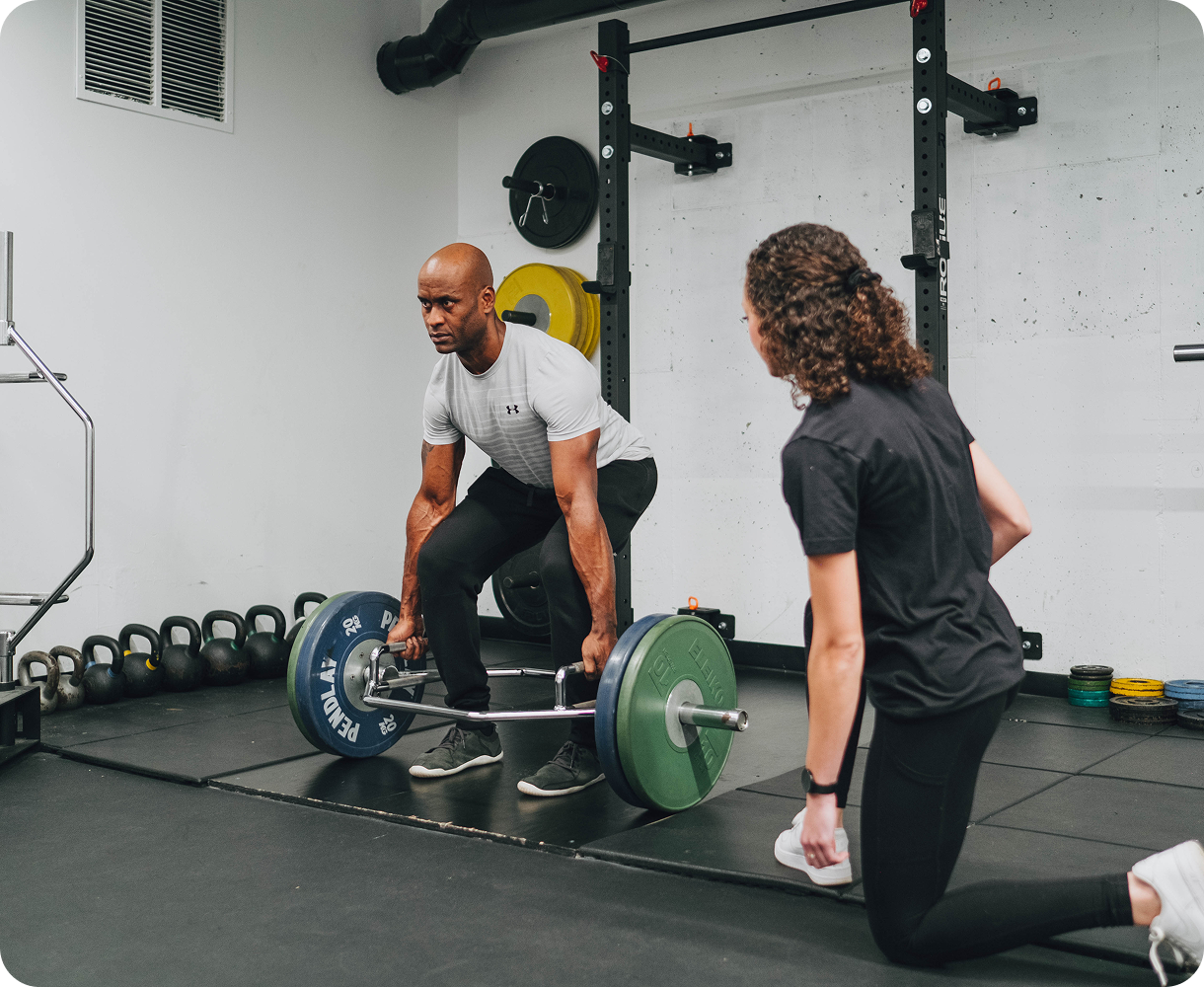

Strength Has to Be Specific to the Demands You Face
Real strength and conditioning prepares you for:
Rapid changes of direction
Deceleration under load
Asymmetrical force production
Repeated efforts without form breakdown
Decision-making while fatigued
This requires more than sets and reps. It requires understanding how your body produces and absorbs force.
That is where Moment’s approach stands apart in the New York performance space.
How Moment Builds Strength That Holds Up
Every strength and conditioning plan starts with assessment, not assumption.
We look at:
How you load one leg versus the other
How force is produced through your hips, knees, and ankles
How trunk control holds up during dynamic tasks
How fatigue changes your movement strategy
From there, we design training that closes gaps instead of reinforcing them. Strength is built in positions you actually use. Conditioning is layered in a way that respects recovery, progression, and the realities of training in NYC.
What Strength and Conditioning Looks Like at Moment
This is not general fitness programming.
You may see:
Single-leg strength progressions tied to deceleration mechanics
Rotational strength trained with trunk and hip integration
Sprint or change of direction exposure layered after strength work
Conditioning blocks that mirror sport demands rather than random fatigue
Every phase has a purpose. Every drill earns its place.

Conditioning Is About Capacity, Not Just Suffering
Conditioning should make you more efficient, not just exhausted.
We train energy systems with intent so that your technique holds up late in sessions, races, or games. Conditioning becomes a tool to reinforce movement quality under stress rather than break it down.
That is how NYC athletes return to competition prepared instead of just cleared.
Who This Is Built For
Strength and conditioning at Moment PTP is designed for:
Athletes returning from injury who do not trust their body yet
Lifters whose numbers are back but confidence is not
Runners who fade late despite solid base fitness
Active adults who want to train hard without setbacks
If you feel strong in isolation but exposed in real situations, this is where progress happens.
How This Fits Into Return to Sport
Strength and conditioning bridges the gap between rehab and performance.
Once mobility is restored and force production is rebuilt, conditioning teaches the body to express that strength under pressure.
This is where athletes stop protecting their body and start trusting it again.
Train for the Demands You Actually Face
If you are ready to move beyond basic rehab and start training for real performance, strength and conditioning is the next step.
At Moment PTP, we work with athletes across New York City who want their training to translate when it matters most. We build resilient athletes who can tolerate load, speed, and fatigue without hesitation.
Schedule your first session and start training in a way that actually prepares you to return to sport.