

Patellar Tendinopathy Treatment in NYC
Patellar tendinopathy does not heal with rest. It heals with the right kind of load, applied progressively. Expert rehabilitation for jumper's knee in New York City, built around tendon loading principles that actually work and a return to sport that lasts.
UNDERSTANDING THE CONDITION
What is patellar tendinopathy?
Patellar tendinopathy, commonly called jumper's knee, is a condition involving pain and dysfunction of the patellar tendon, the thick structure that connects the kneecap to the top of the shin bone. It is classified as a tendinopathy rather than tendonitis because the underlying pathology in most persistent cases is not active inflammation but rather a failed healing response within the tendon tissue itself.
The distinction matters clinically. Tendonitis implies acute inflammation that responds to rest and anti-inflammatory treatment. Tendinopathy describes a condition in which the tendon's normal collagen structure has been disrupted and replaced with disorganized tissue that is weaker, more pain-sensitive, and poorly responsive to passive treatment. Understanding this is why the management approach for patellar tendinopathy is fundamentally different from most people's instinct to rest and wait.
The patellar tendon is the final link in the extensor mechanism of the knee, the system by which quadriceps force is transmitted through the kneecap to extend the lower leg. Every jump, sprint, squat, and deceleration movement demands force from this structure. In athletes and active adults who place repetitive high-load demands on this system, the tendon can accumulate microdamage faster than it can repair, leading to the pathological changes that produce pain and reduced capacity.
Pain is typically felt at the inferior pole of the patella, the bony point at the bottom of the kneecap, and is characteristic in its behavior: worst at the start of activity, improving somewhat after warm-up, and returning with higher load or prolonged activity. Morning stiffness after hard training days is common. The pattern of pain that settles with warm-up and returns after activity is one of the most reliable clinical features of reactive or early tendinopathy.
RECOGNIZING IT
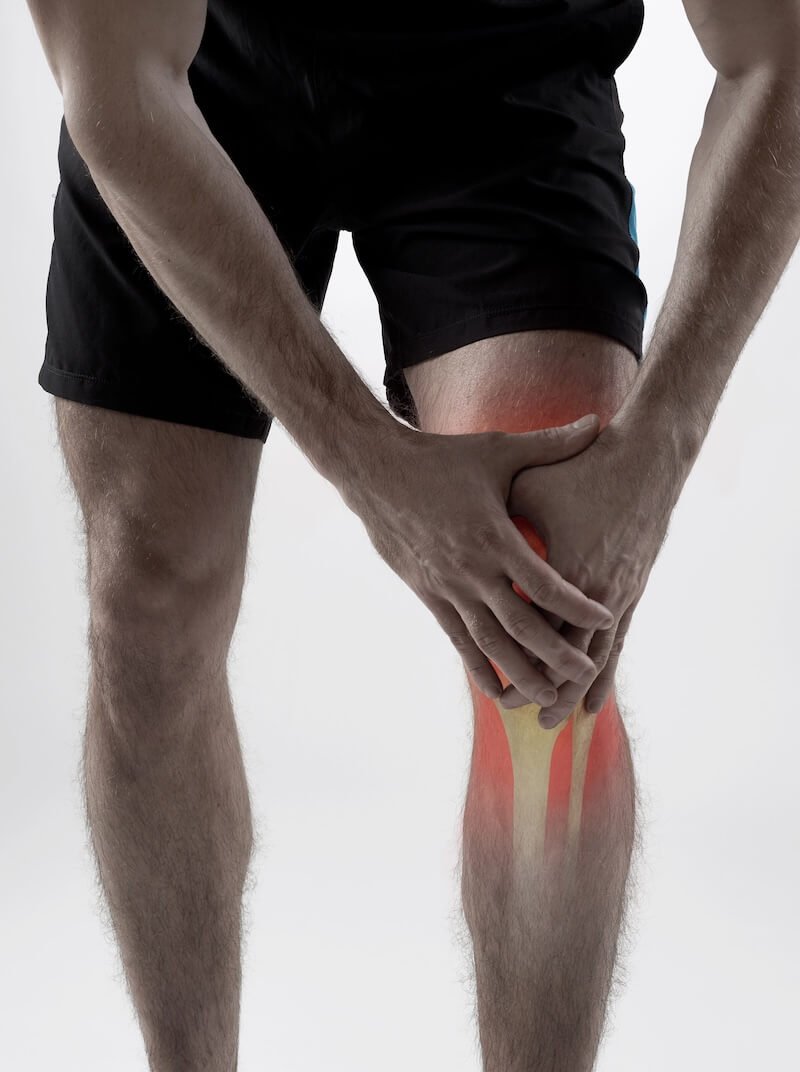
Symptoms of patellar tendinopathy
The clinical presentation of patellar tendinopathy is distinctive enough that experienced clinicians can diagnose it with high confidence from history and examination alone, without imaging.
The hallmark symptom is pain at the bottom of the kneecap that is provoked by loading the extensor mechanism: jumping, landing, squatting, lunging, and stair descent are the most common aggravating activities. The pain is typically well-localized and reproducible, meaning it appears predictably with the same activities and in the same location each time.
The warm-up phenomenon is characteristic: pain is highest in the first few minutes of activity, settles as the tendon warms up, and returns after prolonged or high-load activity or the following day. This pattern distinguishes tendinopathy from acute tendon injuries and from patellofemoral pain, which typically does not show the same warm-up improvement.
Other common features include tenderness to direct palpation at the inferior patellar pole, stiffness after prolonged sitting or rest, and a gradual onset rather than a specific injury event. In more severe presentations, pain persists throughout activity and does not settle with warm-up, indicating a more reactive tendon state that requires modification of loading before progressive rehabilitation can begin.
Imaging, particularly ultrasound, can confirm the diagnosis and identify the degree of structural change within the tendon. It is most useful when the clinical picture is uncertain or when the severity of structural change has implications for how aggressively loading can be progressed.
WHO GETS IT
Sports and activities most commonly affected
Patellar tendinopathy earns its nickname of jumper's knee from its prevaence in sports that demand repetitive, high-force jumping and landing. But it also affects lifters whose sport requires sustained quadriceps loading through deep flexion, and any athlete who significantly spikes training volume without adequate recovery.
| Basketball Repetitive jumping, landing, and deceleration on hard surfaces across long seasons with limited recovery | Volleyball High-frequency jumping demands, often year-round, with significant patellar tendon loading per session | Olympic weightlifting Catch positions in clean and snatch load the patellar tendon under extreme force in deep flexion |
| Powerlifting High-load squatting places sustained demand on the patellar tendon through the full range of knee flexion | CrossFit Box jumps, thrusters, and high-rep squatting create cumulative patellar tendon loads across varied programming | Running Particularly in downhill running and speed work, where eccentric loading of the quad-tendon complex is high |
| Soccer Shooting, acceleration, and deceleration mechanics place repeated demand on the patellar tendon | Tennis Serve mechanics and explosive court movement with hard surface loading | Gymnastics Landing forces and sustained squat positions in skills training |
The common thread across all of these is a load that exceeds the tendon's current capacity to adapt. In sport, this typically occurs during pre-season when training volume increases rapidly, during in-season when recovery is insufficient relative to competition demands, or when returning to training after a break with too rapid a progression.
THE SCIENCE OF TENDON REHAB
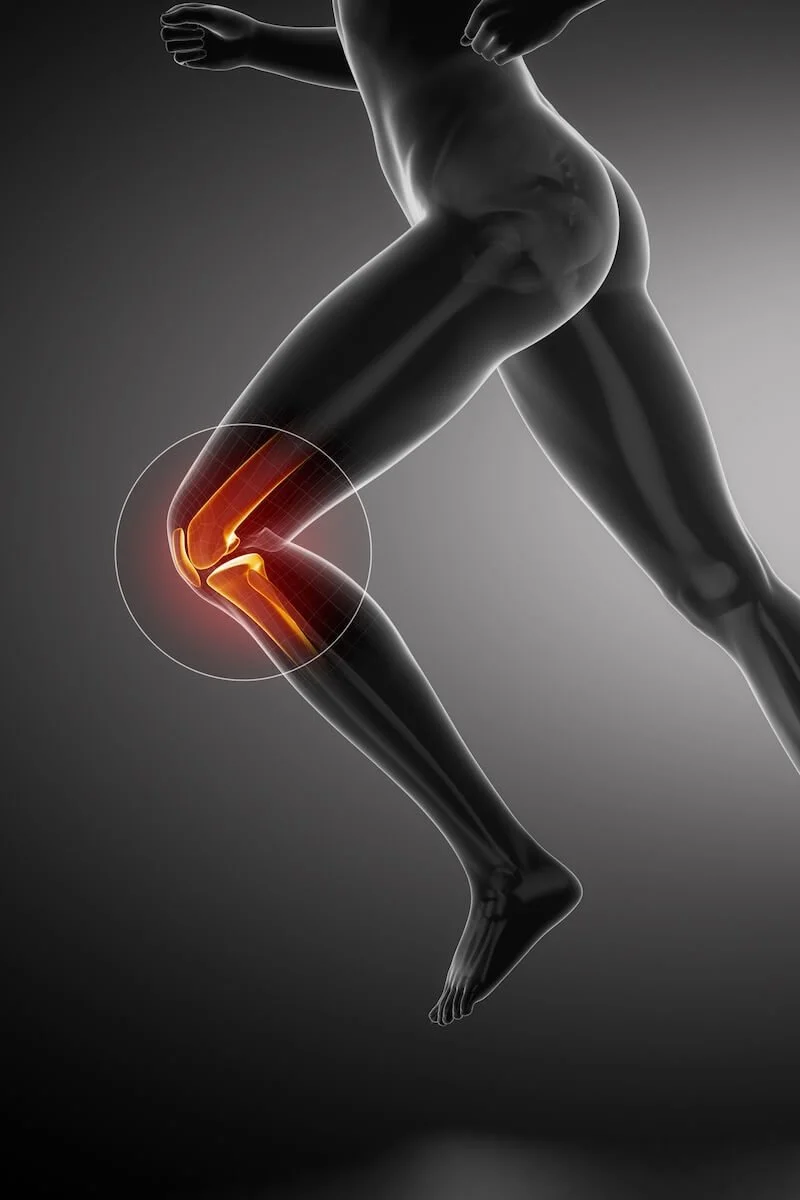
Tendon loading principles: why the approach matters
Tendons are mechanosensitive structures, meaning they respond and adapt to the mechanical load placed on them. This is both the cause of patellar tendinopathy when loading exceeds adaptive capacity, and the solution when loading is applied correctly to drive positive remodeling of the disrupted tissue.
The research on tendon rehabilitation has converged on a consistent finding: tendons need progressive mechanical load to heal. Not rest, not passive treatment, not ultrasound. Load. Specifically, slow, heavy resistance training through the affected range of motion produces superior outcomes to eccentric-only protocols or rest-based approaches, and maintains or improves the training capacity that athletes cannot afford to lose during in-season rehabilitation.
The tendon that is rested becomes weaker, not stronger. The tendon that is progressively loaded in the right way undergoes structural adaptation that reduces pain and restores capacity. This is not a philosophical position. It is the most consistently supported finding in tendon rehabilitation research.
The key variables in tendon loading are load magnitude, speed of loading, and frequency of loading sessions. Heavy slow resistance training uses high load applied through a slow, controlled tempo — typically three seconds up and three seconds down. This produces the highest tendon stress and the greatest adaptive stimulus without the reactive load spike of fast, ballistic movements that can provoke symptoms. The slow tempo also maximizes time under tension, which appears to be an important driver of tendon adaptation.
Reactive tendons, those in which symptoms are significant and easily provoked, require a modified approach. Isometric contractions, in which force is produced without movement, reduce tendon pain through neurological mechanisms while maintaining quad strength and producing tendon load without the compression and stretch that aggravate reactive tissue. Isometrics are typically used in the early phase of rehabilitation and during in-season management when competition cannot be avoided.
| Phase | Type of loading | Typical timing | Goal |
|---|---|---|---|
| Phase 1 | Isometric | Weeks 1 to 3 | Pain reduction, quad strength maintenance, tendon load without provocation |
| Phase 2 | Heavy slow resistance | Weeks 3 to 12 | Tendon remodeling, strength development, progressive load tolerance |
| Phase 3 | Energy storage | Months 3 to 4 | Prepare tendon for spring-like loading demands of jumping and running |
| Phase 4 | Sport-specific loading | Months 4 to 6 | Return to full jumping, sprinting, and sport demands with objective monitoring |
THE MOST IMPORTANT THING TO UNDERSTAND
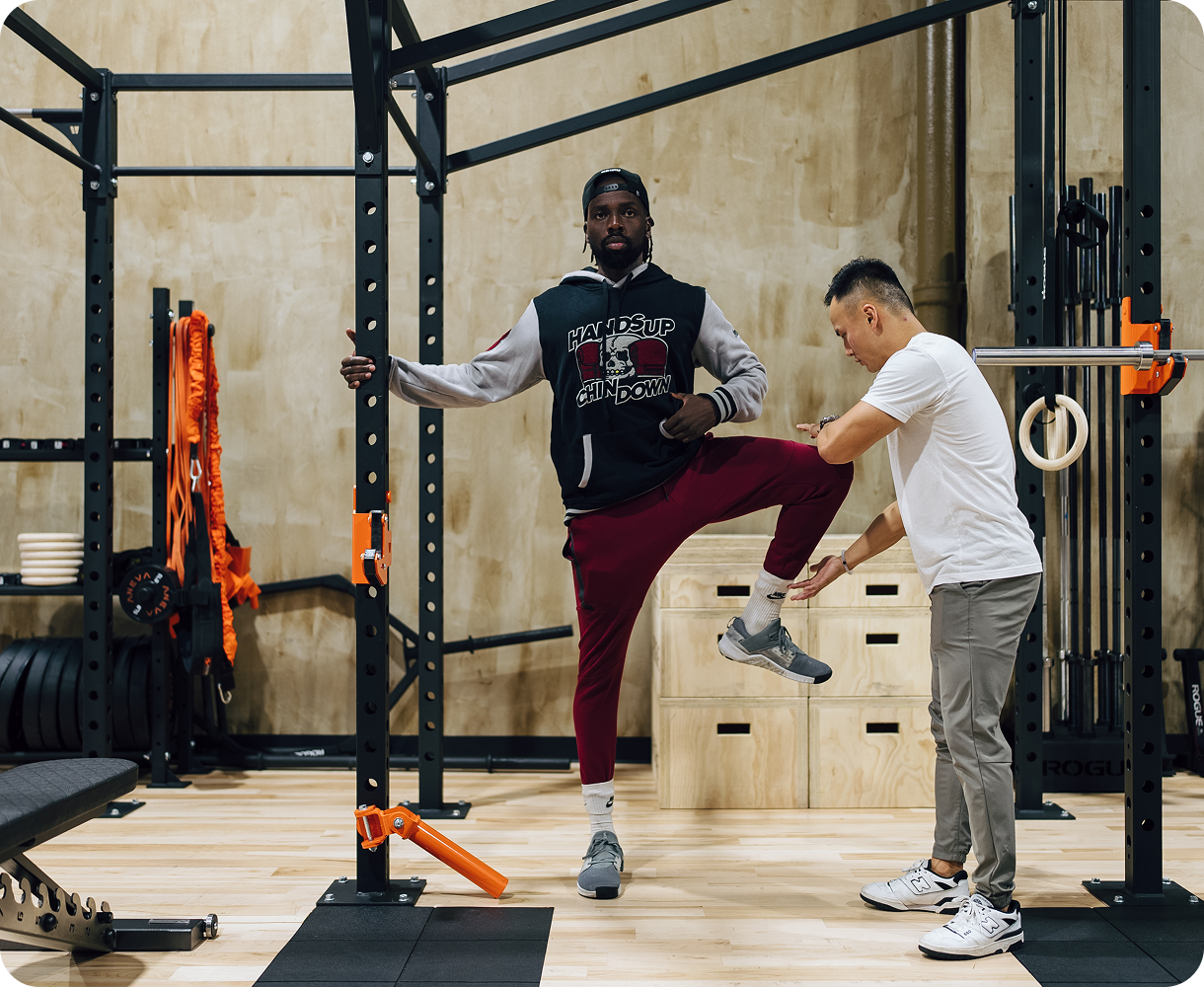
Why rest does not fix patellar tendinopathy
Rest is the most common prescription for patellar tendinopathy and one of the least effective. Understanding why requires understanding what rest actually does to a tendon.
When a tendon is rested, the mechanical stimulus that drives collagen synthesis is removed. Without that stimulus, the tendon does not remodel toward healthier, better-organized tissue. It simply remains in its current pathological state, with disrupted collagen architecture and altered mechanical properties, until load is reintroduced. When the athlete returns to training, they return with a tendon that has the same structural problems it had before the rest period, plus the quad strength and power losses that come from weeks of reduced activity.
This is why the most common pattern in patellar tendinopathy is: train until it hurts too much, rest until it feels better, return to training, symptoms return within weeks. The rest temporarily removes the irritation stimulus, but it does not address the structural deficit that makes the tendon vulnerable to that stimulus. Each cycle of load-rest-reload reinforces the pattern without resolving the underlying problem.
THE CYCLE THAT KEEPS ATHLETES STUCK
Rest reduces pain. Returning to training reloads a tendon that has not structurally improved. Symptoms return. This is not bad luck. It is the predictable consequence of treating a loading problem with the absence of load.
The exception to this principle is the genuinely reactive tendon in which any load provokes significant symptoms. In this case, a brief period of relative rest, meaning reduction of the most provocative loads rather than complete cessation of activity, may be appropriate to settle the acute reactivity before progressive loading begins. This is different from extended rest, which does nothing to drive the structural changes the tendon needs.
Anti-inflammatory medication similarly has limited benefit for established tendinopathy. It may reduce acute pain in reactive presentations, but the underlying pathology is not primarily inflammatory, and prolonged use of NSAIDs has been shown in some research to impair collagen synthesis, potentially slowing the very healing process the treatment is intended to support.
BUILDING THE TENDON BACK
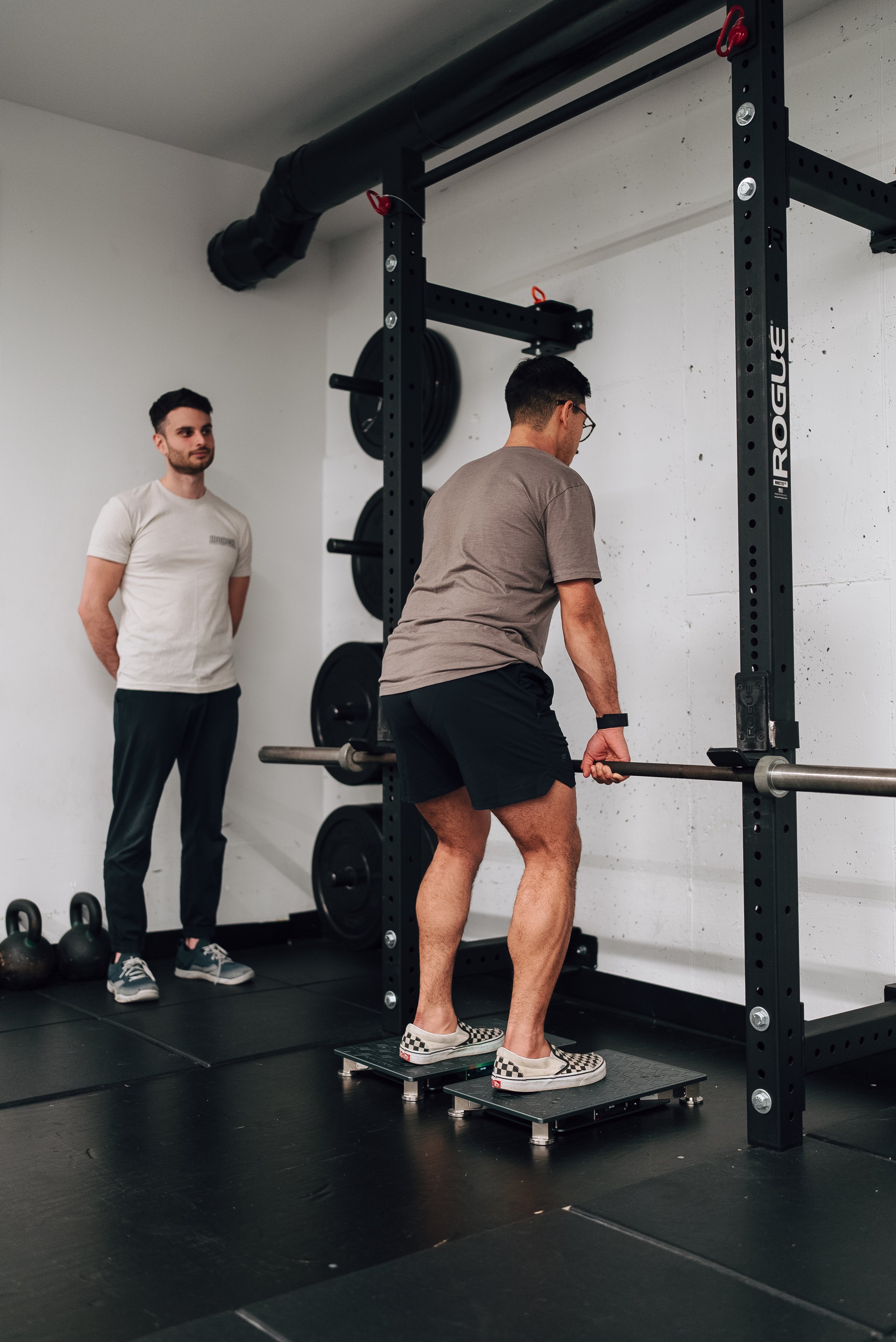
Progressive strength training for patellar tendinopathy
The progressive strength program for patellar tendinopathy at Moment is built around the specific demands of the athlete's sport and the current state of the tendon, not around a generic protocol applied the same way to every patient.
The program begins where the tendon currently is. For a reactive tendon with significant pain, this means isometric quad contractions that produce tendon load without the compressive and tensile stresses that provoke symptoms. A common starting point is wall sits held for 45 seconds, performed three to five times, which reduces tendon pain through central pain inhibition mechanisms while maintaining quad activation. This can typically be performed daily.
As the tendon's reactivity settles, heavy slow resistance training is introduced. Leg press, Spanish squats, and decline squats are the most commonly used exercises, each loading the patellar tendon in different ways and through different ranges. The key variables are load, which should be high enough to produce genuine adaptive stimulus, and tempo, which should be slow enough to maximize time under tension and minimize reactive load spikes. A common starting prescription is 3 sets of 15 repetitions at a tempo of three seconds up and three seconds down, progressed over weeks by increasing load as the tendon adapts.
The middle phases of the program build toward energy storage loading, meaning exercises in which the tendon is loaded rapidly and must store and release elastic energy, replicating the demands of jumping and running. This phase is critical for athletes returning to sport and is frequently absent from standard rehabilitation programs that stop at pain resolution. A tendon that is strong under slow loading is not automatically prepared for the explosive demands of basketball or volleyball.
Throughout the program, quad strength testing with a dynamometer gives us objective data on how the rehabilitated leg compares to the healthy side. Athletes do not advance to sport-specific loading phases until they meet strength criteria that reflect the demands of their sport. This prevents the premature return that perpetuates the load-rest-reload cycle.
GETTING BACK
Progressive strength training for patellar tendinopathy
The progressive strength program for patellar tendinopathy at Moment is built around the specific demands of the athlete's sport and the current state of the tendon, not around a generic protocol applied the same way to every patient.
The program begins where the tendon currently is. For a reactive tendon with significant pain, this means isometric quad contractions that produce tendon load without the compressive and tensile stresses that provoke symptoms. A common starting point is wall sits held for 45 seconds, performed three to five times, which reduces tendon pain through central pain inhibition mechanisms while maintaining quad activation. This can typically be performed daily.
As the tendon's reactivity settles, heavy slow resistance training is introduced. Leg press, Spanish squats, and decline squats are the most commonly used exercises, each loading the patellar tendon in different ways and through different ranges. The key variables are load, which should be high enough to produce genuine adaptive stimulus, and tempo, which should be slow enough to maximize time under tension and minimize reactive load spikes. A common starting prescription is 3 sets of 15 repetitions at a tempo of three seconds up and three seconds down, progressed over weeks by increasing load as the tendon adapts.
The middle phases of the program build toward energy storage loading, meaning exercises in which the tendon is loaded rapidly and must store and release elastic energy, replicating the demands of jumping and running. This phase is critical for athletes returning to sport and is frequently absent from standard rehabilitation programs that stop at pain resolution. A tendon that is strong under slow loading is not automatically prepared for the explosive demands of basketball or volleyball.
Throughout the program, quad strength testing with a dynamometer gives us objective data on how the rehabilitated leg compares to the healthy side. Athletes do not advance to sport-specific loading phases until they meet strength criteria that reflect the demands of their sport. This prevents the premature return that perpetuates the load-rest-reload cycle.
GETTING BACK
Return to sport after patellar tendinopathy
Return to sport from patellar tendinopathy is a graduated process that must account for the tendon's response to increasing load rather than following a fixed timeline. The tendon that feels fine during controlled rehabilitation exercises may react to the unpredictable loads of competitive sport, particularly in the early return period when training and competition volumes are being rebuilt.
For in-season athletes, management is a different challenge from off-season rehabilitation. The goal becomes maintaining enough tendon capacity to compete while managing the total load that is driving the condition. This typically involves modifying training sessions around competition, using isometric loading protocols on match days to reduce pain, and building the rehabilitation work into the training week rather than adding it on top of an already high load.
For athletes completing a full rehabilitation program, return to jumping and reactive movement is phased. Single-leg landing mechanics are assessed and optimized before bilateral jumping is introduced. Bilateral jumping precedes sport-specific cutting and reactive movement. Each stage is gated by the tendon's symptomatic response and by objective strength criteria.
For competitive athletes in jumping sports, we also address the training load management that will be necessary to maintain tendon health long-term. Patellar tendinopathy in athletes who have recovered once has a meaningful recurrence rate if the training practices that drove the initial injury are not modified. Volume management, adequate recovery between high-load sessions, and ongoing maintenance loading are part of the discharge plan.
The metric we use for return-to-sport clearance includes pain levels during and after sport-specific loading of no more than 2/10 during activity that resolves within 24 hours, quad strength symmetry of at least 90% on dynamometer testing, and successful completion of sport-specific loading tasks without tendon reactivity. Athletes who meet these criteria have the best outcomes and lowest recurrence rates.
FREQUENTLY ASKED QUESTIONS
Common questions about patellar tendinopathy
-
They describe the same structure but different underlying conditions. Tendonitis implies active inflammation and is the more accurate description of acute presentations where the tendon is recently irritated and inflammatory mediators are genuinely elevated. Tendinopathy is the more accurate term for persistent conditions in which the tendon has undergone structural changes beyond acute inflammation. Most cases that present to physical therapy are tendinopathy rather than tendonitis, which is why anti-inflammatory treatment and rest produce limited long-term benefit.
-
Meaningful improvement with appropriate loading-based rehabilitation typically occurs within six to twelve weeks. A full return to unrestricted sport, including the reactive jumping and explosive loading demands of high-level competition, usually takes three to six months. Athletes who have had symptoms for many months before beginning proper rehabilitation, or who have been through multiple rest-return cycles, tend to take longer. The most important variable is not time but whether the pr
-
In many cases, yes, with modification. The key is monitoring the tendon's response to competition load and adjusting the overall training week accordingly. A useful guideline is that pain during activity should not exceed three out of ten and should return to baseline within twenty-four hours of competition. If competition is consistently driving the tendon into a reactive state, a brief period of reduced competition load may be necessary to allow rehabilitation to progress. This is a management decision that depends on the severity of symptoms and the competitive calendar.
-
This is the classic tendinopathy pattern. The tendon tolerates load initially when it is warm and when energy storage capacity is fresh. As activity continues and cumulative load accumulates, the tendon's capacity is exceeded and pain increases. Post-activity pain reflects the tendon responding to a load that exceeded its current tolerance. The fact that it settles again with rest does not mean the tendon has recovered. It means the acute irritation has resolved while the underlying structural issues remain.
-
Not usually. Patellar tendinopathy is primarily a clinical diagnosis based on the characteristic history and examination findings. Imaging with ultrasound or MRI can confirm the diagnosis, identify the severity of structural change, and rule out other pathology such as a partial tear or bony avulsion. It is most useful when the diagnosis is uncertain, when symptoms are not responding as expected to rehabilitation, or when surgical management is being considered for recalcitrant cases.
-
Surgery for patellar tendinopathy is rarely necessary and should only be considered after a rigorous course of properly directed physical therapy has been completed without adequate response. When surgery is performed, it typically involves debridement of the pathological tendon tissue. Post-surgical rehabilitation follows the same progressive loading principles as conservative management and takes a similar or longer timeline. The vast majority of patients with patellar tendinopathy, including those with significant structural changes on imaging, respond well to non-operative treatment when it is appropriately applied.
-
Yes, significantly. Insufficient quad strength relative to the loading demands being placed on the extensor mechanism is one of the primary drivers of patellar tendon overload. When the quad cannot produce adequate force, the patellar tendon absorbs more of the mechanical demand of each repetition. This is why quad strengthening is central to every patellar tendinopathy rehabilitation program and why dynamometer testing of quad strength symmetry is part of our return-to-sport criteria.
-
The activities to avoid or modify are those that place high compressive load on the patellar tendon in a reactive state: deep squatting under load, heavy landing from height, and high-volume jumping. However, complete avoidance of all knee loading is counterproductive. Isometric and heavy slow resistance exercises that load the tendon in a controlled way should begin early in rehabilitation. The goal is not avoidance of load but careful management of load type, magnitude, and recovery to allow progressive tendon adaptation.
Moment Physical Therapy and Performance | Midtown Manhattan | SoHo | Long Island City, Queens