

Physical Therapy for Wrist and Hand Pain in NYC
Performance-focused rehabilitation for athletes, active adults, and professionals dealing with wrist pain, hand injuries, grip limitations, and movement dysfunction. We find what is driving the problem and build what is missing.
The wrist and hand are where training demands and daily life converge. When they break down, everything stops.
The wrist and hand are involved in virtually every upper body movement you perform, in the gym, in your sport, and at your desk. A barbell cannot be gripped without them. A keyboard cannot be used without them. A racquet, a climbing hold, a golf club, a pull-up bar — all of it passes through the wrist and hand first. When pain develops here, it does not just limit one activity. It limits most of them simultaneously.
What makes wrist and hand pain particularly frustrating is how quickly it compounds. A sore wrist changes how you grip a barbell, which changes how your elbow and shoulder load, which eventually creates problems further up the chain. A loss of wrist mobility restricts the front rack position, the overhead press, the push-up, and the gymnastics hold. Grip weakness that develops to protect a painful wrist reduces pulling strength, compromises barbell stability, and limits performance across virtually every discipline.
Wrist and hand pain in active people is rarely just a local problem. It almost always reflects a mismatch between what the structures are being asked to do and what they currently have the capacity to handle. That mismatch has specific causes: a training volume that outpaced tissue adaptation, a mobility restriction creating mechanical disadvantage, a technique pattern concentrating load on structures that cannot sustain it, or the cumulative effect of hours at a keyboard loading the same tendons that are then asked to perform in the gym.
At Moment, we treat the wrist and hand as part of the whole system that uses them. Understanding how the body is connected — how elbow, shoulder, and cervical mechanics contribute to wrist symptoms — is what separates treatment that holds from treatment that temporarily quiets things down.
Every wrist and hand case begins with a thorough evaluation of the local structures and the full mechanical context driving the load. From there, treatment is built around progressive loading, targeted mobility work, and a return-to-training plan that addresses the specific demands of your activity, not a generic version of what the wrist should be able to do.
0
Cookie-cutter protocols. Every plan is built from your evaluation, not a template.
3
NYC locations. Midtown, SoHo, Long Island City.
100%
One-on-one sessions. No aides, no hand-offs, no exceptions.

Back to lifting, swinging, and snatching — better than ever.
"I contacted Moment PTP due to constant wrist pain that kept me away from training. Within the first session I was blown away by Andy's knowledge and understanding of how the body is connected and why I might experience pain. Not only did we do training sessions together tailored to getting me back on track, he also created a workout program for me to keep me going and fixing my wrist. My pain is completely gone. I am lifting, swinging, and snatching better than ever before and I also learned a lot about my body and physical training."
Christopher
Wrist and hand conditions we treat
Each section below describes our clinical approach to a specific neck condition: what drives it, how we assess it, and how we treat it. These are not category labels. They are a description of how we actually work.
Wrist tendonitis
NDE QUERVAIN'S, ECU, AND FLEXOR TENDINOPATHIES
Wrist tendonitis encompasses a range of conditions involving irritation or degeneration of the tendons that cross the wrist joint. The most common presentations in active adults are De Quervain's tenosynovitis, which affects the tendons on the thumb side of the wrist and is common in new parents, golfers, and anyone performing repetitive gripping and twisting, extensor carpi ulnaris tendinopathy on the outer wrist frequently seen in racquet sport athletes and CrossFit athletes, and flexor tendon irritation at the inner wrist from repetitive gripping or barbell training.
The characteristic pattern of tendon pain applies here as it does throughout the body: pain that is worst at the start of activity, settles somewhat during warm-up, and returns with sustained or high-load use. The tendon is irritated but not damaged in most presentations, and the most effective treatment is progressive loading rather than rest.
We identify the specific tendon involved, assess the loading pattern and technique driving the irritation, and build a graduated strengthening program that progressively increases the tendon's capacity while managing overall training volume. For athletes in season, this means finding the version of training that is safe right now and expanding from there rather than enforcing complete rest that allows the irritation to settle while doing nothing to build the capacity that prevents recurrence.
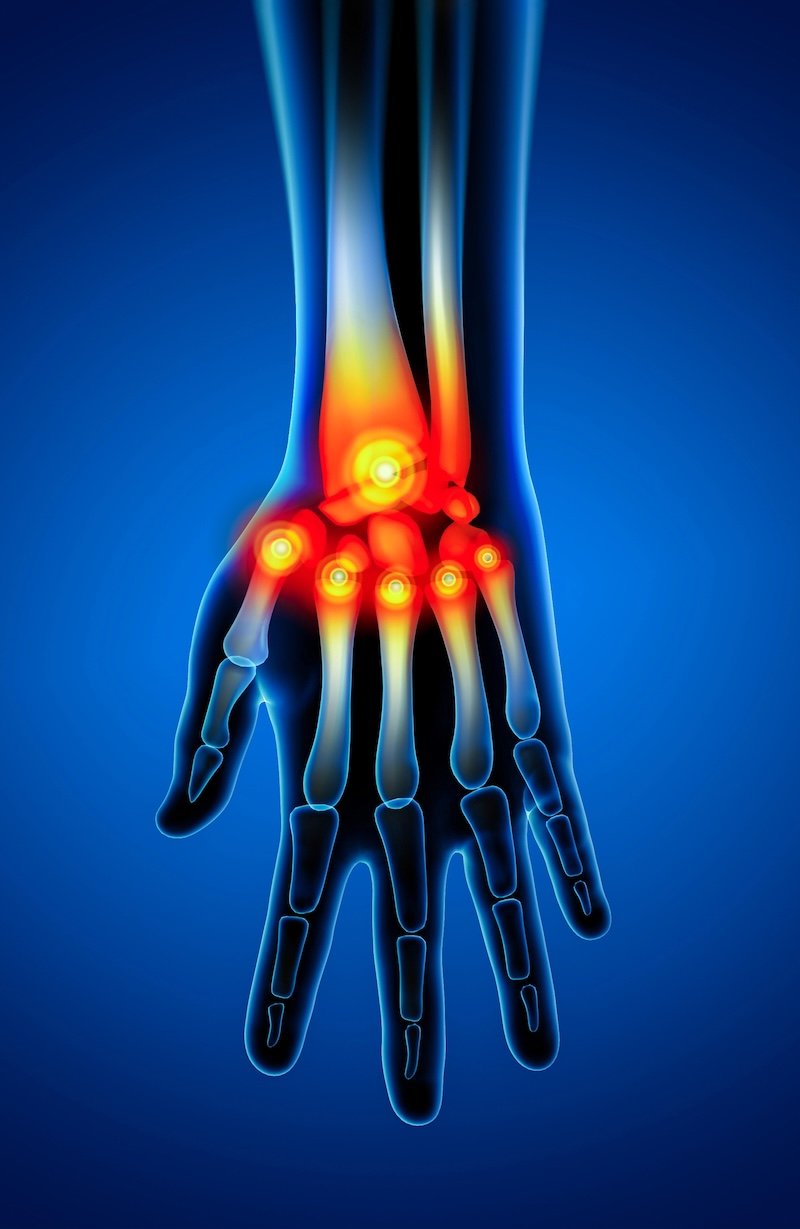
Wrist tendon pain is a load management and capacity problem. The tendon needs progressive loading to adapt, not rest that simply removes the stimulus temporarily.
— CLINICAL TAKEAWAY
Carpal tunnel syndrome
MEDIAN NERVE COMPRESSION
Carpal tunnel syndrome involves compression of the median nerve as it passes through the carpal tunnel at the wrist, producing pain, tingling, and numbness in the thumb, index finger, middle finger, and part of the ring finger. It is among the most common nerve entrapment conditions and is frequently associated with sustained wrist positions, repetitive hand movements, and activities that increase pressure within the carpal tunnel.
What many people are not told is that carpal tunnel syndrome often has contributors above the wrist. The median nerve can be irritated at multiple points along its path from the cervical spine through the forearm and into the hand. When neck or thoracic mechanics are contributing to the presentation, treating only the wrist produces incomplete results. A thorough evaluation identifies where along the nerve's path the irritation is being generated and treats accordingly.
Conservative management with physical therapy is effective for most mild to moderate carpal tunnel presentations and is strongly recommended before surgical intervention. Treatment includes nerve mobilization techniques, wrist and forearm mobility work, ergonomic modification to reduce sustained compression, and strengthening of the hand and forearm musculature. For athletes and active adults, we also assess how training positions and grip patterns are contributing and modify accordingly.
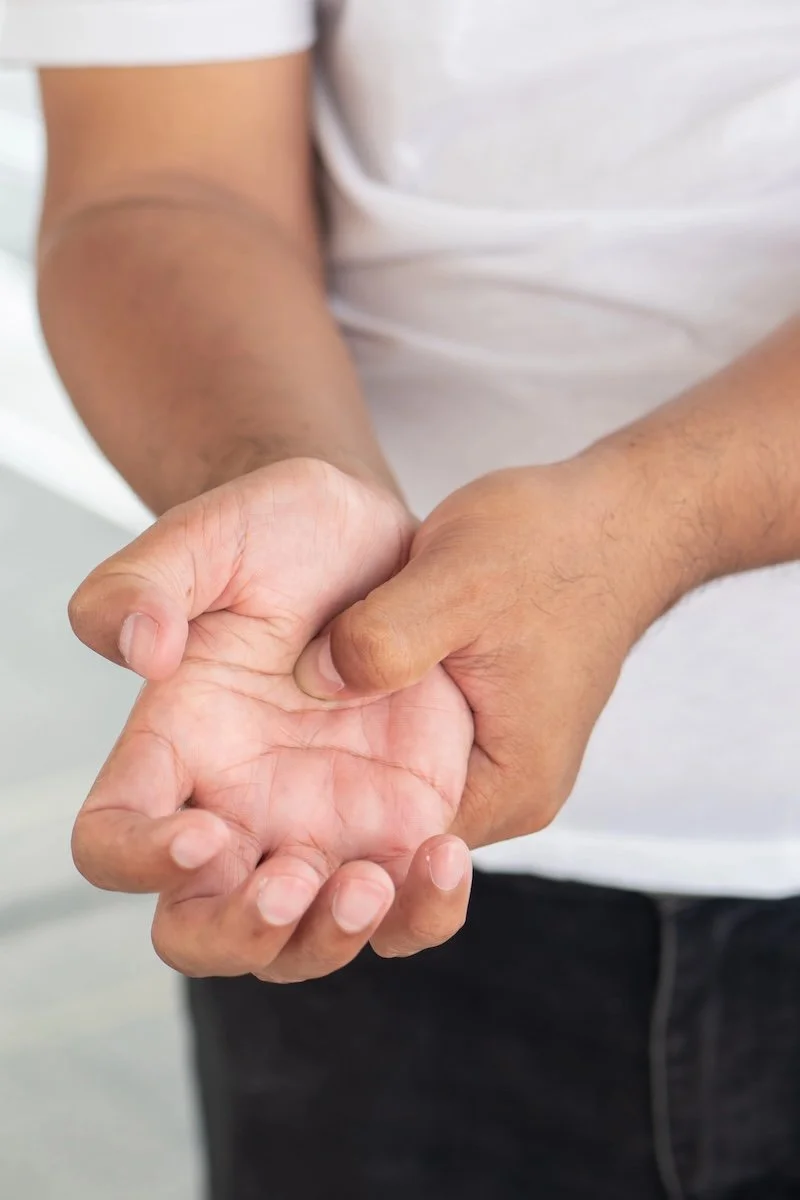
Carpal tunnel syndrome frequently has contributors above the wrist that treating only the hand will miss. A full evaluation changes what treatment looks like and how well it holds.
— CLINICAL TAKEAWAY
Wrist pain from weightlifting
FRONT RACK, OVERHEAD, AND GRIP-RELATED PAIN
Wrist pain in the gym is extremely common and almost universally undertreated. The wrist is asked to manage significant load in a variety of positions across a typical training session: the front rack position in a clean requires full wrist extension under load, the overhead position in a snatch or press requires stability through extreme ranges, and the barbell grip in a deadlift or row places sustained compressive demand on the wrist structures.
Pain in any of these positions is rarely a sign of structural damage. It is almost always a sign that the wrist lacks the mobility, stability, or capacity to manage the demand being placed on it. A front rack that is painful is usually a wrist extension mobility problem combined with insufficient forearm flexibility. Overhead wrist pain is frequently a stability issue rather than a structural one.
We assess your actual training positions and loading patterns, not generic wrist mechanics. Our therapists train with barbells and understand the specific demands of Olympic lifting, powerlifting, and functional fitness programming. The goal is to restore pain-free movement in the positions your training requires, not to build modified versions of your lifts around an ongoing limitation.
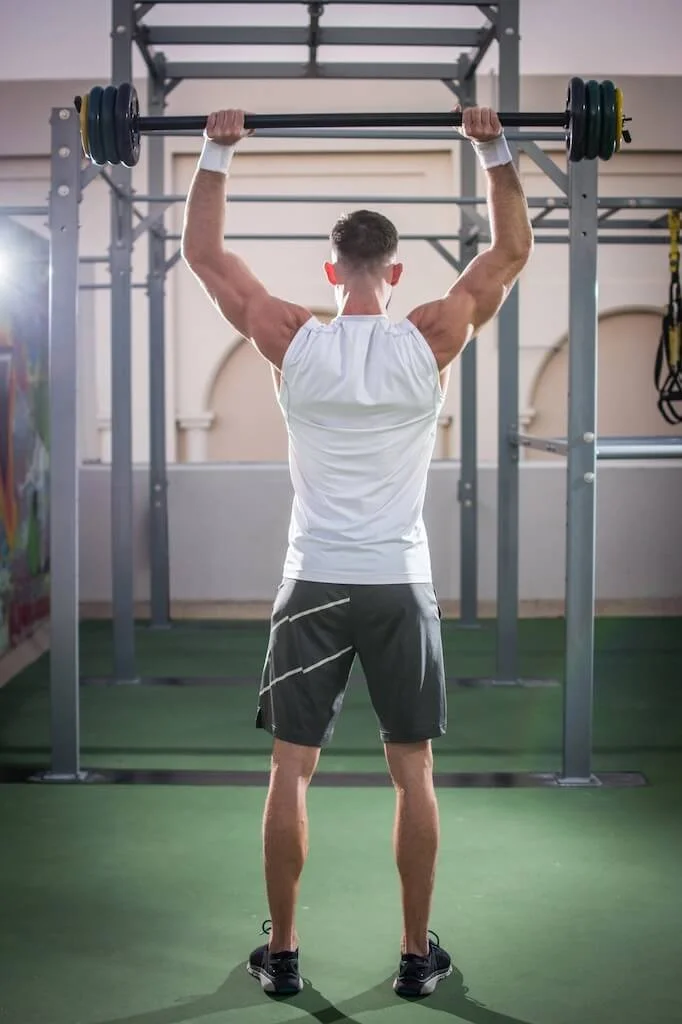
Wrist pain in the gym is almost always a mechanics and capacity problem. The positions that hurt can usually be restored with the right mobility and strength work.
— CLINICAL TAKEAWAY
Repetitive strain injuries
OVERUSE — TYPING, GRIPPING, AND SPORT
Repetitive strain injuries of the wrist and hand develop when cumulative loading exceeds the tissue's capacity to recover between exposures. They are the defining occupational injury of knowledge workers and the defining overuse injury of athletes whose sports demand high-volume grip and wrist use: climbers, tennis and pickleball players, golfers, and gymnasts are all at significant risk.
The insidious nature of repetitive strain injuries is that they develop gradually and are easy to dismiss until they reach a threshold where training or work is meaningfully impaired. By the time most people seek treatment, they have been accommodating the discomfort for weeks or months, creating compensatory movement patterns that often become their own problems.
Treatment addresses the tissue directly through progressive loading and manual therapy, and addresses the movement and ergonomic patterns that have been sustaining the excess load. For desk workers, this means assessing keyboard and mouse positioning, wrist resting habits, and sustained grip patterns. For athletes, it means assessing grip mechanics, wrist position during sport-specific movements, and training volume relative to the tissue's current capacity.

Repetitive strain injuries have clear causes and respond well to treatment when the underlying loading patterns are addressed alongside the local tissue.
— CLINICAL TAKEAWAY
Grip strength limitations
PERFORMANCE AND FUNCTIONAL DEFICITS
Grip strength is one of the most reliable indicators of overall upper extremity health and one of the most underappreciated performance variables in training. A weak or unreliable grip limits pulling strength, reduces barbell stability, compromises climbing performance, and forces the wrist and forearm to compensate in ways that create overuse injury over time.
Grip limitations in active adults usually reflect a combination of intrinsic hand weakness, forearm flexor and extensor strength deficits, and insufficient training of the specific grip patterns the activity demands. A rock climber's grip demands are fundamentally different from a barbell athlete's, and training that builds capacity for one does not automatically transfer to the other.
We assess grip strength objectively with dynamometer testing, compare bilateral symmetry, and identify the specific patterns of weakness relevant to your activity. From there, treatment is a progressive grip and forearm strengthening program built around the specific demands of your training. For patients recovering from wrist injuries, grip strength restoration is often the final limiting factor in return to full performance and receives dedicated attention throughout the rehabilitation process.

Grip strength is both a performance variable and a load management variable. Building it reduces wrist injury risk and unlocks performance capacity across virtually every upper body movement.
— CLINICAL TAKEAWAY
Hand and wrist mobility restrictions
JOINT STIFFNESS AND RANGE OF MOTION DEFICITS
Wrist and hand mobility restrictions are among the most limiting deficits for athletes who train overhead, perform Olympic lifts, or play racquet sports. The wrist needs adequate extension for front rack and push-up positions, adequate flexion for gymnastics and climbing holds, and adequate rotation for throwing and racquet mechanics. When any of these are restricted, performance suffers and injury risk increases as the body compensates at adjacent segments.
Stiffness in the small joints of the hand and wrist accumulates from a combination of training in limited ranges, repetitive loading in fixed positions, and the gradual loss of mobility that comes with sustained desk work. Unlike muscle tightness, joint stiffness does not respond reliably to stretching alone. It requires direct mobilization of the restricted joint surfaces, followed by strengthening to maintain the restored range under load.
We assess wrist and hand mobility in all relevant planes and identify which specific joints or soft tissue structures are limiting movement. Manual therapy restores mobility at the joint level. Progressive loading in the restored range ensures that the improved mobility translates into actual performance rather than just passive range that disappears under load.

Wrist and hand stiffness is not a permanent feature of anatomy. It has causes, and those causes are directly treatable with the right combination of joint mobilization and progressive loading.
— CLINICAL TAKEAWAY
Wrist sprains
LIGAMENT INJURIES — ACUTE AND CHRONIC
Wrist sprains range from minor ligament strains that resolve within a few weeks to significant injuries involving the scapholunate or lunotriquetral ligaments that require careful management to prevent long-term instability. The wrist contains eight carpal bones connected by a complex network of ligaments, and disruption of any of these connections alters the mechanics of the entire wrist joint.
The most common mechanism in athletes is a fall onto an outstretched hand, a ground contact during sport, or a barbell catch position that loads the wrist in extension under force. Symptoms include localized pain and swelling, reduced grip strength, and movement restrictions that often seem disproportionate to what initially appeared to be a minor injury.
Appropriate management depends on which ligaments are involved and the degree of instability. Most wrist sprains respond well to conservative rehabilitation: progressive restoration of wrist mobility, strengthening of the wrist stabilizers, and graduated return to loading. For athletes, we build return-to-sport criteria around functional testing rather than time elapsed, and we assess the movement mechanics that contributed to the injury to reduce re-injury risk.
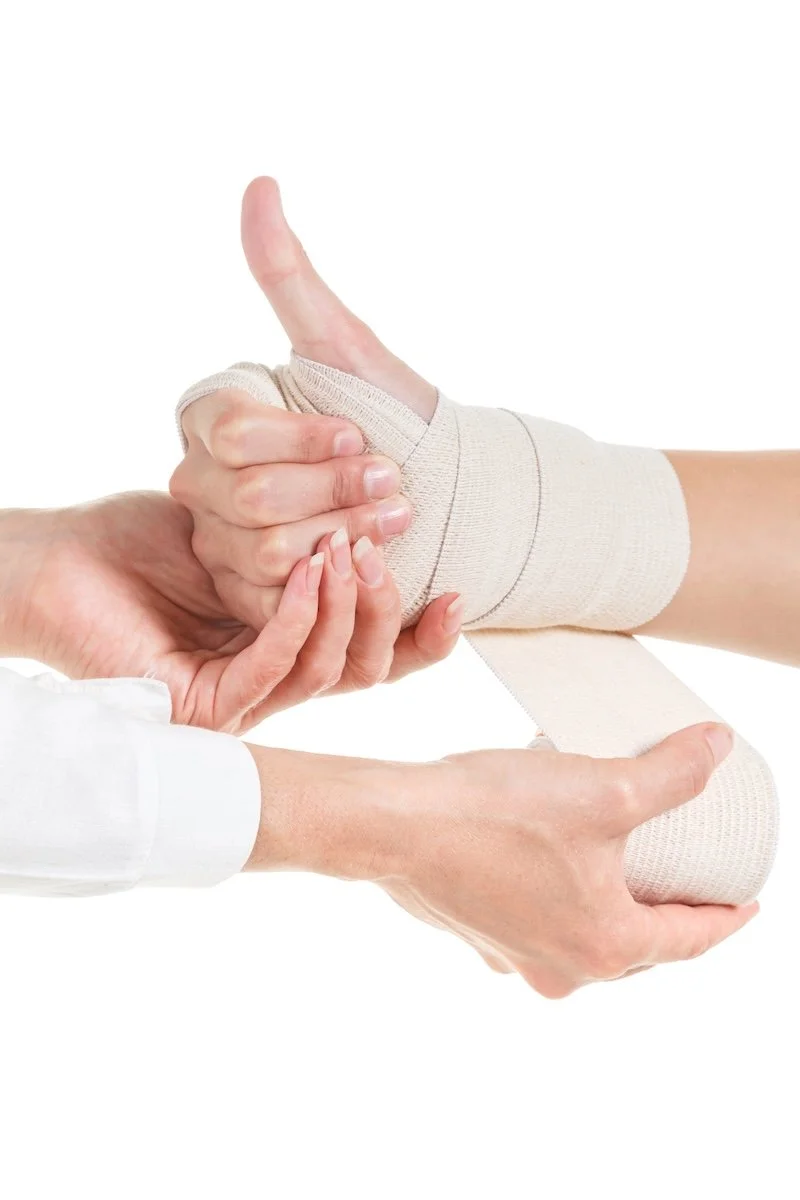
Wrist sprains that seem minor can have significant consequences when the underlying ligament integrity is not properly assessed and rehabilitated.
— CLINICAL TAKEAWAY

CLIMBERS, GOLFERS, RACQUET SPORTS, AND CROSSFIT
The wrist and hand overuse injury patterns vary meaningfully by sport. Climbers develop pulley injuries in the finger flexor tendons and capsular restrictions from sustained grip positions. Golfers develop wrist tendinopathies on both sides of the wrist from the rotational demands of the swing. Tennis and pickleball athletes develop both wrist and forearm tendinopathies from repetitive impact loading. CrossFit athletes stress the wrist across multiple movement patterns including barbell cycling, gymnastics holds, and kettlebell work.
What all of these share is the fundamental overuse mechanism: load that exceeds the tissue's capacity to recover between sessions. What differentiates them is the specific structure involved, the mechanical pattern producing the excess load, and the sport-specific demands that treatment needs to account for.
We assess athletes in the context of their actual sport demands, not generic wrist mechanics. Understanding what a climber's crimp grip asks of the finger pulleys, how a golf swing loads the lead wrist, or what barbell cycling does to forearm flexor capacity is what allows treatment to be specific and return to sport to be complete. Generic wrist rehab for athletes with sport-specific demands produces incomplete results.
Overuse injuries in athletes
Wrist overuse injuries in athletes require sport-specific understanding of what the activity is asking of the structures. Generic protocols do not address sport-specific demands.
— CLINICAL TAKEAWAY
What we assess and why it matters.
Wrist and hand evaluation at Moment goes beyond the local structures. The wrist is the end of a kinetic chain that includes the forearm, elbow, shoulder, and cervical spine. Problems anywhere along that chain can produce or contribute to wrist symptoms. A thorough evaluation identifies where the primary driver is located before determining how to treat it.
-
01
Local joint assessment
Range of motion in flexion, extension, radial and ulnar deviation, and forearm rotation. Joint integrity testing, ligament stability, and soft tissue evaluation of tendons and nerve structures.
-
02
Grip strength testing
Dynamometer testing of grip and pinch strength with bilateral comparison, identifying deficits most associated with both pain and performance limitation.
-
03
Neural evaluation
Assessment for nerve involvement, including sensation testing and nerve tension tests for median, ulnar, and radial nerve contributions to wrist and hand symptoms.
-
04
Upper extremity chain screen
Evaluation of elbow, shoulder, and cervical mechanics to identify contributors above the wrist that a local assessment alone would miss.
-
05
Activity-specific analysis
Assessment of your actual training positions and sport demands — front rack, overhead, grip patterns, racquet mechanics — not just generic wrist movement screens.
Treatment is progressive and specific. Tendon loading protocols for tendinopathies. Nerve mobilization for carpal tunnel and nerve entrapment presentations. Joint mobilization for mobility restrictions. Progressive grip and wrist strengthening built around the demands of your activity. Take-home programs updated after every session so progress continues between appointments.
WHO WE WORK WITH
Is this you?
Our wrist and hand patients range from competitive climbers and CrossFit athletes to desk workers who also train and cannot get their wrist pain under control. What they share is a training or professional life that depends on the wrist and hand functioning reliably.
You lift.
Front rack mobility, overhead stability, deadlift grip, barbell cycling. Wrist pain in the gym is almost always a mechanics and capacity problem. We assess your actual training positions and build the mobility and strength to handle what you are asking of your wrists.
You climb.
Finger pulley injuries, wrist capsule restrictions, grip endurance deficits. Climbing places demands on the hand and wrist that no other sport does. We treat climbers who need sport-specific rehabilitation that understands what each grip type is asking of the structures involved.
You play racquet sports or golf.
Tennis, pickleball, squash, golf. Repetitive impact and rotational loading through the wrist creates predictable overuse patterns. We assess the specific mechanics of your sport and build the capacity and movement quality to sustain your training and competition load.
You work at a desk and also train.
Hours of sustained wrist position combined with training load is one of the most common drivers of wrist and hand overuse injuries. We address both the occupational contributors and the training mechanics, because treating only one without the other rarely holds.
You do CrossFit or functional fitness.
Barbell cycling, gymnastics holds, kettlebell work, and rope climbs all load the wrist in different ways. Wrist pain in functional fitness athletes almost always reflects a specific position or movement that can be identified, addressed, and restored to pain-free loading.
You are dealing with something that will not go away.
Wrist pain that flares with every training block. Grip that feels unreliable. Tingling in the fingers that comes and goes. Chronic wrist and hand conditions have clear causes when properly evaluated. Christopher's wrist pain kept him from training for months before the right assessment changed everything.
-
Almost always a combination of mobility restrictions and loading demands that exceed current capacity. Front rack pain is usually a wrist extension mobility problem. Overhead wrist pain typically reflects instability or insufficient mobility for the range being demanded. Grip-related pain during deadlifts or rows usually points to forearm or wrist tendon irritation from volume or technique. A thorough assessment identifies which pattern is driving your specific presentation.
-
Yes, and it should almost always be attempted before surgical intervention for mild to moderate presentations. PT addresses the nerve directly through mobilization techniques, reduces compression through ergonomic modification and positional retraining, and builds the forearm and hand strength that supports the wrist under load. Importantly, a thorough evaluation also checks for contributors above the wrist, in the forearm, elbow, or cervical spine, that treating only the hand would miss.
-
Wrist tendonitis develops when a tendon is loaded repeatedly beyond its current capacity to recover. In athletes, this is usually a training volume spike, a technique issue that concentrates load on a specific tendon, or a return to training after time off that progresses too quickly. In desk workers, it reflects sustained positioning and repetitive movement that accumulates gradually. The specific tendon involved tells us which activities and positions are driving it.
-
Yes, significantly. Insufficient grip strength forces the wrist and forearm to compensate during lifting and sport, increasing stress on tendons, joints, and ligaments that are not designed to be primary load-bearers. Building grip strength is both a performance intervention and an injury prevention strategy. We assess it objectively with dynamometer testing and build it progressively as part of every wrist and hand rehabilitation plan.
-
Minor tendon irritation and wrist sprains typically respond well within four to eight weeks of consistent treatment. Carpal tunnel syndrome and more established tendinopathies take longer, usually eight to twelve weeks. Post-surgical wrist rehab timelines depend on the procedure. What matters more than the timeline is that the underlying mechanics and capacity drivers are addressed, not just the local symptoms. We give you a realistic picture at the initial evaluation.
-
Yes, and it is among the most common drivers of wrist and hand pain in adults who also train. Sustained keyboard and mouse positions compress the carpal tunnel, restrict wrist mobility, and fatigue the forearm extensors. When combined with training loads, the cumulative demand frequently exceeds the tissue's capacity. Ergonomic assessment and modification is part of every treatment plan for patients with desk-work-related wrist pain.
-
In many cases, yes. The most common wrist surgeries, including carpal tunnel release, tendon repair, and ligament reconstruction, are frequently performed on patients who have not completed a rigorous course of physical therapy. For carpal tunnel syndrome, mild to moderate tendinopathies, and many ligament injuries, conservative management with PT produces outcomes comparable to surgery with far less risk and recovery time. We will give you an honest assessment of what is realistic for your situation.
-
Push-up wrist pain almost always reflects insufficient wrist extension mobility for the position the exercise requires. The wrist needs approximately 90 degrees of extension in a standard push-up, and most adults with desk-work backgrounds do not have that range available without compensation. Treatment involves restoring wrist extension mobility and building the wrist stability to load through that range. Most patients return to pain-free push-ups within a few weeks once the mobility restriction is addressed.
Frequently Asked Questions
Moment Physical Therapy and Performance | Midtown Manhattan | SoHo | Long Island City, Queens