
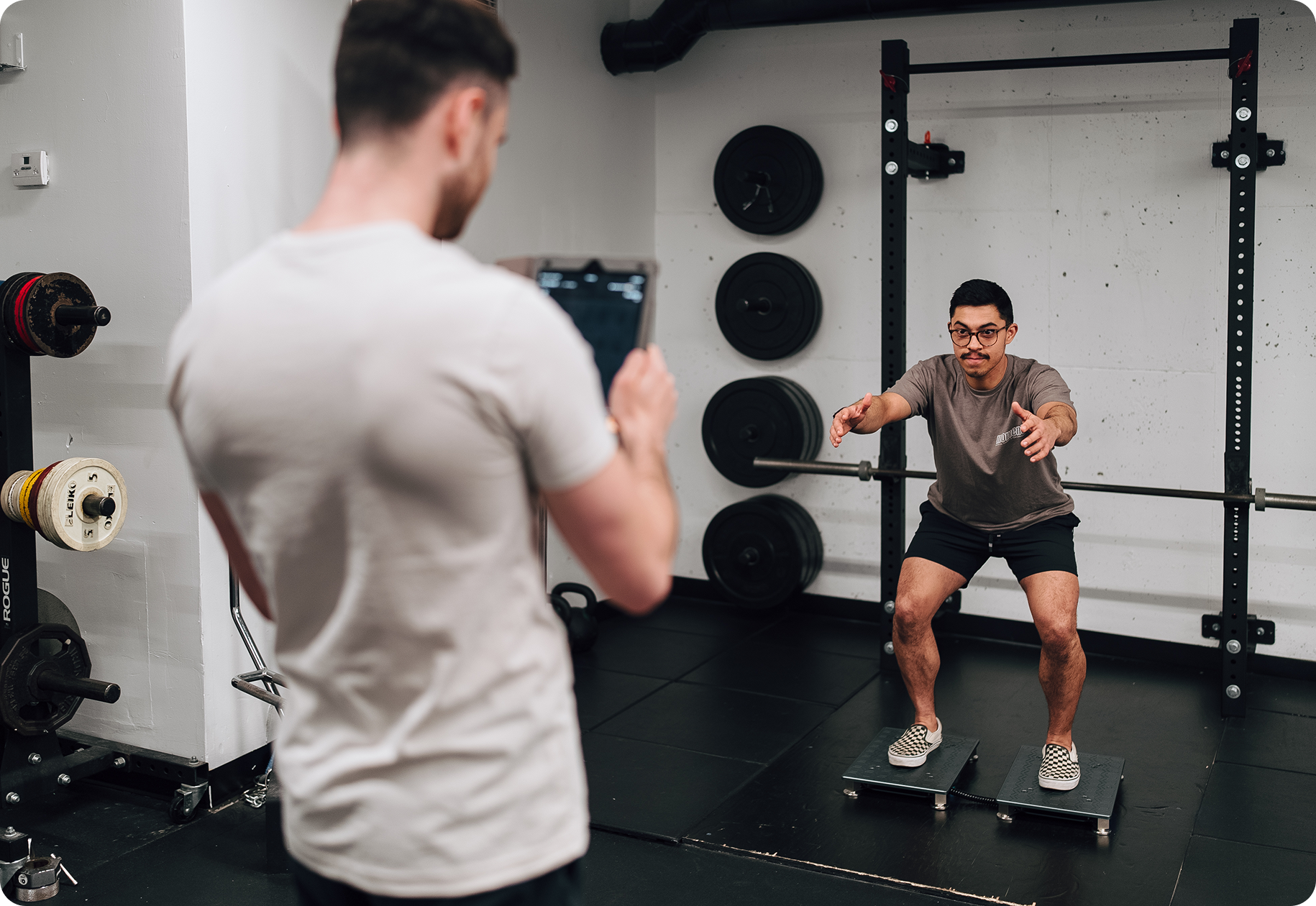
Force Plate Testing in NYC
Data That Shows You When You’re Truly Ready to Return to Sport
Getting back to sport is not about how you feel.
It is about how your body actually performs under load.
Force plate testing gives us objective insight into how you produce force, how you absorb it, and where your body may still be protecting itself. This level of analysis is typically reserved for professional teams and research labs. At Moment PTP, it is part of how we guide athletes through a smarter, safer return to sport in New York City.
This is not about chasing numbers.
It is about reducing guesswork and making confident decisions.
What Is Force Plate Testing?
Force plate testing is a high-level assessment that measures how your body interacts with the ground during athletic tasks such as jumping, landing, and rapid force production.
Every movement generates data.
How much force each limb produces.
How efficiently force is absorbed.
How load is shared across the body.Paired with motion tracking technology, force plates reveal not just what is happening, but how you are accomplishing the task.
Force plates tell us how your body truly performs when force, speed, and coordination collide — the conditions that matter most in sport.
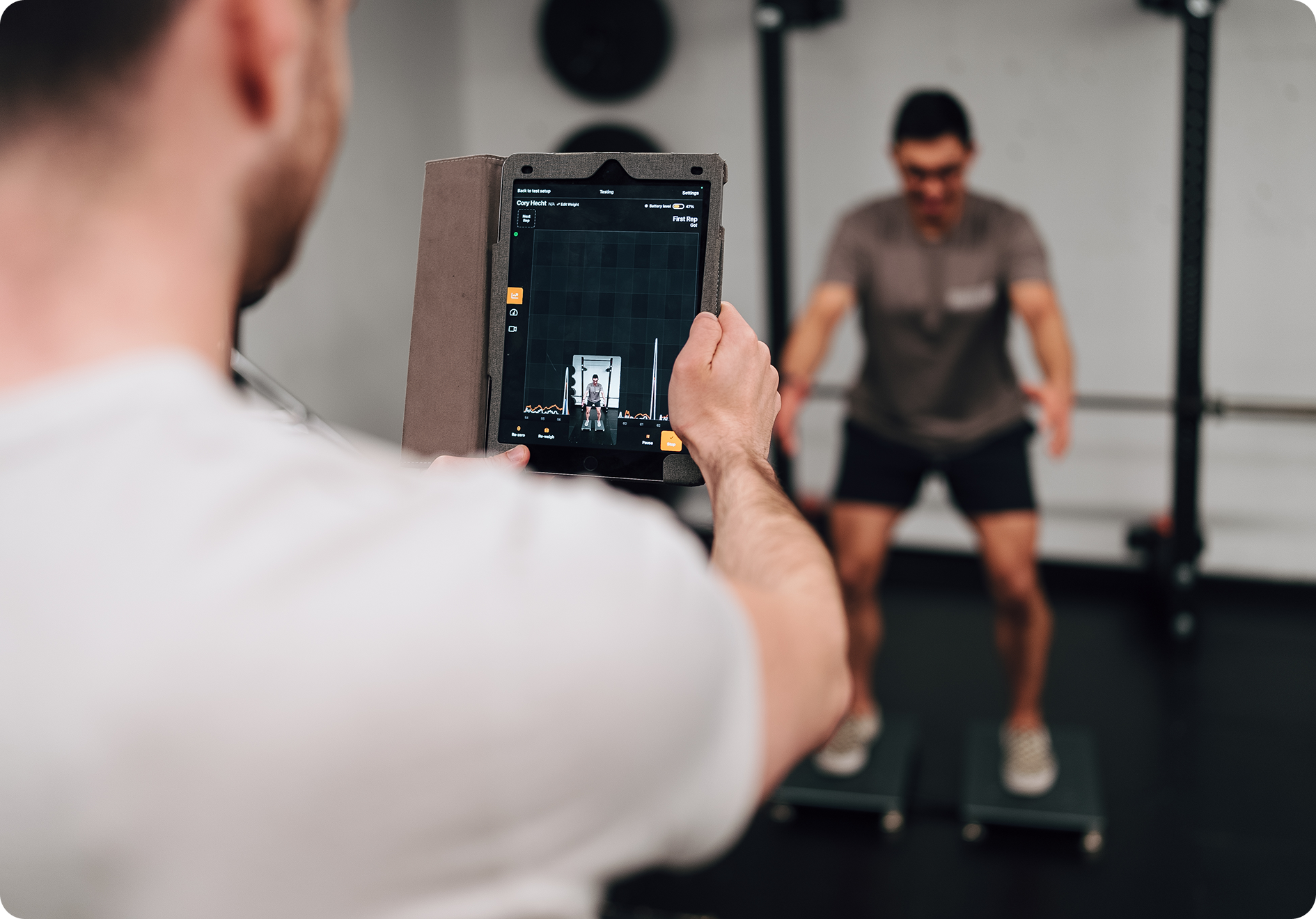
How Force Plates Measure Athletic Performance
During testing, you will perform a series of controlled athletic tasks, often involving jumps or rapid transitions.
The force plates capture:
Force production and absorption from each limb
Timing and symmetry between sides
Load distribution patterns
Movement strategies under demand
This allows us to see how your body manages impact and propulsion, two key components of safe return to sport.
Identifying Asymmetries Before They Become Injuries
After injury, athletes become very good at compensating.
You may jump higher on one side.
Land softer on the unaffected limb.
Shift load away from the injured area without realizing it.
These asymmetries are common after injuries like ACL reconstruction or Achilles tendon repair. Research consistently shows that unresolved asymmetries increase the risk of re-injury or injury on the opposite side.
Force plate testing allows us to detect these patterns early so they can be addressed intentionally rather than ignored.

Why Normative Values Matter More Than Side-to-Side Comparison
A common mistake in return to sport testing is using the uninjured side as the benchmark.
The problem is simple.
During rehab, both sides often lose capacity.
Comparing one deconditioned limb to another does not tell us if you are truly ready.
At Moment PTP, we use normative values drawn from research and global athlete databases. These benchmarks reflect what healthy, prepared athletes should demonstrate, not just what your other side can manage.
This shifts the goal from “better than the injured side” to “ready for the demands of sport.”
How Force Plate Testing Guides Your Rehab and Training
Data only matters if it changes what you do next.
Force plate results directly inform:
Strength and conditioning progressions
Advanced mobility priorities
Return to running or jumping timelines
Load management strategies
Sport-specific preparation
When paired with Force Dynamometer Testing, we can confirm whether deficits are coming from isolated strength limitations or global movement strategies.
This integration allows us to build a plan that closes gaps instead of reinforcing them.

Who Benefits from Force Plate Testing?
Force plate testing is ideal for:
Athletes returning from lower extremity injuries
Runners preparing to reintroduce speed or volume
Field and court athletes transitioning back to full competition
Lifters who feel strong but unstable under load
Active adults who want objective insight before pushing intensity
If you want clarity rather than guesswork, this is the standard.

Part of a Smarter Return to Sport System
Force plate testing is one component of a comprehensive return to sport process at Moment PTP.
It works alongside:
Force Dynamometer Testing
Advanced Mobility Training
Strength and Conditioning
Sport-specific progression planning
Each piece informs the next. Nothing is random.
Ready for a Data-Driven Return to Sport?
If you want to understand how your body truly performs and reduce the risk of future setbacks, force plate testing is the next step.
At Moment PTP, we provide force plate testing in NYC as part of a complete return to sport assessment, not a one-off screen.
Schedule your force plate testing session and take the guesswork out of your return to sport.