

Sciatica: Symptoms, Causes & Physical Therapy Treatment
Sciatica is one of the most searched pain terms there is, and one of the most misunderstood. It is not a diagnosis. It is a set of symptoms, pain, tingling, numbness, or weakness, that travel along the sciatic nerve, and those symptoms can come from several different sources. The treatment that resolves one source often does little for another, which is why generic sciatica advice so frequently fails. We find the specific driver first, then treat it.
Built for people who want the actual problem solved, not just the leg quieted for a while.
1st-line
Physical therapy, the recommended first-line care for most sciatica
0
Cookie-cutter protocols. Every plan is built from your evaluation.
100%
One-on-one sessions with a doctorate-trained physical therapist
UNDERSTANDING THE SYMPTOM
What sciatica actually is
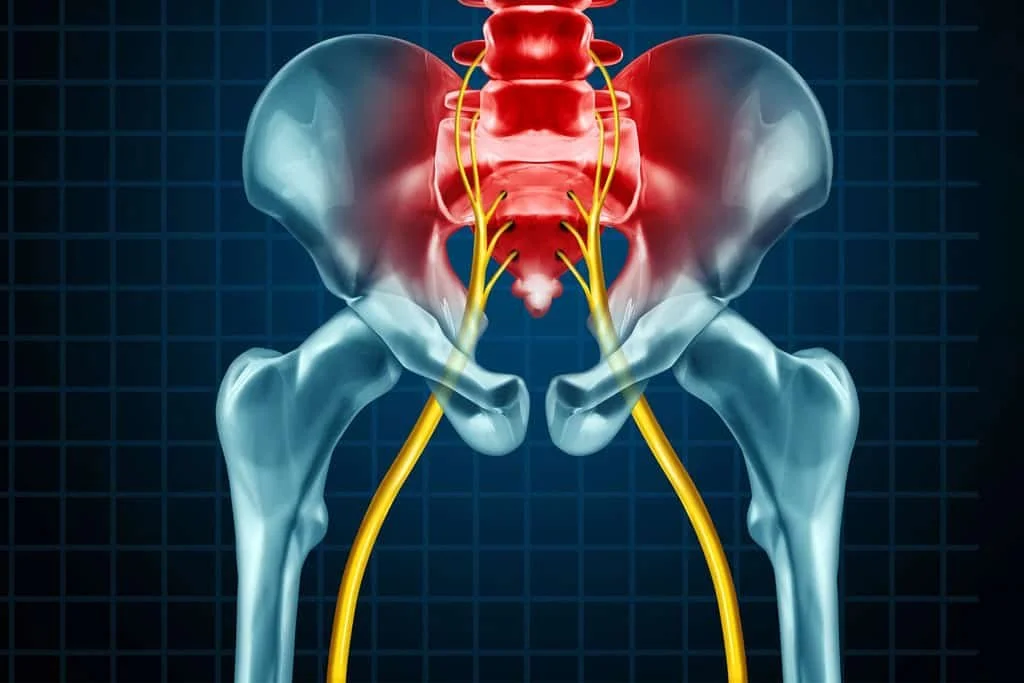
Sciatica refers to symptoms that travel along the path of the sciatic nerve, the largest nerve in the body, which runs from the lower spine through the glute and down the back of the leg. When that nerve is irritated or compressed anywhere along its path, the result is pain, and often tingling, numbness, or weakness, that follows the nerve rather than staying put in one spot.
The word describes the pattern, not the cause. That is the single most important thing to understand about sciatica, and it is where most treatment goes wrong. Two people can have nearly identical leg pain driven by completely different problems, and the plan that helps one can be useless or even aggravating for the other. Getting sciatica right starts with identifying what is actually irritating the nerve, not with reaching for the exercise that worked for someone else.
Sciatica is a symptom, not a diagnosis. It tells you a nerve is irritated. It does not tell you why, and the why is what determines the treatment.
Sciatica can be frightening. Electric pain down the leg, numbness, a foot that does not feel quite right, it all invites the worst-case interpretation: permanent nerve damage, a fragile spine, surgery on the horizon. For most people, none of that is the reality. Most sciatica is treatable, and most of it improves with the right conservative care. The people who get better are not the lucky ones. They are the ones whose treatment finally matched the actual source, instead of the generic stretches and wait-and-see advice that so often come first.
WHERE IT COMES FROM
What causes sciatica
Sciatica has several possible sources, and they are entirely different problems that happen to produce a similar symptom. These are the most common.
Disc-related nerve root compression. This is the most frequent cause. A lumbar disc bulges or herniates and presses on or chemically irritates a nearby nerve root. It often feels worse with sitting, bending forward, or coughing and sneezing, and it frequently sends symptoms below the knee.
Deep gluteal irritation. The nerve can be irritated as it passes through the glute, by the piriformis or other structures in the area. This is often what people mean when they blame the piriformis, though it is less common than disc-related sciatica and frequently over-diagnosed.
Spinal stenosis. A narrowing of the space around the nerves in the lower spine, more common with age. It tends to feel worse with standing and walking and to ease when sitting or bending forward, which opens that space back up.
More than one at once. These sources often overlap, and other issues, such as the hip or the sacroiliac joint, can mimic sciatica closely enough to confuse the picture. That is a large part of why an accurate assessment matters.
The treatment for each of these is different. Directional movement that relieves a disc-driven presentation will not address a stenosis-driven one, and stretching the glute does nothing for a nerve root compressed at the spine. This is the entire reason generic sciatica advice has such a poor track record.
RECOGNIZING IT

Common symptoms of sciatica
Sciatica symptoms follow the nerve, and that is what sets them apart from ordinary back pain. The hallmark is pain that radiates: it starts in the lower back or the glute and travels down the back of the leg, often past the knee and sometimes into the foot. It usually affects one side.
The pain has a particular character. People describe it as sharp, burning, electric, or shooting, different from the dull ache of a muscular problem. It often comes with other nerve symptoms: a pins-and-needles sensation, numbness in part of the leg or foot, or weakness in specific movements.
Symptoms vary from person to person because they depend on which nerve root is involved and what is irritating it. The level in the spine determines where in the leg and foot the symptoms land. The source determines what makes them better or worse: a disc-driven presentation often hates sitting and bending, while a stenosis-driven one often hates standing and walking. That variation is not noise. It is a clue, and a trained clinician uses it to locate the source.
TELLING THEM APART
Sciatica, or ordinary back pain?
Not all back pain is sciatica, and the distinction matters because the two involve different tissue and different treatment. “Ordinary” low back pain is usually a problem of muscle, joint, or other soft tissue, and it stays local. Sciatica involves the nervous system, and it travels. The table below lays out the difference.
| Localized low back pain | Sciatica (nerve involvement) | |
|---|---|---|
| Where you feel it | Stays in the lower back and the immediate area | Travels from the back or glute down the leg, often past the knee |
| What it feels like | Aching, stiff, sore, muscular | Sharp, burning, electric, or shooting along a line |
| Other symptoms | None in the leg | Tingling, numbness, or weakness in the leg or foot |
| What is involved | Muscle, joint, or soft tissue | Irritation or compression of a nerve |
| What changes it | Often eases with movement and position changes | Position-dependent in a way that points to the source |
HOW WE TREAT IT
How physical therapy treats sciatica
Physical therapy for sciatica starts with the question most treatment skips: what is actually irritating the nerve? Because the answer changes everything that follows, the assessment is not a formality. It is the part that makes the rest of the plan correct rather than generic. From there, treatment is matched to your specific source, your current level of irritability, and the activity you are trying to get back to.
| 01 | Identify the source Determine where and why the nerve is being irritated, whether disc-related, stenosis-related, or coming from the deep glute, because the treatment depends entirely on it. |
| 02 | Calm the irritability Reduce the nerve's sensitivity with positioning, the specific movements that ease your symptoms, and manual therapy, so the leg symptoms settle down. |
| 03 | Restore movement Address the mobility restrictions in the spine, hip, and surrounding tissue that are feeding the irritation. |
| 04 | Build strength and stability Strengthen the lumbar spine, core, and hip to take load off the nerve and support the area through the demands you place on it. |
| 05 | Graded return to activity Progressively reintroduce the movement, training, and load you want back, matched to how the nerve is actually responding rather than to the calendar. |
This is also why there is no single sciatica exercise, and why we are careful about the ones we prescribe. A movement that relieves one presentation can aggravate another. Directional exercises that centralize symptoms help a disc-driven presentation and may do nothing for a deep gluteal one. Nerve mobility work has its place but is easy to overdo on a reactive nerve. Hip and core strengthening matters for nearly everyone, but it is not where treatment should begin if the nerve is highly irritable. The exercises that help are the ones matched to your source and your current state, which is exactly what the assessment establishes.
The right exercise for sciatica depends entirely on why the nerve is irritated. The wrong one, even a popular one, can make it worse..
Out of pain was not enough.
She wanted to be an athlete again.

“After dealing with sciatic pain for over a year, a spinal procedure that did not help, and months of physical therapy that assisted my recovery but could not get me back to the athlete I have always been, I turned to Moment. I have been working with Andy for two months and the difference I see in not only the reduction of my pain but my increased strength is astounding. There is something reassuring about working with someone who understands your goals and knows exactly how to get you back to where you want to be, with a prescriptive plan that is easy to follow. Moment individualizes their approach to your recovery, so you never feel like just another patient.”
Kelly W.
Result: A year of sciatica and a failed procedure behind her, back to training with astounding pain reduction and real strength gains.
WHEN TO COME IN
When should you see a physical therapist for sciatica?
Sciatica sometimes improves on its own, but it does not always, and waiting is not a neutral choice when symptoms are interfering with your life. It is worth seeing a physical therapist when the symptoms have persisted beyond a week or two without clear improvement, when they are limiting your work, sleep, training, or daily activities, or when they keep returning after settling down. Recurring sciatica in particular is a signal that the underlying source was never addressed, only waited out. The earlier that source is identified, the sooner the right treatment can start, and the less time you spend guessing at exercises that may not fit your presentation.
WHEN TO SEEK MEDICAL CARE
When sciatica requires medical evaluation
The large majority of sciatica is not dangerous and responds well to conservative care. A small number of presentations are different, and they call for prompt medical evaluation rather than a wait-and-see approach. Seek medical care quickly if you notice any of the following.
WHEN TO SEEK MEDICAL CARE
These signs are uncommon, but they are the ones worth acting on without delay.
Progressive or significant weakness: worsening weakness in the leg or foot, such as difficulty lifting the front of your foot or a leg that feels like it is giving way.
Saddle numbness: numbness or tingling in the inner thighs, groin, or the area that would contact a saddle.
Bladder or bowel changes: any new loss of control, new difficulty going, or numbness affecting these functions.
Sudden severe symptoms in both legs at once.
Together, some of these can indicate cauda equina syndrome, a rare condition that needs urgent assessment. Sciatica that follows a significant injury, or that arrives with fever or unexplained weight loss, also warrants a medical evaluation. None of this is common, but all of it is worth acting on right away.
Schedule your evaluation
Individualized physical therapy for sciatica in NYC. We find the source before we treat it.
Moment Physical Therapy and Performance | Midtown Manhattan | SoHo | Long Island City, Queens
FREQUENTLY ASKED QUESTIONS
Sciatica questions, answered
-
It varies widely, and the honest answer depends on the source and the severity. Many episodes settle over a few weeks, particularly disc-related sciatica, which often improves as the disc calms down and the nerve becomes less reactive. Others persist longer or keep returning, usually when the underlying driver was never addressed. A more useful question than how long it will last is what is causing it, because that determines both how it is treated and whether it comes back.
-
There is no single best exercise, and that is not a dodge. Sciatica has several possible sources, and a movement that relieves one can aggravate another. Directional exercises that ease a disc-driven presentation may do nothing for a deep gluteal one, and stretching an already irritable nerve can make it worse. The exercises that help are the ones matched to your specific source and how reactive your symptoms currently are, which is exactly what an assessment is
-
In most cases, staying reasonably active is better than resting, though the specifics depend on the source. Prolonged rest tends to stiffen and decondition the area without addressing what is irritating the nerve. Gentle, symptom-respecting movement usually helps, and there is often a particular direction of movement that eases the symptoms while another aggravates them. Finding which is which is part of the assessment, and it changes the guidance considerably from one person to the next.
-
For most people, physical therapy can do more than manage symptoms. By identifying and addressing the source of the nerve irritation, then building the strength and mobility that take load off the nerve, PT resolves the problem rather than just quieting it. It is also the most reliable way to reduce the chance of recurrence, because it addresses the driver that caused the episode rather than waiting for it to pass and hoping it does not return.
-
No. Disc-related nerve root compression is the most common cause, but it is not the only one. Spinal stenosis, irritation of the nerve in the deep glute, and other issues can all produce sciatica, and sometimes more than one is involved at once. This is why sciatica should not be assumed to be a disc problem and treated as one without an assessment. The source determines the treatment.
-
Most people with sciatica do not need surgery. Conservative care, and physical therapy in particular, is the recommended first-line approach for the majority of presentations, and most cases improve without an operation. Surgery is generally reserved for specific situations, such as significant or progressing weakness, or symptoms that fail to respond to a genuine course of conservative treatment. Completing rigorous physical therapy first is both reasonable and, for most people, effective.
-
Recurring sciatica almost always means the underlying source was never fully addressed. The symptoms settled, on their own or with treatment aimed at the symptom rather than the driver, but the disc, the movement pattern, or the strength deficit that irritated the nerve in the first place stayed the same. Breaking the cycle means identifying that driver and building the capacity that keeps the nerve out of trouble, which is different from simply waiting for each episode to pass.