

Ultra-Runner Therapy in NYC for Athletes Training Beyond Standard Distance

If you’re training for ultras in NYC, you’ve already figured something out most runners haven’t.
The challenge isn’t the distance itself. It’s how long your body can keep doing what you’re asking of it without losing consistency.
There’s a moment in longer efforts where the focus shifts. You stop thinking about pace and start paying attention to feel—how your stride is holding up, whether your legs are still responding the same way, whether what you’re doing is sustainable or just barely hanging on.
That shift is subtle. But it’s where everything changes.
Ultra Running Changes What the Body Must Tolerate
Ultra running doesn’t just extend distance. It expands the number of variables your body has to manage at once.
Terrain alone changes the equation. You’re not repeating the same stride over and over—you’re constantly adjusting. Small variations in foot placement, angles, and timing. Add in elevation, and now you’re layering in sustained climbing effort followed by long descents that require control more than power.
And then there’s time.
Over the course of an effort, even small changes start to matter. A slight loss of hip control. A gradual shift of load into the calves. A stride that becomes just a bit less efficient.
None of it feels dramatic in the moment. But over the course of an ultra, those small changes compound into something your body has to manage.

Why Standard Running Rehab Doesn’t Translate to Ultra Distance
Most rehab programs are built around a simpler goal: get you moving well again within a contained effort.
They typically focus on:
restoring clean movement
reducing irritation
rebuilding baseline strength
That works for traditional running demands.
Ultra running asks a different question: will that movement and strength still be there later in the effort, when conditions are less controlled and demands are constantly shifting?
What we consistently see:
runners feel good early in long efforts
symptoms don’t show up until much later
and when they do, they escalate quickly
It’s not because the rehab didn’t work. It’s because it didn’t prepare you for the duration or variability of what you’re actually doing.

What Working With Moment Actually Looks Like
Step one: understand your breaking point
We’re less interested in how you move when you’re fresh.
We want to understand what happens when your system is no longer operating at its baseline:
how your stride holds up
where control begins to slip
how you’re producing and absorbing force later in an effort
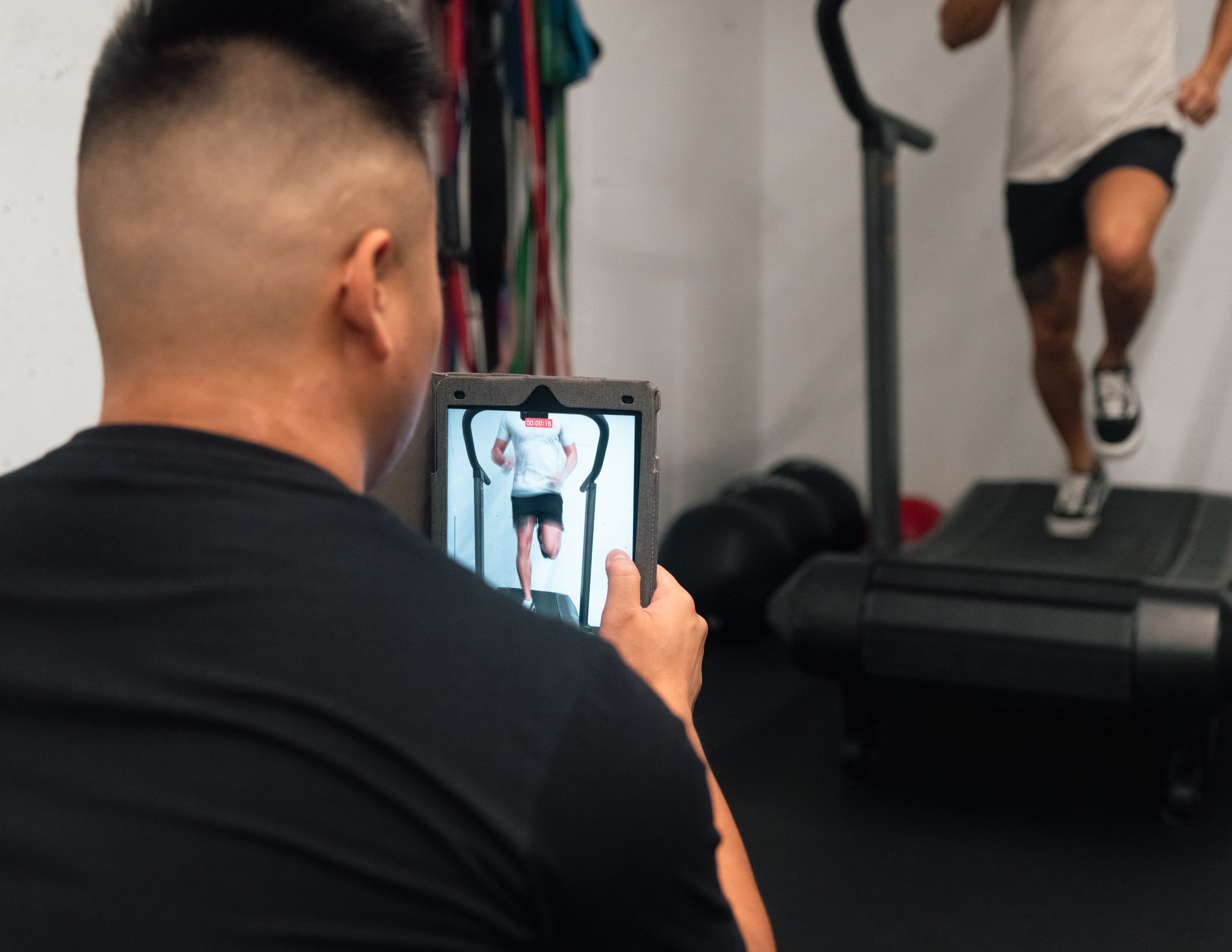
This may include fatigue-based gait analysis, force plate testing, and strength assessments that go beyond basic output.
Because for ultra runners, the issue isn’t early capacity.It’s what becomes less available as the effort progresses.

Then we build what actually lasts
Once we identify where things break down, the plan becomes highly specific.
We’re not building general strength, we’re rebuilding the qualities that tend to drop off mid-effort:
eccentric control so descents don’t progressively wear you down
hip stability that remains consistent as demands increase
posterior chain strength that continues contributing late
trunk control that keeps your stride from slowly unraveling
The goal isn’t just to feel better early in a run.
It’s to extend how long everything holds together.

Built to work inside your training
Ultra runners don’t need to step away from training to fix this.
They need a plan that works with it.
We adjust volume where needed, layer in targeted work, and build capacity alongside your training so you’re not choosing between progress and staying healthy.
By the time you’re back into your longest efforts, things don’t just feel better.
They last longer.
They feel more consistent.
And you’re not second guessing your body late in the run.
Common Breakdowns in Ultra Runners
Ultra running places sustained stress on the body across time, terrain, and variability. The result is a predictable set of breakdown patterns that tend to show up later in long efforts rather than early in training.
The most common issues we see include:
Calf overload
Persistent tightness or fatigue that does not fully resolve between long runs, often influenced by uneven terrain and prolonged time on feetAchilles tendon irritation
Symptoms that escalate with cumulative vertical gain and repeated loading, especially during back-to-back effortsDownhill knee pain
Pain during descents driven by eccentric quad fatigue and reduced shock absorption capacityHip fatigue and loss of controlBreakdown in frontal plane stability leading to changes in stride mechanics as demands increase
Foot and ankle fatigue
Reduced ability to manage ground contact and adapt to terrain, often leading to compensatory loading patterns
These issues are rarely isolated. As the effort progresses, small inefficiencies begin to compound, increasing stress on specific tissues and making symptoms more likely to persist or progress.
Most ultra runners notice these changes at a consistent stage in their efforts, typically when duration, terrain, and accumulated demand begin to converge.

Rehab That Extends Your Range
Ultra runners don’t need to shut things down every time something surfaces.
They need a clearer sense of what’s actually happening, and how much room they have to keep moving forward without letting it turn into something bigger.
That’s the difference in how we approach it.
We’re not just trying to quiet symptoms.
We’re building a system that can handle more, so the same issue doesn’t keep showing up at the same point in every long effort.
What that gives you is simple:
More range.More consistency.And more confidence in how your body will respond as the effort unfolds.
Because at this level, it’s not just about finishing.
It’s about staying intact long enough for your training to actually show up on race day.
Schedule your first session and build a body that holds up when it matters most.