ACL Injury Physical Therapy in NYC
Expert rehabilitation for ACL tears, ACL reconstruction recovery, and non-operative ACL management. Criteria-driven, performance-focused care for athletes and active adults in New York City.
UNDERSTANDING THE INJURY
What is an ACL injury?
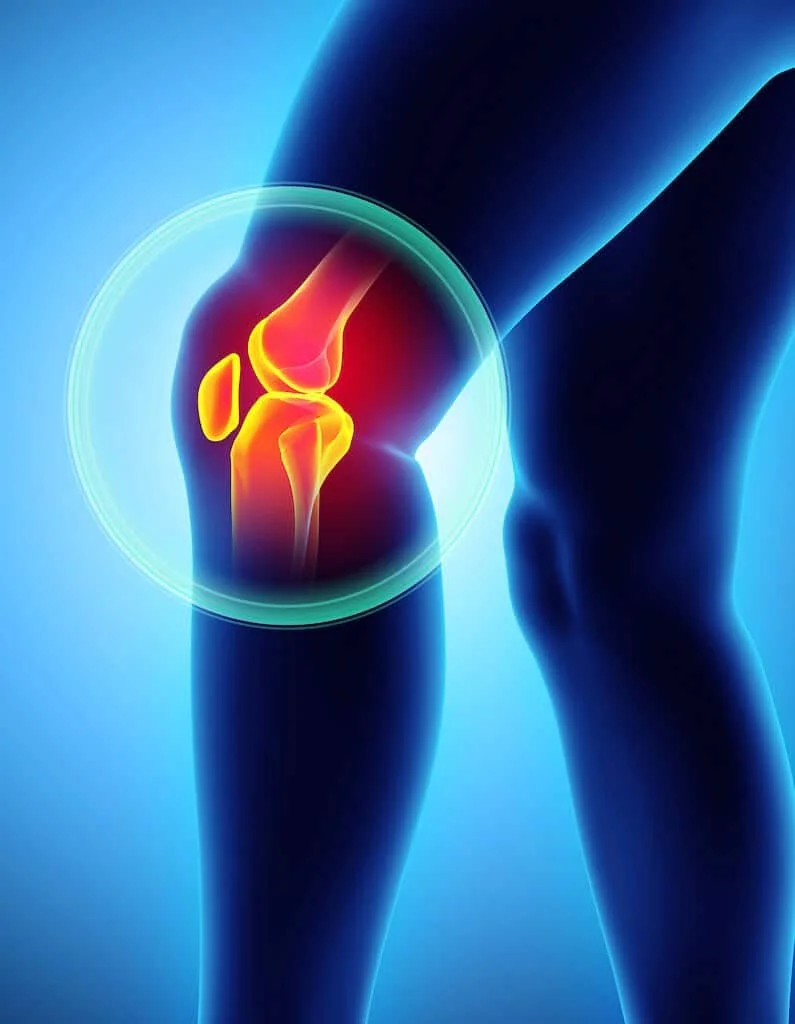
The anterior cruciate ligament is one of four major ligaments that stabilize the knee joint. It runs diagonally through the center of the knee, connecting the femur to the tibia, and its primary job is to prevent the tibia from sliding forward relative to the femur and to control rotational stability during athletic movement. When the ACL is torn, the knee loses a significant portion of its passive stabilizing capacity.
ACL injuries occur on a spectrum. Partial tears involve disruption of some but not all fibers of the ligament and may retain meaningful structural integrity. Complete tears involve full disruption of the ligament and result in significantly greater instability, particularly during cutting, pivoting, and deceleration movements. Both types require careful rehabilitation regardless of whether surgery is chosen.
ACL tears are among the most significant injuries an athlete can experience, not because the structural damage is irreparable, but because of the psychological, physical, and performance demands of the recovery process. A well-managed ACL rehabilitation is 9-12 months of deliberate, progressive work. A poorly managed one is a return to sport before the tissue and neuromuscular system are ready, and a re-tear rate that reflects that gap.
200,000+
ACL injuries in the US each year
9-12
Months for a full return to sport
15x
Higher re-injury risk without objective clearance
RECOGNIZING THE INJURY
Common signs and symptoms of an ACL tear
ACL injuries are often dramatic in their initial presentation. The most characteristic feature is a popping sensation at the moment of injury, heard or felt by the athlete, followed by immediate swelling that develops within hours as blood fills the joint. The knee typically feels unstable, and weight-bearing is painful or impossible in the acute period.
As the acute swelling settles over the following days and weeks, the more defining feature of an ACL tear becomes apparent: instability during rotational or cutting movements. The knee may feel reliable during straight-line walking or cycling but give way or feel unreliable when changing direction, pivoting, or decelerating from a sprint.
Common presentations include:
A loud pop at the moment of injury, often audible to others nearby
Rapid swelling of the knee, typically within two to four hours
Immediate pain that may settle but recurs with activity. Instability or giving way during lateral movement
Loss of full range of motion, particularly full extension in the early stages
Difficulty bearing weight in the acute phase.
It is worth noting that some ACL tears, particularly partial tears, present with less dramatic initial symptoms. A knee that swells mildly after a non-contact deceleration, feels vaguely unreliable without ever fully giving way, or restricts return to full training without an obvious reason should prompt evaluation rather than watchful waiting.
MECHANISM OF INJURY
How ACL injuries occur
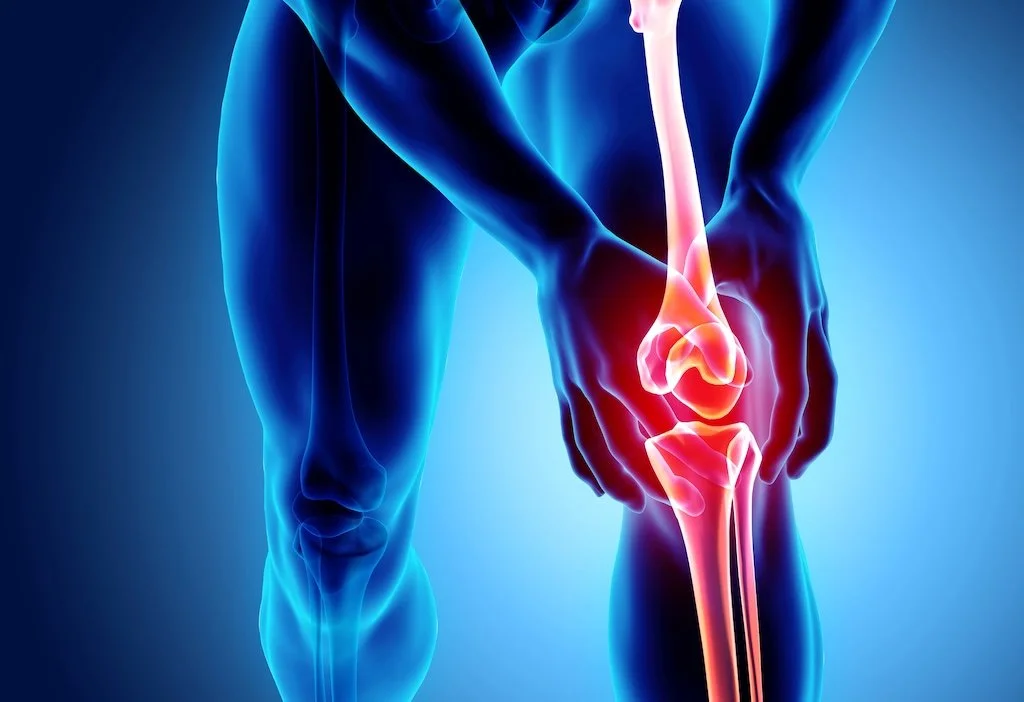
Approximately 70% of ACL injuries are non-contact, meaning they occur during the athlete's own movement rather than from external impact. This is clinically important because it tells us that ACL injury risk is significantly influenced by how an athlete moves, not just by the sport they play or the contact they sustain.
The most common mechanism is a deceleration, cutting, or landing movement in which the knee is loaded in a position of slight flexion with valgus collapse — the knee caving inward relative to the foot — combined with internal tibial rotation. This creates a position of maximum ACL stress, and when the demand exceeds the ligament's structural capacity, it fails.
Risk factors for non-contact ACL injury include insufficient neuromuscular control during high-speed deceleration and landing, limited hip strength that allows femoral internal rotation and valgus collapse under load, fatigue that degrades movement quality in the later stages of a game or training session, and in female athletes, anatomical and hormonal factors that influence ACL loading mechanics. Understanding these factors is why comprehensive ACL rehabilitation addresses far more than just the structural recovery of the ligament.
Non-contact ACL tears are movement quality failures as much as they are injuries. Effective rehabilitation rebuilds not just the tissue but the movement patterns and neuromuscular control that protect it.

THE CRITICAL DECISION
Do all ACL tears require surgery?
No. And the decision is more nuanced than most patients are led to believe.
The traditional recommendation for ACL tears in athletes has been reconstruction, and for many athletic populations, surgery followed by rigorous rehabilitation produces excellent outcomes. However, the evidence for non-operative management of ACL tears has grown substantially in recent years, and a meaningful proportion of people with complete ACL tears return to full athletic activity without surgical reconstruction.
The most important factor in determining surgical versus conservative management is the individual's instability presentation and athletic demands. Athletes who participate in high-demand pivot sports (think soccer, basketball, football, skiing) at a competitive level typically benefit from reconstruction because the passive restraint the ACL provides is necessary for the rotational stability those sports require. Athletes with less rotational demand, or those whose lifestyle does not place high cutting and pivoting requirements on the knee, are more likely to succeed with non-operative management.
The 'coper versus non-coper' distinction is clinically meaningful. Copers are individuals who demonstrate sufficient neuromuscular compensation to manage without the passive restraint of an intact ACL. Non-copers continue to experience instability despite rehabilitation. Initial conservative management with rigorous physical therapy can identify which category an individual falls into before committing to surgery.
IMPORTANT CLINICAL REALITY
Surgery repairs the ligament. It does not repair the neuromuscular system, strength deficits, or movement patterns that contributed to the injury. Rehabilitation does all of that, regardless of whether surgery occurs. An ACL reconstruction without rigorous rehabilitation produces worse outcomes than surgery preceded and followed by the highest standard of care.
At Moment, we approach the surgical decision as a conversation informed by the evidence, the individual's athletic goals, and objective assessment of their instability presentation. We do not push patients toward or away from surgery. We give them the most accurate clinical picture available and help them make the decision that is right for their situation.
THE REHABILITATION PROCESS
ACL rehabilitation timeline
9 to 12 months is the evidence-based minimum for a full return to sport after ACL reconstruction in high-demand athletes. This is not a conservative estimate. It is what the research on re-injury rates supports. Athletes who return before 9 months re-tear at significantly higher rates than those who complete the full timeline and meet objective criteria before returning.
For non-operative ACL management, the timeline is more variable. Some individuals return to full activity within 3 to 6 months. Others require longer. The critical variable in both cases is not the calendar. It is whether objective criteria are met at each phase before progressing.
Phase 1 Weeks 1–6
Protection and early recovery
Reduce swelling and pain, restore full range of motion, initiate quad activation and basic lower extremity strengthening, normalize gait.
Phase 2 Weeks 6–12
Strength foundation
Progressive quad, hamstring, and hip strengthening, single-leg stability, proprioception retraining, low-impact cardiovascular maintenance.
Phase 3 Months 3–6
Movement quality and load tolerance
Criteria-based progression to jogging, bilateral and single-leg loading patterns, sport-specific movement preparation, limb symmetry testing.
Phase 4 Weeks 6–9
Sport-specific loading
Running, cutting, deceleration mechanics, agility, return-to-sport testing, advanced strength and power development.
Phase 5 Weeks 9–12*
Return to full competition
Objective clearance based on force plate and dynamometer testing, full sport participation, ongoing strength maintenance.
These phases are descriptive, not prescriptive. Progression within and between phases at Moment is driven by objective criteria, not by time elapsed. You advance when the data says you are ready.
THE REHABILITATION PROCESS
Return-to-sport testing:
why numbers matter more than feelings
The most dangerous moment in ACL rehabilitation is not the injury. It is the return to sport.
Athletes who feel ready and athletes who are objectively ready are not the same population. Research consistently shows that subjective readiness, how the knee feels, how confident the athlete is, how well training has been going, does not reliably predict whether the neuromuscular system is prepared to protect the knee under high-speed, high-load, reactive athletic conditions.
Re-injury rates in athletes who return to sport based on time and subjective readiness alone are alarmingly high. Studies have documented ACL re-tear rates of 15 to 25% in athletes under 25 who return to pivoting sports. The athletes who re-tear are not the ones who lacked motivation or skipped their exercises. They are the ones who were cleared before they were ready.
At Moment, return-to-sport clearance is based on objective criteria that must be met before any progression to full competitive activity. These include limb symmetry index on force plate testing of at least 90% for functional tasks including single-leg hop, triple hop, and crossover hop, quad and hamstring strength symmetry of at least 90% assessed with dynamometer testing, and demonstration of movement quality during sport-specific cutting and deceleration tasks that reflects the neuromuscular control required for competition.
THE MOMENT STANDARD
You do not advance to the next phase because the calendar says so. You advance because the data says you are ready. This distinction is what makes the difference between a successful return and a re-injury.
THE OBJECTIVE DIFFERENCE
Why strength testing is non-negotiable in ACL rehabilitation
Quad weakness following ACL injury and reconstruction is one of the most persistent and most consequential deficits in ACL rehabilitation. The quadriceps protect the anterior cruciate ligament by controlling tibial translation during loading. When the quad is significantly weaker on the reconstructed side than the healthy side, the ligament is doing more work than it should with every landing, cut, and deceleration. That asymmetry predicts re-injury.
The problem is that quad weakness is not reliably detectable by feel. An athlete can feel strong, train at high intensity, and demonstrate impressive performance on bilateral exercises while still having a 20 or 30% strength deficit on single-leg testing. This is why dynamometer testing, which measures the precise force output of each leg independently and compares it against both the other side and validated population benchmarks, is essential rather than optional.
Similarly, force plate testing of single-leg hop performance detects asymmetries in power output, landing mechanics, and reactive strength that predict re-injury risk and cannot be identified through observation or subjective assessment alone. Athletes who pass both force plate and dynamometer criteria before returning to sport have re-injury rates that are a fraction of those who return based on time and clinical impression.
This is the standard we apply to every ACL patient at Moment, regardless of whether surgery was performed. Not because we want to extend timelines, but because we want athletes to return to sport once and stay there.
Why Moment
How Moment approaches ACL rehabilitation
ACL rehabilitation at Moment is built on three principles that distinguish it from standard post-surgical care.
Every session is one-on-one with a doctorate-trained physical therapist for the full hour. You are never handed off to an aide, given a list of exercises to perform unsupervised, or managed in a group setting. The complexity of ACL rehabilitation, the nuance of progression decisions, and the importance of movement quality in every exercise demands direct, skilled observation throughout.
Progression is always criteria-driven. We do not advance phases based on what the calendar says or on how you feel. We advance based on what objective testing shows. Strength symmetry, functional performance, movement quality under load — these are measurable, and we measure them. Every athlete at Moment knows exactly what they need to achieve before moving to the next phase.
We treat the whole athlete. ACL rehabilitation that only addresses the knee produces an athlete who can perform well in a straight line but whose movement patterns, hip strength, and neuromuscular control have not been rebuilt to the standard required for safe return to reactive athletic activity. We assess and address the hip, core, and lower extremity movement system as an integrated whole throughout the rehabilitation process.
For athletes considering non-operative management, we provide the structured conservative trial and objective assessment that determines whether surgery is actually necessary for their goals. For post-surgical patients, we provide the full arc of rehabilitation from early recovery through return-to-sport clearance without the need to transition between providers.
ACL rehab that ends when pain resolves is not complete ACL rehab. The goal is an athlete who returns to competition with the physical and neuromuscular capacity to play without re-injury, and the confidence that comes from knowing their body is objectively ready.
FREQUENTLY ASKED QUESTIONS
Common questions about ACL injuries and rehabilitation
-
Not necessarily. The decision depends on the degree of instability, your athletic demands, and the results of an initial conservative rehabilitation trial. Athletes in high-demand pivot sports at a competitive level typically benefit from reconstruction. Many others succeed with non-operative management. The best way to determine which path is right for you is a thorough evaluation and an honest conversation about your goals and the evidence.
-
A full return to high-demand sport after ACL reconstruction typically takes nine to twelve months. This is the minimum timeline supported by re-injury rate research — athletes who return before nine months re-tear at significantly higher rates. Non-operative management timelines vary more by individual presentation. What matters more than the timeline in both cases is meeting objective criteria at each phase before progressing.
-
Re-injury rates vary significantly depending on age, sport, and how return-to-sport decisions are made. Athletes under 25 who return to pivoting sports face re-tear rates in the range of 15 to 25 percent in studies that track them beyond two years. Athletes who meet objective strength and functional symmetry criteria before returning re-tear at substantially lower rates. This is why criteria-driven clearance is not optional — it is the most important protective factor in the return-to-sport process.
-
Graft selection is a surgical decision made in consultation with your orthopedic surgeon. The most common options are patellar tendon autograft, hamstring tendon autograft, and quadriceps tendon autograft, each with different properties and implications for the rehabilitation process. We coordinate closely with surgeons and adjust rehabilitation protocols based on graft type, as each has different early loading parameters and strength development timelines.
-
Yes, at the appropriate phase. Return to jogging typically occurs between months three and six for post-surgical patients and earlier for non-operative cases, depending on objective criteria. Running too early is one of the most common rehabilitation errors. At Moment, return to running is based on symmetry testing and movement quality, not a fixed date. When you do return to running, we link to the return-to-running protocol and assess your mechanics to ensure the loading is appropriate.
-
Early phases focus on restoring range of motion and quad activation — straight leg raises, quad sets, and gentle range work. Middle phases introduce progressive single-leg loading, hip strengthening, and neuromuscular retraining. Later phases build toward sport-specific movement patterns, plyometric loading, cutting mechanics, and the strength levels required for objective clearance. Every program is individualized based on graft type, strength testing, and the specific demands of the athlete's sport.
-
A partial ACL tear involves disruption of some but not all fibers of the ligament. Depending on the degree of involvement, partial tears may retain enough structural integrity to manage non-operatively, and some resolve well with rehabilitation alone. Complete tears involve full disruption of the ligament and produce greater instability, particularly during rotational and cutting movements. Both require evaluation to determine the appropriate management path.
-
Feeling ready is not the same as being ready. Return-to-sport readiness is determined by objective criteria including limb symmetry index on functional hop testing of at least 90 percent, quad and hamstring strength symmetry of at least 90 percent on dynamometer testing, and demonstrated movement quality during sport-specific tasks. At Moment, you receive a clear picture of where you are against these benchmarks throughout the rehabilitation process, so there are no surprises at the clearance decision.
Moment Physical Therapy and Performance | Midtown Manhattan | SoHo | Long Island City, Queens