

Meniscus Tear Physical Therapy in NYC
Most meniscus tears do not require surgery. For many patients, rigorous physical therapy produces outcomes as good or better than surgical intervention. Expert rehabilitation for traumatic and degenerative meniscus tears in New York City, built around what the evidence actually supports for your specific presentation.
UNDERSTANDING THE STRUCTURE
What is the meniscus?
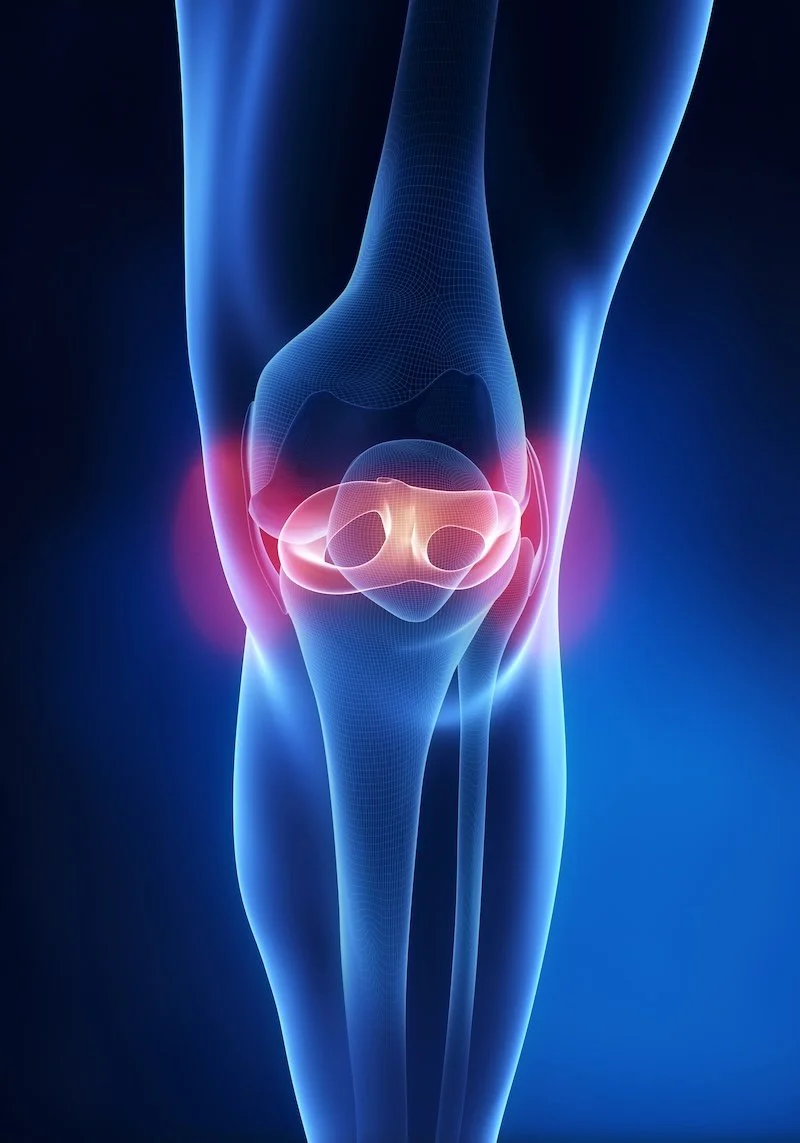
The knee contains two menisci, the medial meniscus on the inner side of the joint and the lateral meniscus on the outer side. Each is a C-shaped wedge of fibrocartilage that sits between the femur and the tibia, serving several critical functions that go well beyond simply cushioning the joint.
The menisci distribute load across the tibial plateau, reducing peak contact pressures on the articular cartilage during weight-bearing. They contribute to joint stability by deepening the surface the femoral condyles articulate on. They play a role in lubrication and nutrition of the articular cartilage. And they provide proprioceptive feedback, sensory information about joint position, that contributes to neuromuscular control of the knee.
When the meniscus is torn, these functions are compromised to a degree that depends on the location, size, and pattern of the tear, and on which meniscus is involved. Understanding those variables is what determines whether conservative management, surgical repair, or surgical removal of the damaged tissue is the most appropriate path.
The meniscus is not just a shock absorber. It is an active contributor to knee stability, cartilage health, and joint proprioception. How it is managed when torn has long-term consequences that extend well beyond the immediate symptoms.
RECOGNIZING THE INJURY
Common symptoms of a meniscus tear
Meniscus tear symptoms vary considerably depending on the type of tear, how it occurred, and how long it has been present. Not all meniscus tears are symptomatic. Meniscal pathology is found on MRI in a significant proportion of adults over 40 who have no knee pain, which is clinically important context when interpreting imaging findings.
When symptoms are present, the most common include:
Pain along the joint line, the inner or outer edge of the knee depending on which meniscus is involved, that is often specifically tender to palpation
Swelling that may be immediate in traumatic tears or gradual in degenerative presentations
Stiffness and difficulty fully straightening or bending the knee
A sensation of the knee catching, clicking, or locking during certain movements, particularly in tears that create a mobile flap of tissue within the joint
Pain with deep squatting, twisting, or pivoting movements that compress the meniscus
In complex tears that create loose fragments, true mechanical locking of the knee that prevents full extension.
The specific pattern of symptoms, combined with clinical examination findings and the mechanism of injury, tells an experienced clinician far more about the nature of the tear than imaging alone. Symptoms that are primarily activity-related and position-dependent point toward a mechanical contribution. Symptoms that are more constant and less position-specific often reflect inflammatory or degenerative drivers.
THE REHABILITATION PROCESS
Common causes of meniscus tears
Meniscus tears occur through two fundamentally different mechanisms, and understanding which mechanism is responsible has significant implications for how the injury should be managed.
Traumatic tears typically occur in younger, active individuals during a specific incident: a deep squat under load, a contact injury, a sudden change of direction, or a landing from height. The force applied to the knee in that moment exceeds the structural capacity of the meniscus, producing a tear in otherwise healthy tissue. Traumatic tears are more common on the medial side and frequently occur in conjunction with other knee injuries, including ACL tears.
Degenerative tears develop gradually over time as the meniscal tissue loses integrity with age and cumulative loading. They are common in adults over 40 and may occur without any memorable injury event. A patient simply notices that their knee has been sore after certain activities, or discovers the tear incidentally on an MRI obtained for another reason. Degenerative tears represent aging of tissue, not acute damage to healthy structure.
The distinction between these two mechanisms is not just academic. It directly determines what conservative management can and cannot achieve, what surgical intervention can and cannot add, and what realistic recovery expectations look like.
TYPES OF TEARS
Meniscus tear patterns
Meniscus tears are classified by their pattern, location, and the zone of the meniscus in which they occur. These classifications matter clinically because they influence both the likelihood of healing with conservative management and the options available if surgery is considered.
The meniscus has 3 zones based on blood supply. The outer one-third, called the red zone, has a good blood supply and tears here have healing potential. The inner two-thirds, the white zone, is avascular and tears here do not heal spontaneously. This distinction determines whether a tear can be repaired surgically or whether the options are conservative management or partial removal of the torn tissue.
Horizontal tear
Runs parallel to the tibial plateau. Common in degenerative presentations. Often managed conservatively.
Radial tear
Runs perpendicular to the meniscus edge. Can disrupt load distribution significantly. Location determines management.
Vertical longitudinal
Runs along the length of the meniscus. If in the vascular zone, repair is possible. Bucket handle tears are this type.
Bucket handle tear
A complete longitudinal tear that can flip into the joint, causing locking. Often requires surgical management.
Flap tear
Creates a mobile piece of tissue within the joint. Causes mechanical symptoms including catching and clicking.
Complex tear
Involves multiple planes. Common in degenerative presentations. Conservative management is usually appropriate first.
THE EVIDENCE-BASED CONVERSATION

Does a meniscus tear require surgery?
For many meniscus tears, particularly degenerative ones in middle-aged and older adults, the answer supported by the research is no.
Multiple high-quality randomized controlled trials, including the landmark METEOR and FIDELITY trials, have compared partial meniscectomy, the surgical removal of the torn portion of the meniscus, to sham surgery and to physical therapy alone in patients with degenerative meniscus tears. The consistent finding across these trials is that partial meniscectomy produces outcomes no better than rehabilitation alone at one, two, and five-year follow-up. Patients in the PT-only groups achieved equivalent pain relief, functional improvement, and activity levels as those who had surgery.
This finding has substantially changed how degenerative meniscus tears are managed internationally, though the change has been slower in clinical practice than in the research literature. Many patients with degenerative tears are still being offered surgery as a first-line treatment when the evidence strongly supports conservative management as the appropriate starting point.
For traumatic tears in younger athletes, the picture is more nuanced. Tears in the vascular outer zone have healing potential and repair may be appropriate, particularly in conjunction with ACL reconstruction where the biological environment supports healing. Bucket handle tears that cause true mechanical locking require surgical management. Complex traumatic tears in athletic populations are evaluated case by case.
WHAT THE RESEARCH TELLS US
Most meniscus tears in adults over 35, and many in younger patients, respond as well or better to rigorous physical therapy as they do to surgery. The meniscus that was surgically removed cannot be restored. Starting with conservative management is almost always the appropriate first step.
At Moment, we provide an honest clinical assessment of what the research supports for your specific tear type and presentation. If surgery is appropriate, we help you prepare for it and manage the full rehabilitation afterward. If conservative management is appropriate, we apply the most rigorous and targeted approach available.

HOW WE TREAT IT
Physical therapy treatment for meniscus tears
Effective conservative management for meniscus tears is not passive. It is not a course of ultrasound, ice, and gentle range-of-motion exercises. It is a progressive rehabilitation program that reduces initial irritation, restores full knee function, and builds the muscular strength and movement capacity that reduces load on the meniscus during activity.
The first priority is settling the acute irritation and restoring normal range of motion. Swelling compresses the joint and inhibits the quadriceps, creating a secondary layer of dysfunction on top of the original injury. Manual therapy, targeted mobility work, and early progressive exercise address this phase.
The middle phase of rehabilitation builds the strength and movement quality that protects the meniscus during activity. This is where most conservative programs fall short. They stop once pain has settled rather than completing the work of building genuine capacity. Strong quadriceps reduce compressive load on the meniscus. Good hip mechanics distribute force more evenly across the joint. Improved single-leg stability reduces the rotational and shear forces that stress the torn structure.
For athletes returning to sport, the final phase ensures that the knee can handle the specific mechanical demands of the activity. For runners, this includes gait analysis and a graduated return-to-running protocol. For strength athletes, it includes assessment of squat and hinge mechanics and progressive loading back to training weight.
For post-surgical meniscus repair, rehabilitation is managed in close coordination with the surgeon. Early sessions protect the repair while preventing the strength and mobility losses that come with immobility. Progression is phase-based and weight-bearing restrictions from the surgical protocol are strictly observed before transitioning to more demanding loading.
WHAT TO EXPECT
Recovery expectations for meniscus tears
Recovery timelines for meniscus tears vary considerably by tear type, management approach, and the individual's baseline strength and fitness.
For degenerative tears managed conservatively, meaningful improvement typically occurs within six to twelve weeks of consistent physical therapy. Many patients return to full activity within this window, though some complex or more irritable presentations take longer. The trajectory of improvement is usually clear within the first four to six weeks, which provides useful prognostic information.
For traumatic tears managed conservatively without surgery, the timeline depends on the degree of instability and the mechanical symptoms present. Tears without locking or significant instability often recover within eight to sixteen weeks. Those with intermittent catching may take longer and require close monitoring to determine whether the mechanical symptoms are resolving or persisting.
For post-surgical meniscus repair, the timeline is substantially longer because the repair site must be protected during healing. Most repair protocols restrict full weight-bearing for four to six weeks and avoid deep flexion for a similar period. Return to sport after meniscus repair typically takes four to six months, depending on the extent of the repair and the demands of the sport.
For partial meniscectomy, recovery is faster than repair because there is no healing tissue to protect. Return to activity often occurs within six to twelve weeks, though the long-term implications of meniscal tissue removal require ongoing attention to knee health and loading management.
GETTING BACK TO ACTIVITY
Returning to sport and training after a meniscus tear
Return to sport after a meniscus tear, whether managed conservatively or surgically, should be based on criteria rather than time. The criteria that matter are full range of motion compared to the uninjured side, strength symmetry between legs, absence of significant swelling with activity, and the ability to perform the specific movement demands of the sport without pain or compensation.
For runners, return to running is a graduated process. We use a structured return-to-running protocol that begins with walking, progresses through run-walk intervals, and advances to continuous running only when each stage is tolerated without pain or swelling response. Gait analysis identifies any compensatory patterns that have developed during the injury period and addresses them before higher training loads are resumed.
For strength athletes and lifters, return to training involves progressive loading of the knee through the specific patterns of the sport. Squat depth, load, and volume are increased systematically based on the knee's response rather than a fixed schedule. The goal is full return to the training program, not a permanently modified version built around the injury.
For field and court athletes, return to cutting, pivoting, and reactive movement follows strength and single-leg performance criteria. We do not clear athletes for sport-specific movement until they demonstrate the quad strength, single-leg stability, and movement quality required to perform those movements safely.
A meniscus tear that is properly rehabilitated should not be a permanent limitation. The athletes who return fully and stay healthy are those who complete the rehabilitation process rather than returning as soon as pain allows.
Common questions about meniscus tears
FREQUENTLY ASKED QUESTIONS
-
It depends on the location of the tear. The outer third of the meniscus has a blood supply and tears in this zone have some capacity to heal, particularly in younger patients. The inner two-thirds are avascular and do not heal spontaneously. However, the absence of healing does not mean symptoms cannot resolve. Many tears that cannot structurally heal become asymptomatic with appropriate rehabilitation as the surrounding musculature adapts to protect the joint.
-
For most degenerative meniscus tears in adults, the research strongly supports conservative management as the appropriate first step. Multiple randomized controlled trials have shown that partial meniscectomy produces outcomes no better than rehabilitation alone for this population. For certain traumatic tear types, particularly bucket handle tears causing mechanical locking, or for vascular zone tears in young athletes where repair is feasible, surgery may be appropriate. A thorough evaluation and honest conversation about the evidence for your specific presentation is the right starting point.
-
Conservative management for degenerative tears typically produces meaningful improvement within six to twelve weeks. Traumatic tears managed without surgery may take eight to sixteen weeks depending on symptoms. Post-surgical meniscus repair requires four to six months before return to sport. Partial meniscectomy allows faster return, often within six to twelve weeks, though long-term knee health requires ongoing attention to loading and strength.
-
Many people with meniscus tears can continue running with appropriate modification. Whether running is advisable depends on the type of tear, the degree of symptoms, and whether running provokes pain or swelling. Some tears produce minimal symptoms during straight-line running but significant symptoms during cutting and pivoting. A thorough evaluation and often a brief trial with monitored progression is the most informative way to answer this question for your specific situation.
-
In the early stages of a painful meniscus tear, activities that provoke significant pain or swelling should be modified. Deep squatting, heavy loaded flexion, and pivoting on a loaded knee are the movements most likely to be aggravating. However, complete rest is rarely the right prescription. Maintaining activity within tolerable limits while beginning rehabilitation is almost always better than stopping entirely. The specific modifications depend on your tear type, symptoms, and goals. That is why evaluation is the right first step.
-
Many people with meniscus tears can continue running with appropriate modification. Whether running is advisable depends on the type of tear, the degree of symptoms, and whether running provokes pain or swelling. Some tears produce minimal symptoms during straight-line running but significant symptoms during cutting and pivoting. A thorough evaluation and often a brief trial with monitored progression is the most informative way to answer this question for your specific situation.
-
A meniscus repair stitches the torn tissue back together, preserving the meniscal tissue. It is only possible for tears in the vascular outer zone that have healing potential, and it requires a longer recovery period because the repair must be protected during healing. A partial meniscectomy removes the torn portion of the meniscus. It allows faster return to activity but permanently reduces the amount of meniscal tissue in the joint, which has long-term implications for knee cartilage health. Preserving the meniscus through repair or conservative management is always preferable when it is clinically appropriate.
-
Meniscal tissue loss, whether from a large untreated tear or from surgical removal, does increase the risk of knee osteoarthritis over time. This is one of the strongest arguments for conservative management when it is appropriate. Preserving the meniscal tissue that remains protects the articular cartilage. However, appropriate loading and maintaining strong supportive musculature around the knee significantly reduces the rate of arthritic progression regardless of the meniscal status.
-
Not necessarily, and this is clinically important. Meniscal pathology is common on MRI in adults over 40, including those with no knee pain. The finding of a tear on imaging does not automatically identify it as the source of symptoms. A thorough physical examination, including provocation testing and an assessment of the full knee and surrounding structures, determines whether the meniscal finding is actually contributing to the presentation and guides treatment accordingly.
Moment Physical Therapy and Performance | Midtown Manhattan | SoHo | Long Island City, Queens