

Triathlete Therapy in NYC
for Athletes Managing Swim, Bike, and Run Demands
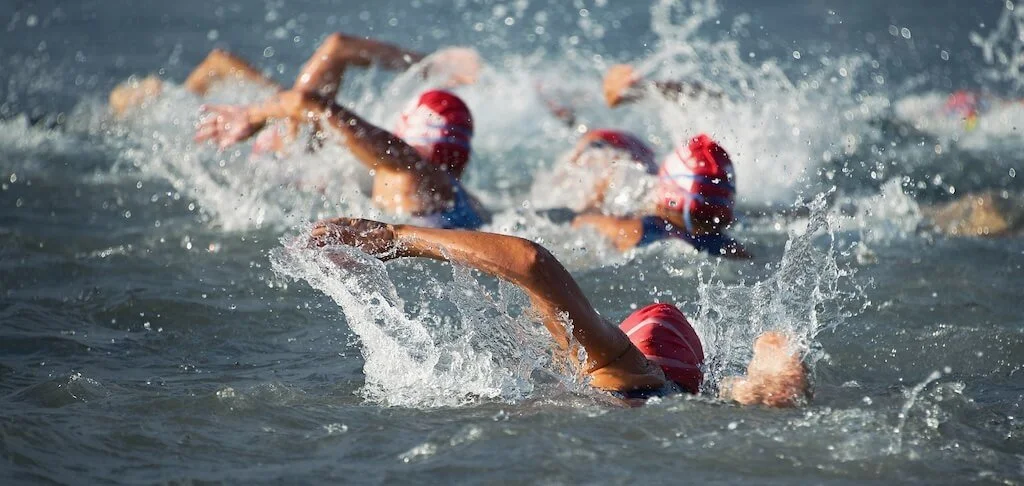
Triathlon is one of the few sports where improving one area can quietly create limitations somewhere else.
You can be swimming more efficiently, holding stronger numbers on the bike, and still find your run becoming less consistent. Not because your fitness dropped, but because each discipline is shaping your body in a different direction.
Over time, that tension is what most athletes start to feel.
Not from a single session, but from how training stacks across a full week, swims, rides, and runs layered into a schedule that rarely leaves much room for error.
Triathletes Carry Three Different Movement Demands
Each discipline reinforces a distinct set of mechanics.
Swimming relies on rotation, overhead mobility, and repeated shoulder loading.
Cycling narrows movement into a fixed position—hips flexed, spine stabilized, force produced in a limited range.
Running then demands extension, rhythm, and efficient force absorption.
The challenge isn’t mastering each one individually.
It’s maintaining movement quality as you move between them.
A restriction that builds during the week often doesn’t show up immediately. It reveals itself when the body is asked to switch contexts, when posture, position, and output all need to change quickly.
That’s where performance starts to drift.
Where Triathletes Commonly Break Down
As training becomes more consistent, certain patterns tend to show up.
Not as sudden injuries, but as recurring issues that follow a predictable progression.
The most common include:
Hip flexor overload from sustained cycling position, often limiting extension during running
Calf and Achilles strain as run volume builds on top of accumulated demand from the bike
Low back stiffness from prolonged time in flexion combined with insufficient trunk support
Shoulder irritation from repetitive swim volume, especially when mobility or control is limited
Transition inefficiency, where the shift from bike to run exposes underlying mechanical gaps
For most athletes, these don’t stop training right away.
They show up more frequently, require more attention, and begin to influence how each session feels.

Addressing these issues effectively requires more than treating the area that hurts.
Because what you feel during one discipline is often influenced by what came before it.
A limitation on the bike can carry into your run mechanics.
A restriction in rotation can change how the shoulder tolerates swim volume.
If those relationships are not accounted for, progress tends to stall.
What matters is understanding how these pieces connect and where your system is starting to compensate instead of adapt.
That’s where the right approach makes the difference.
Why Rehab Must Be Built for Triathlon
How We Approach Triathlete Performance at Moment
-

System-wide assessment
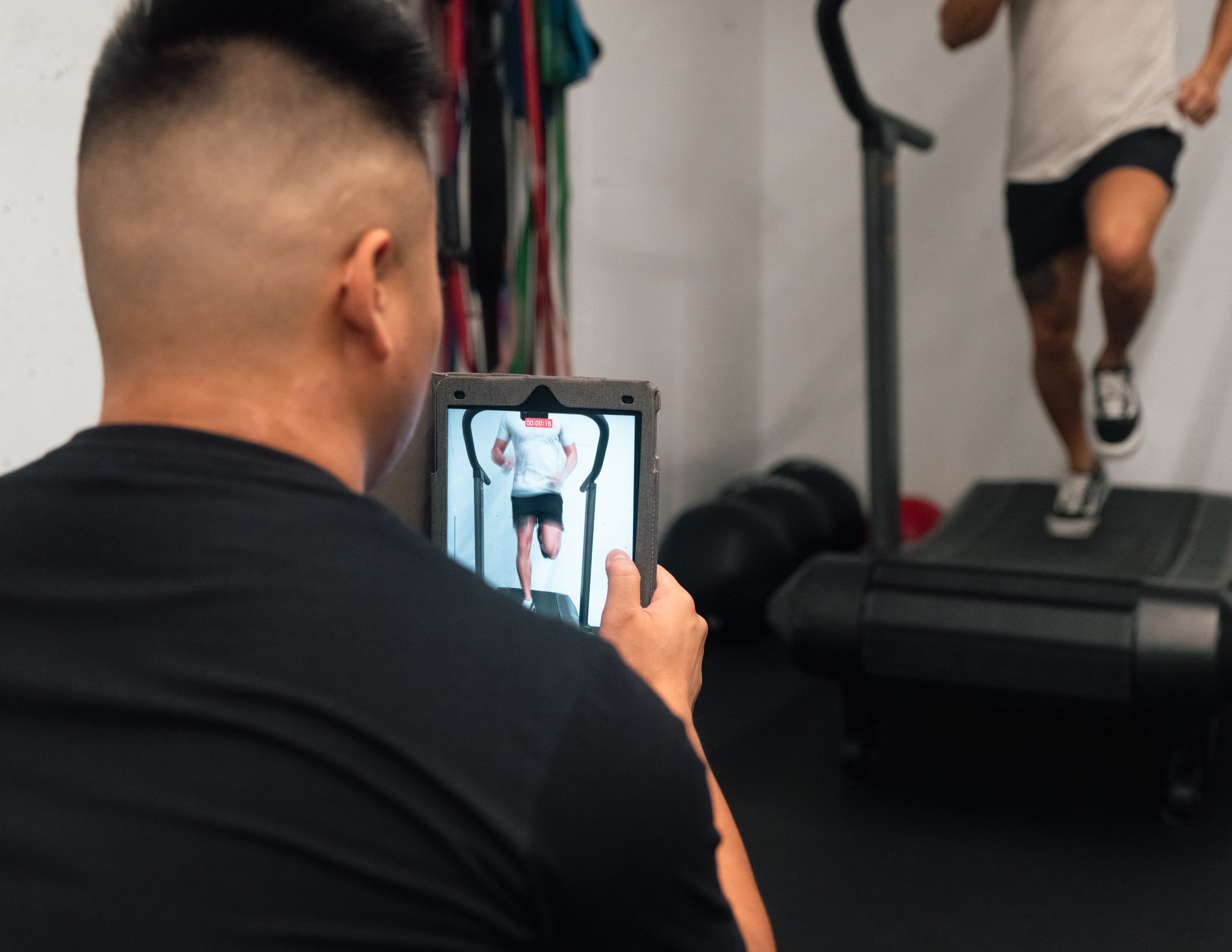
We evaluate how your shoulders, hips, spine, and stride function together across swim, bike, and run. This goes beyond basic movement screens and includes objective testing such as running gait analysis, force dynamometer testing, and force plate assessment to identify where breakdowns are actually coming from.
-
Identify the root cause
Most issues are not isolated. A limitation in one discipline often shows up somewhere else. We connect those relationships so you are not chasing the same problem across multiple sessions.
-
Targeted treatment and capacity building
Care is built around what your body actually needs. That may include restoring mobility, improving control, or building strength where your training demands it. Every input is selected based on how it carries over across disciplines.
-
Performance optimization
Once symptoms are under control, the focus shifts to how well your system performs as a whole. Movement becomes more efficient. Force production becomes more consistent. Transitions between disciplines feel smoother and more automatic.
This is where the difference shows up.
Not just in how you feel, but in how your body performs across sessions, disciplines, and race-specific efforts.

For Triathletes Who Expect Their Body to Keep Up
“I’m a triathlete and distance runner with a long injury history and a lot of past PT experience. No matter what I tried, pain would always come back once training started to ramp up. After getting connected with Moment at the start of my training season, everything changed. Before working together, I had a hard time finishing 10-mile runs without pain showing up. Within two months, I was completing all of my workouts feeling strong—and with real consistency. What stood out most was how specific and manageable everything was. The plan was challenging, but realistic. As someone balancing a full-time job with Ironman training, that matters. Nothing felt excessive, but everything delivered results. Even the remote sessions were incredibly effective. The team was able to adj ust in real time based on what I was feeling and seeing, and it never felt like a limitation. Now I feel more confident than ever that I’ll be strong at the finish line.” — Melanie Chen, Triathlete
Therapy That Fits Your Race Calendar
Triathletes don’t struggle with effort.They struggle with knowing when to adjust, and when not to.
Your training is already structured. What’s harder to track is how your body is responding across it.
That’s where we come in.
At Moment, the goal isn’t to pull you out of your plan. It’s to give you control inside it.
Because most setbacks don’t come from one session.They come from small misreads that build across a week, then a training block.
When you understand what’s actually happening, you stop guessing.
And when you stop guessing, training starts to feel more precise & more aligned with the work you’re already putting in.
Schedule your first session and train with a level of precision that matches your program.