Knee Pain From Strength Training
Knee pain from squatting, deadlifting, or leg day is a signal about your mechanics and programming, not a verdict on your training. Treatment built by therapists who train with barbells, understand your programming, and want you back under the bar, not away from it.
UNDERSTANDING THE PROBLEM
Most advice a lifter receives about knee pain amounts to the same three words: stop squatting deep. This advice treats the symptom as the diagnosis and the movement as the enemy, and it is almost always the wrong answer. The knee is designed to be loaded, and heavy resistance training is not inherently dangerous to it. Knee pain during lifting is a signal that something specific in how the joint is being loaded needs to change, not a signal that the joint cannot tolerate load at all.
The knee experiences dramatically higher compressive and shear forces during barbell training than during almost any other common activity. A heavy back squat can place several times body weight through the patellofemoral joint at the bottom of the movement. This is not a problem in itself. Joints are built to handle high loads when they are positioned well and supported by adequate strength and mobility through the full range of the movement. Pain develops when one of those conditions is not being met: when technique places stress somewhere the tissue is not prepared to absorb it, when programming increases load or volume faster than the tissue can adapt, or when a mobility restriction forces a compensation that changes where force is being distributed.
This is also why generic advice so often fails lifters specifically. A physical therapist who does not understand barbell training, who has never coached a squat or watched someone pull a heavy deadlift off the floor, cannot reliably distinguish between a technique problem, a programming problem, and a genuine tissue injury. They default to the only tool available to them: stop doing the thing that hurts. For a competitive or serious lifter, that advice is not a solution. It is a non-answer
Why lifting causes knee pain
Knee pain from lifting is almost always solvable without abandoning the movements that caused it. The goal of treatment is not to modify you away from squatting and deadlifting. It is to identify exactly what is creating the problem and rebuild toward lifting without restriction.
DIAGNOSING THE PATTERN
Where your knee hurts tells us what is happening
The location of pain during lifting is one of the most useful diagnostic clues available, and it is often enough on its own to point toward the likely structure involved and the mechanical driver behind it.
| Where It Hurts | Likely Structure | Common Trigger Movement |
|---|---|---|
| Front of the knee, below the kneecap | Patellar tendon | Squats, especially high volume or a recent jump in frequency; deep knee bends under load |
| Front of the knee, behind or around the kneecap | Patellofemoral joint | Squats and lunges, particularly through a limited range where the kneecap is tracking poorly |
| Inside of the knee | Medial meniscus or MCL | Deep squats with knee valgus, or a hinge pattern with excessive inward knee drift |
| Outside of the knee | Lateral meniscus, LCL, or IT band | Squats with excessive knee cave, or high-volume unilateral work |
| Pain that moves or is hard to pinpoint | Referred pain from the hip or lower back | Deadlifts and hinge patterns where the true driver is upstream of the knee |
| Deep, aching pain with clicking | Patellofemoral cartilage irritation | High-frequency squatting or leg press without adequate recovery between sessions |
This is not a substitute for a hands-on evaluation, since several of these presentations overlap and the same location of pain can have more than one underlying cause. But it illustrates the core principle: effective treatment starts with correctly identifying what structure is involved and what movement pattern is driving the load onto it, not with a blanket instruction to lift lighter or stop lifting altogether.
TECHNIQUE
Squat mechanics and knee load
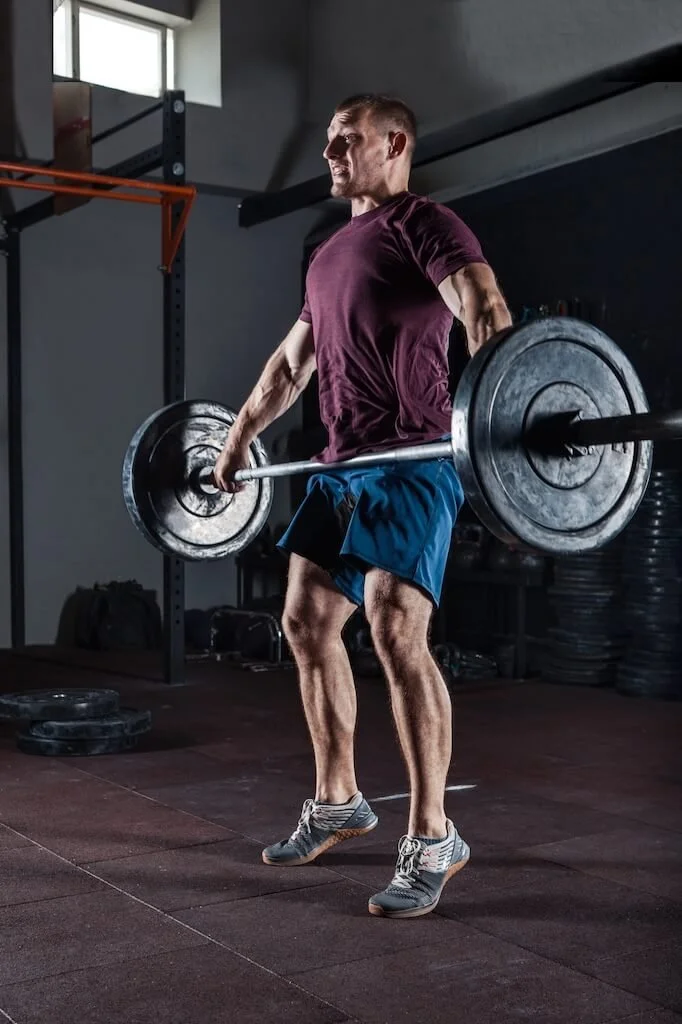
The squat is the movement most commonly associated with lifting-related knee pain, largely because it places the knee through its full range of motion under significant load, repeatedly, often for high volume. Small technical variables in how the squat is performed meaningfully change where and how much force the knee absorbs.
Stance width and foot angle influence how much the knee has to travel forward relative to the ankle and how much hip rotation is available to share the work of the movement. A stance that is too narrow for an individual's hip structure and ankle mobility often forces more forward knee travel and more patellofemoral compression than a stance suited to that lifter's anatomy. There is no single correct stance width. There is a stance width that is correct for a given lifter's proportions and mobility, and identifying it is part of a proper movement assessment.
Depth is frequently blamed for knee pain, and while a rapid increase in squat depth without adequate mobility and control can be a contributing factor, depth itself is not inherently harmful. Populations that squat deep as a normal part of daily life show no elevated rate of knee pathology. What matters is whether the lifter has the ankle and hip mobility to reach that depth with good control, and whether the load and volume at that depth have been programmed to allow the tissue to adapt.
Knee valgus, meaning the knees drifting inward during the ascent, particularly under heavy load, is one of the more common technical faults we see and one of the more consistently correctable ones. It typically reflects insufficient hip external rotation strength relative to the load being lifted, and it changes the loading pattern at both the meniscus and the collateral ligaments. Bar position, whether high bar, low bar, or front rack, also changes the torso angle and correspondingly the demand placed on the knee versus the hip, and switching bar position is sometimes part of a return-to-lifting strategy for a specific presentation.
In our experience treating lifters, programming errors are at least as common a driver of knee pain as technique flaws, and they are frequently overlooked because the lifter assumes their form is the issue when the real problem is how their training has been structured.
Find your condition
Rapid volume increases
Adding sets, frequency, or intensity for a lift faster than the connective tissue can adapt is one of the most common drivers of tendon-related knee pain, particularly at the patellar tendon.
Peaking without a deload
Approaching a competition or a new max without programmed recovery periods accumulates fatigue in the tendons and cartilage faster than in the muscle, which recovers more quickly.
Repeating the same rep range indefinitely
Training exclusively in one rep range, particularly high-volume moderate load work, without variation can overload specific structures that would benefit from occasional heavier, lower-volume work.
Insufficient recovery between heavy sessions
Squatting or lunging heavy multiple times per week without adequate spacing does not allow the patellar tendon and cartilage to recover between sessions, even when the muscles feel recovered.
Ignoring early warning signs
A mild ache that shows up after every squat session and is dismissed as normal soreness frequently progresses into a persistent tendinopathy that limits training entirely.
Returning from a break too aggressively
Coming back to previous training weights after time off, illness, or a deload without rebuilding load tolerance gradually is one of the most reliable ways to trigger a flare-up.
Related:
Strength and Conditioning at Moment
MANAGING THE VARIABLE THAT MATTERS MOST
Load management for lifters with knee pain
Load management is the single most important lever in resolving and preventing lifting-related knee pain, and it is more nuanced than simply lifting less. The goal is not to minimize load. It is to manage the relationship between the load being placed on the knee and the current capacity of the tissue to tolerate it, a relationship that changes over time as training progresses.
For an irritated tendon or joint, this often means a temporary reduction in the specific variable that is provoking symptoms, which might be total volume, absolute load, or range of motion, while other elements of training continue relatively unaffected. A lifter with patellar tendon irritation from high-volume squatting can often continue upper body training, maintain some lower body strength work through modified ranges or exercises, and keep training momentum while the irritated structure recovers, rather than stopping training entirely.
As symptoms settle, load is reintroduced progressively and deliberately, tracking the tissue's response at each step rather than jumping back to previous training numbers once pain has resolved. This is where working with someone who understands programming specifically, not just general exercise prescription, matters. Reintroducing squat volume after a patellar tendon flare-up requires a different progression than reintroducing it after a meniscus issue, and getting this wrong is one of the most common reasons lifters cycle through repeated flare-ups.
WHAT LIMITS GOOD POSITIONS
Mobility deficits that drive lifting-related knee pain
Restricted mobility upstream and downstream of the knee is a frequent and frequently overlooked contributor to knee pain during lifting. The knee is a hinge joint with a relatively narrow range of healthy movement options. When the joints above and below it, the hip and the ankle, cannot provide the mobility a lift requires, the knee often absorbs the difference.
Limited ankle dorsiflexion is one of the most common and most consequential restrictions we see in lifters with knee pain. Adequate dorsiflexion allows the shin to travel forward over the foot during a squat without the heel lifting or the arch collapsing. When dorsiflexion is restricted, lifters commonly compensate by shifting weight onto their toes, allowing the knees to travel excessively forward, or by widening their stance and reducing depth to avoid the range they cannot access, all of which change the loading pattern at the knee in ways that can become symptomatic under volume.
Limited hip internal rotation similarly forces compensation, often showing up as the knee caving inward during the ascent of a squat because the hip cannot provide the rotation the movement is asking for. Addressing these restrictions directly, through targeted mobility work paired with the strength to control the newly available range, is frequently a more effective and more durable solution than modifying the lift itself to work around a mobility deficit that a modified lift does nothing to fix.
WHAT IS NOT PULLING ITS WEIGHT

Strength imbalances, both between the two legs and between muscle groups within a single leg, are a common and correctable driver of lifting-related knee pain. A quadriceps to hamstring strength ratio that is heavily skewed toward the quad, for example, changes how force is distributed across the knee during both squatting and hinge patterns, and can increase stress on the ACL and the patellofemoral joint.
Side-to-side asymmetries are also common, particularly in lifters who have had a previous injury to one leg or who have unconsciously favored one side during training for an extended period. A leg that is meaningfully weaker than its counterpart absorbs disproportionate compensatory stress during bilateral lifts like the squat and deadlift, since the stronger leg tends to take over more of the work, but the weaker leg is still being asked to keep pace, often at the cost of positioning and control that would hold up fine if the leg were adequately strong.
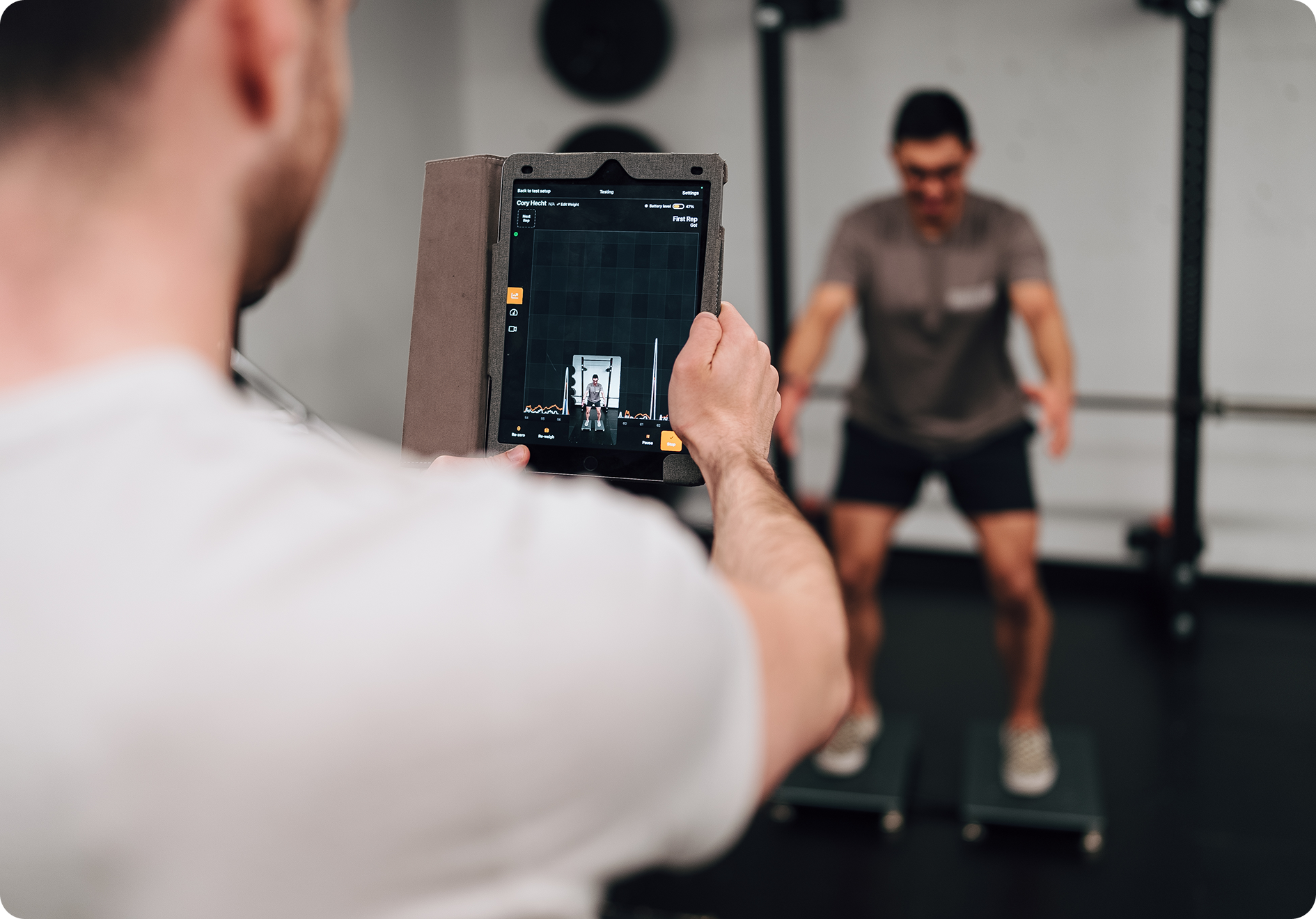
We assess these asymmetries objectively with dynamometer testing rather than relying on subjective impressions of which side feels weaker, since strength deficits of 20% or more are common even in lifters who are not consciously aware of any imbalance. Addressing the deficit directly through targeted unilateral strengthening is frequently a more effective intervention than continuing to program bilateral lifts around a persistent imbalance that those lifts alone will not correct.
Strength imbalances that overload the knee
HOW WE TREAT IT
How physical therapy helps lifters with knee pain
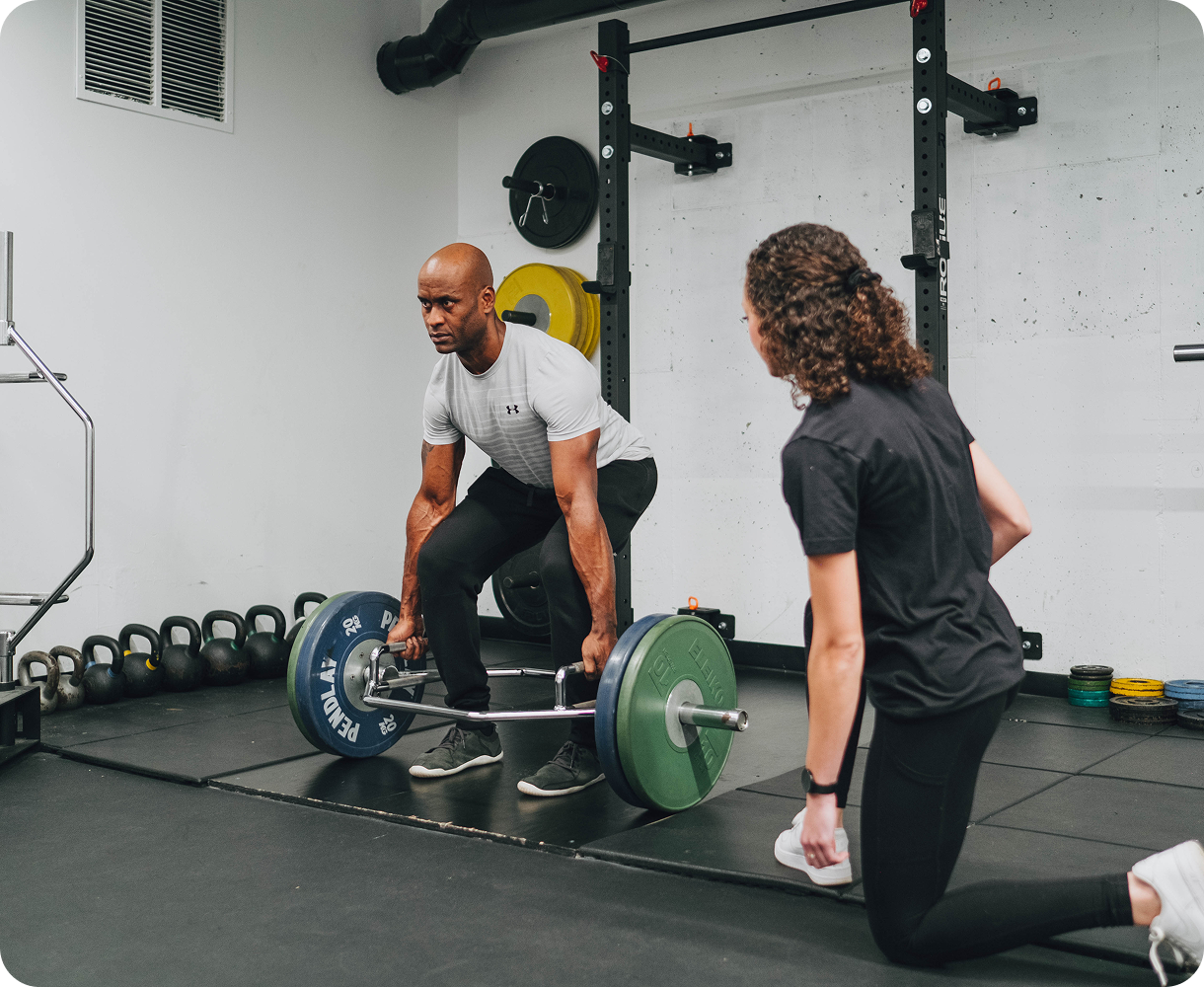
Treating a lifter's knee pain requires understanding lifting, which is why our therapists train with barbells and assess your actual squat, hinge, and lifting patterns rather than a generic movement screen disconnected from the sport you are actually doing.
The evaluation starts with watching you lift, at a load and rep scheme close to what provokes your symptoms where it is safe to do so, to see directly how your mechanics, mobility, and strength come together under real conditions. This is combined with a hands-on assessment of the knee itself, an evaluation of hip and ankle mobility, and dynamometer strength testing to identify any asymmetries between legs or between muscle groups.
From there, treatment addresses whatever combination of factors the evaluation identifies: technical adjustments to stance, depth, or bar position where relevant, a load management plan that keeps you training while the irritated tissue recovers, targeted mobility work for any restrictions limiting good positions, and a progressive strengthening program addressing any imbalances that are overloading the knee. Throughout the process, the goal is explicit: return to lifting the movements you care about, at the loads you want to be lifting, without the modifications that a less specific approach might have left permanently in place.
THE GOAL WE WORK TOWARD
The goal is not to modify you away from the training you care about. It is to identify the technical and capacity gaps creating the problem and build toward lifting without restriction.
FREQUENTLY ASKED QUESTIONS
Common questions about knee pain from lifting
-
Not necessarily, and in most cases complete cessation is not the right first step. The more useful question is what specifically about your squatting, the depth, the load, the frequency, or the technique, is provoking the pain, and whether the movement can be modified temporarily while the underlying issue is addressed rather than eliminated entirely. A thorough evaluation identifies whether continuing to squat in some modified form is appropriate for your specific presentation.
-
No. Deep squatting is not inherently harmful to healthy knees, and populations that squat deep as part of daily life do not show elevated rates of knee pathology. What matters is whether you have the ankle and hip mobility to reach that depth with good control and whether your training load and volume at that depth have been programmed to allow your tissue to adapt. Depth becomes a problem when it increases faster than mobility and tissue capacity can keep pace, not because deep knee flexion is dangerous in itself.
-
Deadlift-related knee pain often has a different mechanism than squat-related pain. Since the deadlift is primarily a hip-dominant movement, knee pain during deadlifting frequently reflects a technique issue where the knees are doing more work than they should relative to the hips, or it can reflect referred discomfort from the hip or lower back rather than a true knee problem. An evaluation of your specific deadlift mechanics is the most reliable way to distinguish between these possibilities.
-
Pain that is consistent, well-localized, and clearly tied to a specific movement pattern or load range often points toward a mechanical or programming issue that can be corrected without extended time away from training. Pain accompanied by significant swelling, a sense of instability or the knee giving way, or an inability to bear weight normally warrants a more thorough evaluation to rule out a structural injury. When in doubt, a proper assessment is far more useful than guessing.
-
Yes. Insufficient hip strength, particularly in the muscles that control hip external rotation, is one of the most common contributors to knee valgus, the inward knee drift seen in many lifters under heavy load. When the hip cannot adequately control the femur's position, the knee absorbs the resulting stress. Strengthening the specific hip muscles responsible for that control, rather than generic glute exercises, is often a key part of resolving squat-related knee pain.
-
It depends on the underlying cause and how long it has been present. A technique-driven issue caught early can often be corrected within a few weeks. A more established tendon irritation from months of accumulated overload typically requires six to twelve weeks of progressive loading to resolve meaningfully. Strength imbalances take longer to close fully, though functional improvement is often noticeable well before the imbalance is completely resolved. We give you a realistic timeline based on your specific evaluation.
-
A therapist without hands-on experience in barbell training can still address general strength and mobility deficits, but they are less likely to accurately interpret the specific technical details of your lifts, understand realistic programming adjustments, or communicate with you in a way that respects your training goals. This is a meaningful part of why our therapists train with barbells themselves: it changes both the quality of the assessment and the practicality of the recommendations.
-
In most cases, no. The goal of treatment is to identify and resolve the specific mechanical, programming, or capacity issue that is creating the problem so that you can return to your full lifts without restriction. Permanent modifications are sometimes appropriate for lifters with significant anatomical variation or a structural condition that genuinely limits certain positions, but this applies to a minority of cases, not the default expectation.
Moment Physical Therapy and Performance | Midtown Manhattan | SoHo | Long Island City, Queens